NASA sets conservative dust exposure limits for Mars missions
The Johnson Space Center working group recommends a permissible exposure limit of 0.1 mg/m³, derived from lunar data but adjusted for Martian regolith properties.
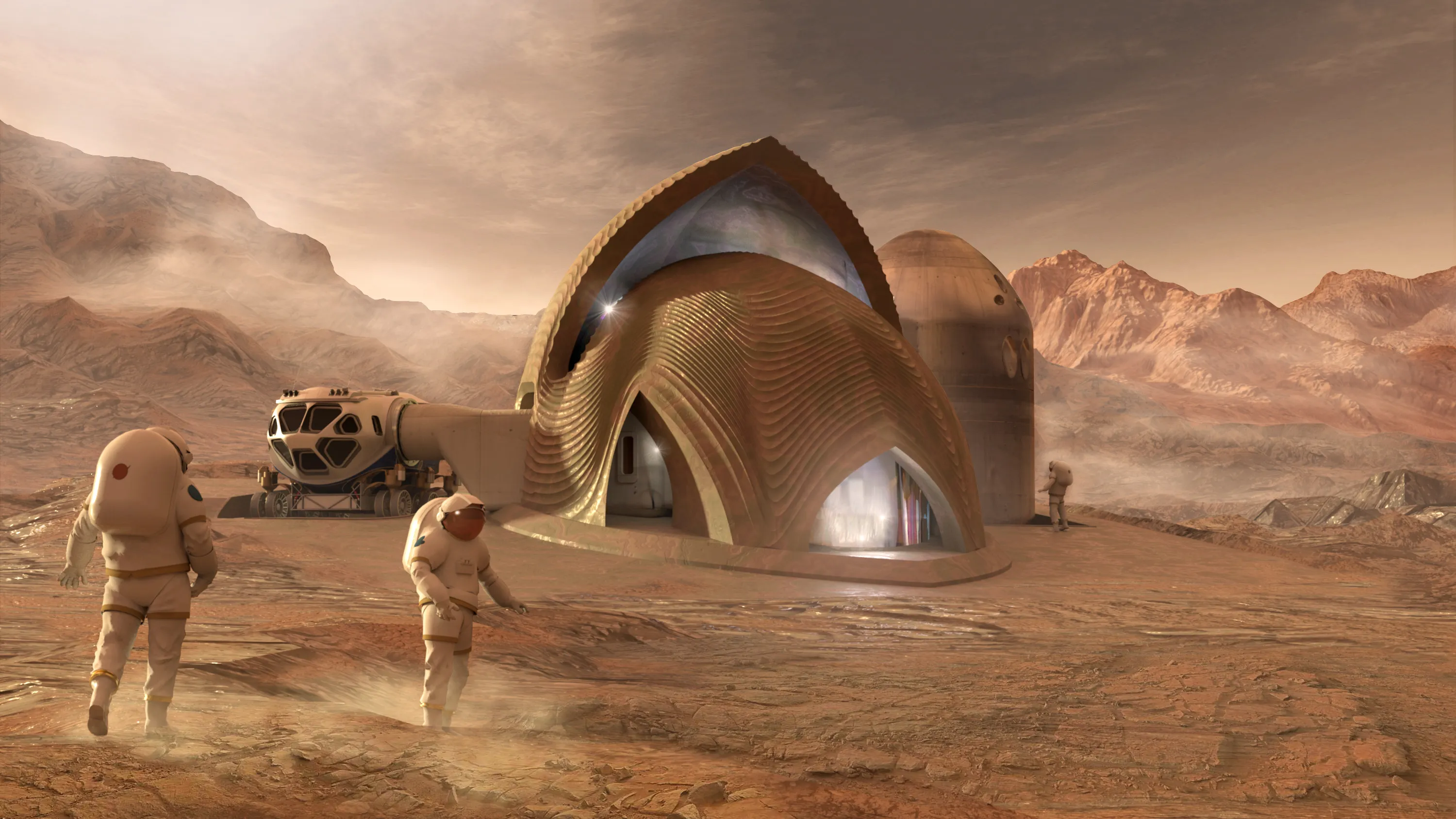
NASA’s Johnson Space Center (JSC) Martian Dust Limit Working Group has recommended a Permissible Exposure Limit (PEL) of 0.1 mg/m³ for Martian dust particles smaller than 10 micrometres. This limit applies to continuous exposure scenarios lasting up to 30 days and will be incorporated into NASA-STD-3001, Volume 2: Human Factors, Habitability, and Environmental Health. The standard aims to ensure crew health safety during early short-stay missions to Mars.
The recommendation follows two working sessions held in February 2026 involving the JSC Lunar and Martian Dust Risk Custodian, the JSC Toxicology group, and the Office of the Chief Health and Medical Officer (OCHMO) Standards team. Panel members reviewed mission architecture drivers, scientific understanding of Martian dust composition, and the toxicological evidence base. The group concluded that the proposed limit is reasonable and appropriately conservative for initial missions.
The PEL of 0.1 mg/m³ was derived from the established lunar 30-day PEL of 0.4 mg/m³. It was reduced by a factor of three to account for knowledge gaps in Martian dust toxicity, the higher iron content of Martian regolith, the presence of amorphous constituents, and differences between simulants and actual dust. The panel noted that a continuous limit applied using measured time-weighted averages is more practical than assumptions tied to fixed dust clearance rates given the diversity of spacecraft designs.
While overall dust mass remains the primary engineering concern, the panel identified specific chemical constituents warranting attention. Chromium 6+, manganese, and perchlorate were considered low-risk in the context of inhaled Martian dust, provided the overall dust PEL is applied. However, perchlorate was recommended for broader agency-level exposure management across multiple intake routes, such as ingestion due to in situ crop growth.
Iron was prioritised for further study due to its high abundance and potential to generate Reactive Oxygen Species (ROS), although current toxicology shows no clear link between iron-driven ROS and pulmonary harm. Arsenic was judged unlikely to pose a meaningful risk at present. The working group advised that Spacecraft Maximum Allowable Concentration (SMAC) standards be maintained for select constituents such as perchlorate and manganese for mission-planning crosschecks.
The new requirement, designated [V2 6253], specifies that the system shall limit concentrations of Martian dust particles less than 10 μm in size in the habitable atmosphere below a 24-hour time-weighted average of 0.1 mg/m³. Members also recommended that the standard explicitly address the management of short-duration dust spikes, particularly post-EVA suit ingress, noting that near-term exposures will be peak-driven.
This initial standard balances conservatism with operational feasibility while accommodating architectural and scientific uncertainty. As additional Martian data and toxicological research become available, the standard should be periodically revisited to ensure continued protection of crew health during human exploration of Mars.