NASA Rovers Release Dual Panoramas of Mars, Revealing Ancient Watery History
New 360-degree views highlight the missions' strategy of exploring opposite ends of Mars' geological timeline, from ancient boxwork formations to the oldest landscapes in the solar system.
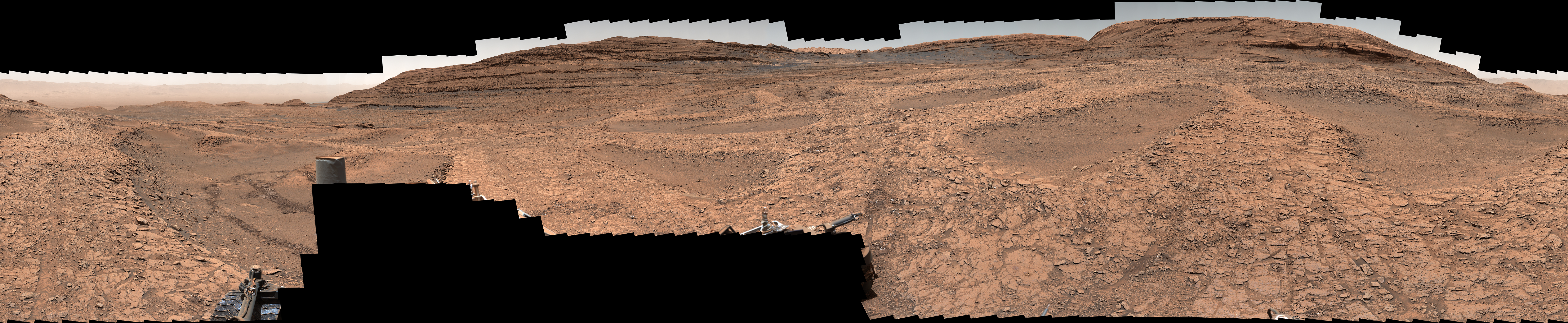
NASA's Curiosity and Perseverance rovers have released two new 360-degree panoramas of Mars, stitched together from thousands of images captured between late 2025 and early 2026. The imagery highlights the complementary nature of the missions as they explore areas billions of years old, filling in missing details about the planet's formation, watery past, and potential for life.
Located 2,345 miles apart on the Martian surface, the rovers are effectively time-travelling in opposite directions. Curiosity, which has been ascending Mount Sharp in Gale Crater since 2012, is reaching ever-younger terrain in the foothills of the mountain. In contrast, the five-year-old Perseverance is venturing into some of the oldest landscapes in the entire solar system.
Curiosity's new panorama, assembled from 1,031 images taken between November 9 and December 7, 2025, offers a detailed look at a region filled with ancient boxwork formations. Resembling giant spiderwebs in orbiter images, these low ridges were created by groundwater that once flowed through large fractures in the bedrock, leaving behind erosion-resistant structures where minerals hardened the rock.
Perseverance's panorama focuses on a location nicknamed "Lac de Charmes," situated outside the rim of Jezero Crater. Stitched from 980 images captured between December 18, 2025, and January 25, 2026, the 360-degree view captures the Jezero rim and ancient rocks around the crater, providing a stark contrast to the younger terrain being mapped by its counterpart.
While today both landscapes appear as frigid deserts, the images reveal evidence of a more dynamic past. Curiosity continues its climb up Mount Sharp, moving through layers of sediment deposited in ancient lakes, ponds, and streams. This upward progression allows the rover to analyse geological strata that record the transition from wetter eras to drier conditions over billions of years.
Perseverance, meanwhile, continues its hunt for signs of ancient microbial life within Jezero Crater, where a river once fed a lake. The rover has collected 23 intact rock cores, storing them in metal tubes on board or in a backup depot awaiting return to Earth for advanced analysis, while Curiosity continues to pulverise samples for on-site investigation.
Managed for NASA by Caltech's Jet Propulsion Laboratory in Southern California, both missions remain focused on unravelling the secrets of Mars. As Curiosity moves past the boxwork region into layers enriched in salty minerals called sulfates, and Perseverance heads toward exceptionally old terrain such as Singing Canyon, the dual exploration strategy promises to deepen our understanding of the Red Planet's history.