NASA reveals lunar crater formed by SpaceX Falcon 9 debris
New high-resolution imagery from the Lunar Reconnaissance Orbiter captures the 60-foot-wide scar left by the upper stage of a SpaceX Falcon 9 rocket after it collided with the Moon in August.
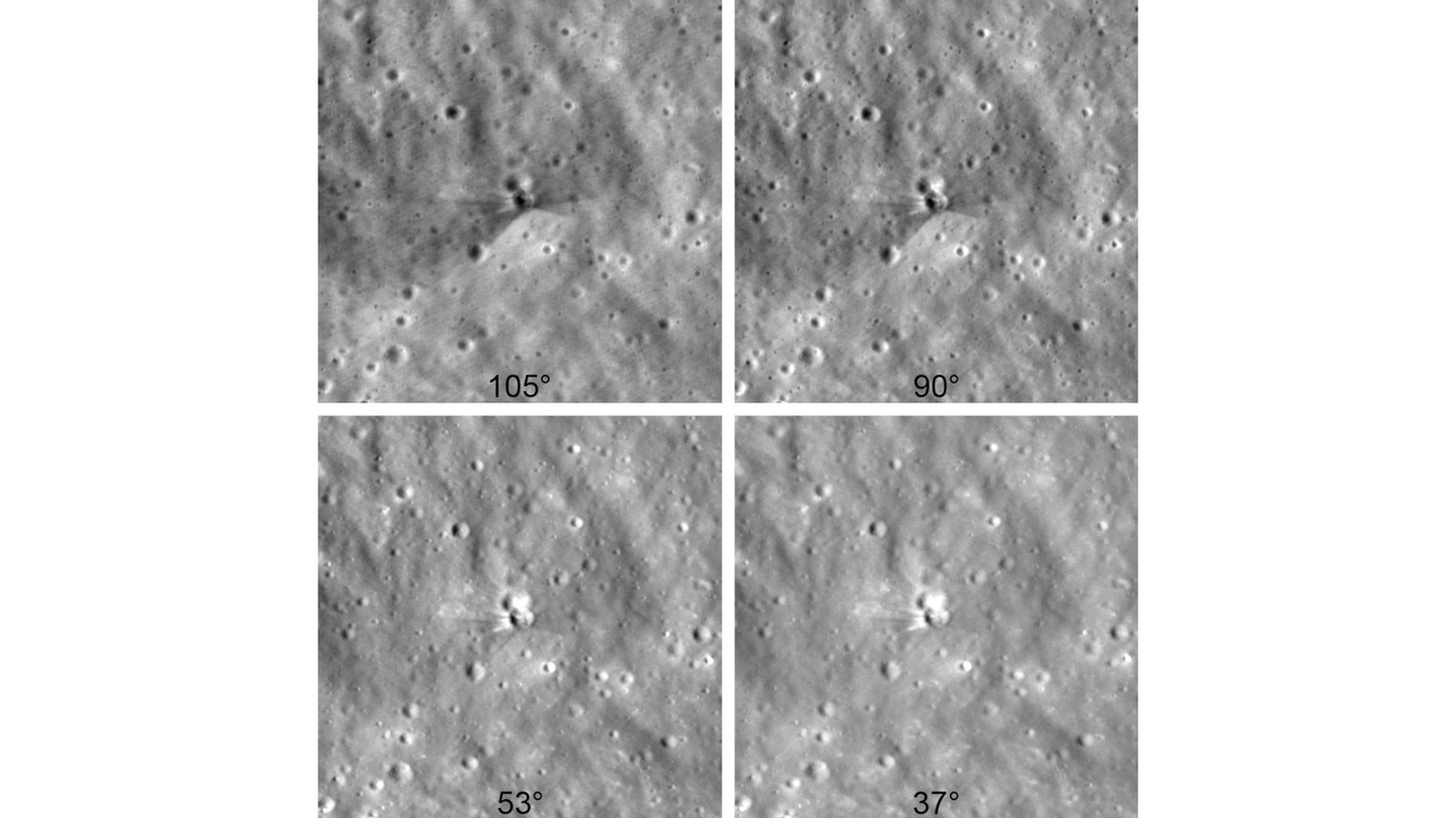
NASA has released new imagery from the Lunar Reconnaissance Orbiter (LRO) confirming the presence of a crater on the lunar surface created by the upper stage of a SpaceX Falcon 9 rocket. The images, captured between August 11 and 12, show the impact site resulting from a collision that occurred in the early hours of August 5.
The rocket stage, which had remained in space since the January 15, 2025 Blue Ghost mission, struck the lunar surface at approximately 5,400 mph. The high-velocity impact excavated a crater measuring 60 feet in width and 12 feet in depth, according to NASA’s calculations.
Acquiring the images required precise manoeuvring by NASA engineers. To capture the site, the LRO had to be tilted sideways so its Narrow-Angle Camera pointed downward from an altitude of 60 miles. The alignment process took six days, necessitated by the spacecraft’s rapid two-hour orbit and the Moon’s rotation.
The released photos reveal a distinct darker streak radiating from the crater, composed of older surface materials altered by solar winds and cosmic rays. Lighter materials visible near the rim are inferred to have been ejected from deeper underground during the impact.
Independent astronomer Bill Grey and his colleagues had predicted the crash in April using orbit-computing software and a physics simulator. They estimated the impact would be minimal for the upper stage, which weighed around 4,000 kilograms and measured 39 feet long. The stage lacked sufficient fuel to return to Earth after delivering landers to orbit and was eventually drawn to the Moon by gravity and solar activity.