NASA releases imagery as 2026 total solar eclipse sweeps across Spain
The Moon passed between the Sun and Earth on Wednesday, plunging parts of Greenland, Iceland, northern Russia, the Atlantic, Spain, and Portugal into darkness, while partial views were seen across the Americas and Europe.
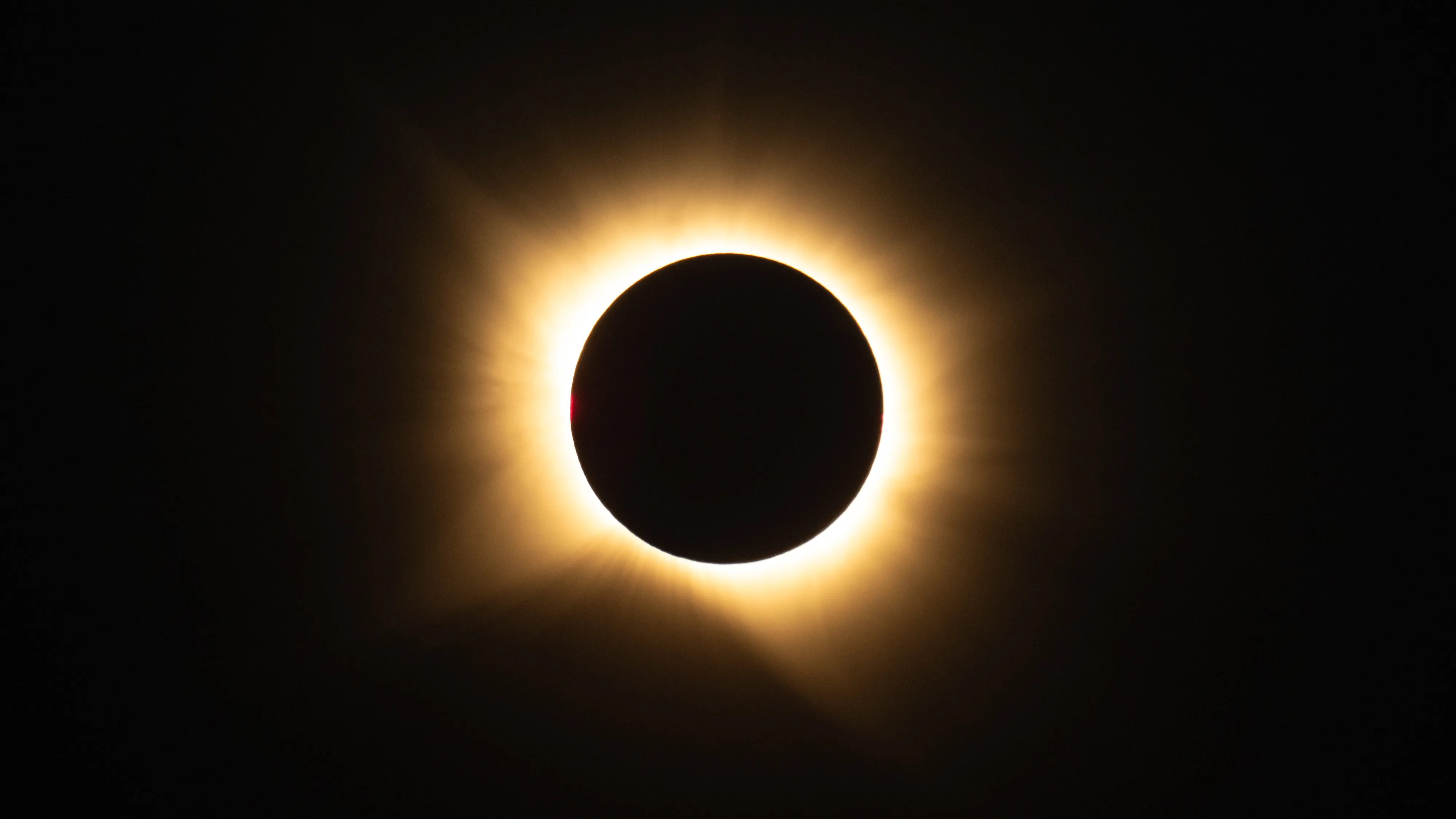
A total solar eclipse occurred on Wednesday, 12 August 2026, traversing the Northern Hemisphere and drawing significant public attention to parts of Europe and the Atlantic. The celestial event, where the Moon passed directly between the Sun and Earth to completely block the solar face, swept across Greenland, Iceland, northern Russia, the Atlantic Ocean, Spain, and a small corner of Portugal.
NASA released an image article featuring a photograph of the eclipse captured in San Millán de los Caballeros, Spain. The agency invited the public to relive the event on its YouTube channel, providing digital access to the phenomenon that marked the first total solar eclipse visible in northern Spain since 2006.
While the path of totality was limited to the regions listed above, a partial eclipse was visible across a broader geographic area. Observers in parts of the United States, most of Canada, much of Europe, and northwest Africa were able to witness the Moon partially obscuring the Sun.
The event provided opportunities for scientific observation of the Sun’s corona, a layer of the Sun’s atmosphere that is typically obscured by the star’s bright surface. The eclipse also drew large crowds to Iceland and Spain, where the darkness accompanying the celestial event was noted by international news outlets.
However, the influx of visitors seeking to witness the eclipse has triggered significant logistical pressures in rural parts of northern Spain. Reports indicate that the volume of eclipse tourism has strained local infrastructure in areas not typically equipped to manage such large-scale, transient populations.