NASA releases composite image of Tarantula Nebula
A new image combining observations from Chandra, James Webb and Hubble shows the Tarantula Nebula’s honeycomb-like gas and dust, while analysis suggests hot gas may be escaping the region.
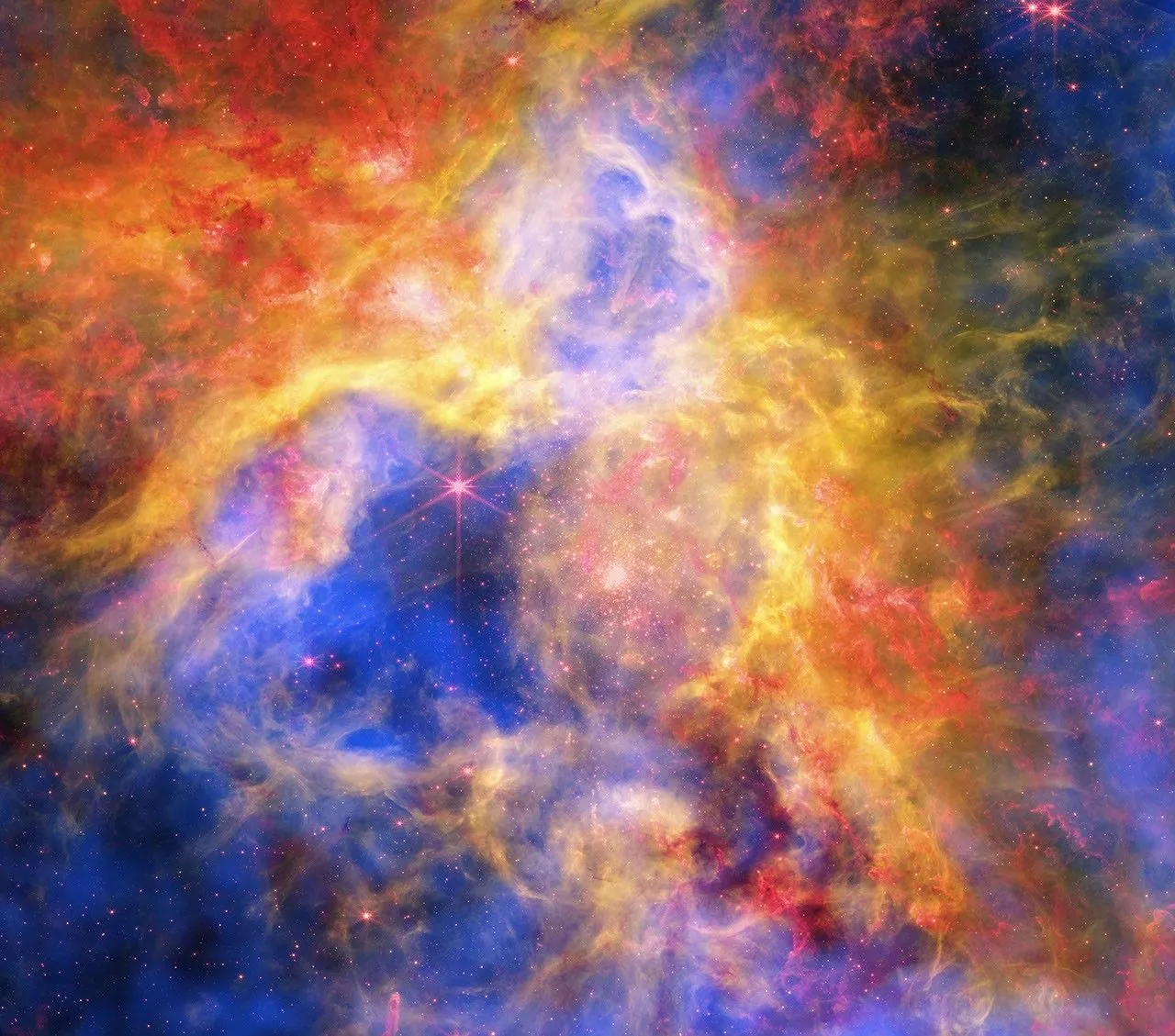
NASA has released a composite image of the Tarantula Nebula, also known as 30 Doradus, combining data from the Chandra X-ray Observatory, the James Webb Space Telescope and the Hubble Space Telescope. The image, dated 11 August 2026, reveals the nebula’s structure within the Large Magellanic Cloud, a small neighbour galaxy to the Milky Way located approximately 160,000 light-years from Earth.
The Tarantula Nebula contains thousands of young stars embedded in a vibrant honeycomb-like structure of gas and dust. The composite view integrates observations across multiple wavelengths, with X-ray data contributed by NASA/CXC/Ohio State Univ./J. Rodriguez et al, infrared data from NASA/ESA/CSA/STScI, and optical data from NASA/ESA/STScI. Image processing was handled by NASA/CXC/SAO/P. Edmonds.
By studying the combined data from Chandra, Hubble and Webb, alongside data from the agency’s retired Spitzer Space Telescope, astronomers have identified potential mechanisms for energy loss within the nebula. Analysis suggests the Tarantula may be losing energy from several sources, specifically including hot gas escaping from the region.
The release highlights the collaborative nature of modern astronomical observation, utilising active NASA observatories alongside retired instruments to create a comprehensive picture of star-forming regions. The image provides a detailed look at one of the most active star-forming regions in the Local Group of galaxies.
This latest release from NASA adds to the growing body of knowledge about the Large Magellanic Cloud and its interaction with the Milky Way. The multi-wavelength approach allows scientists to study different physical processes occurring within the nebula, from high-energy X-ray emissions to the cooler infrared signatures of dust and gas.