NASA releases audio excerpt from Artemis II Mission Interface Manager Kathleen Harmon
Kathleen Harmon, a systems engineer with the Jet Propulsion Laboratory, oversees the global array of radio antennas that keep the Artemis II spacecraft in contact with Earth.
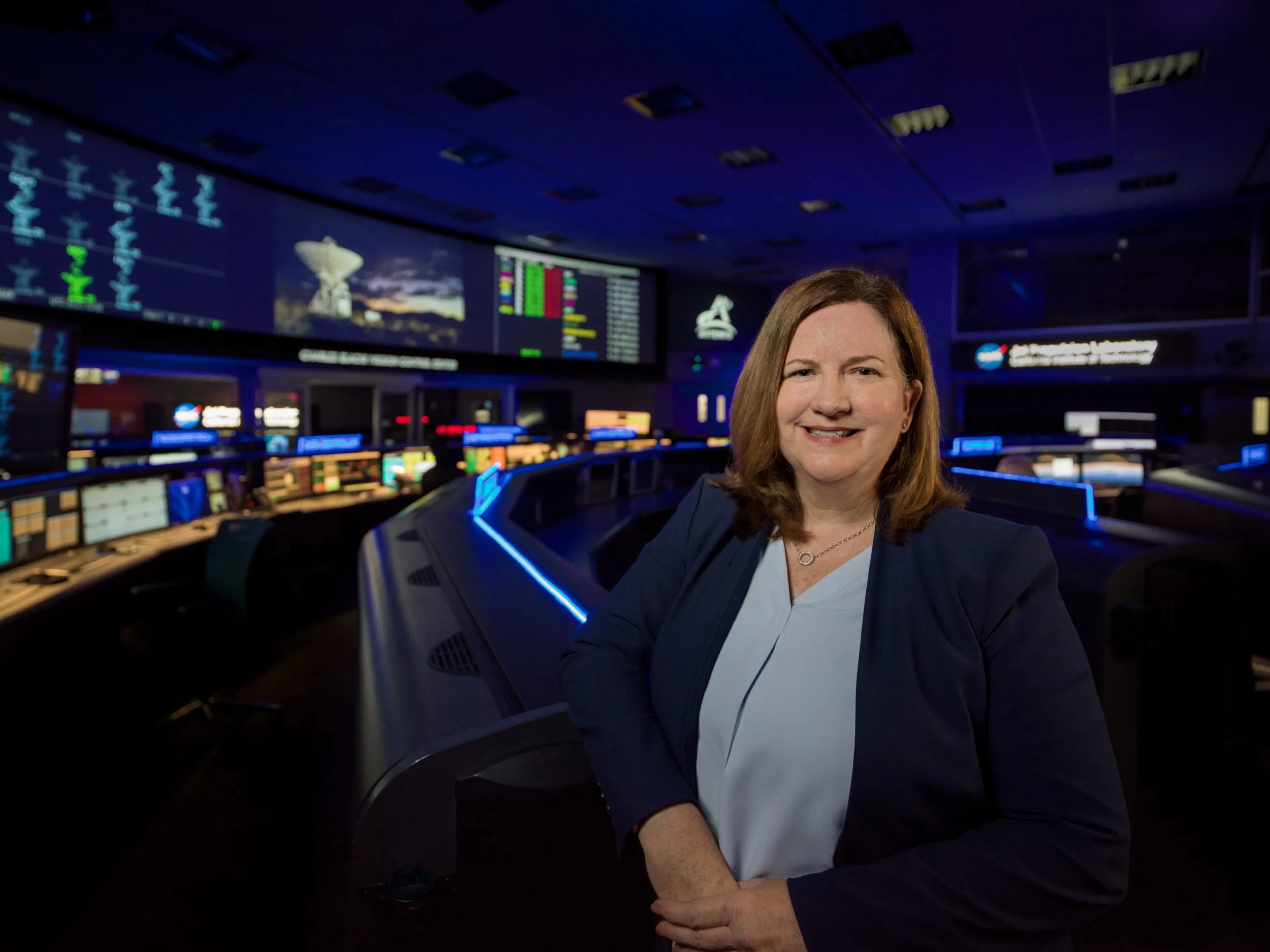
NASA has released an audio excerpt featuring Kathleen Harmon, who serves as the Artemis II Mission Interface Manager for the Deep Space Network. In the recording, Harmon reflects on her career trajectory, noting that witnessing Apollo launches on television as a child inspired her to join the agency. She now oversees the international array of radio antennas that provide critical communication links for spacecraft across the solar system.
Harmon details her current responsibilities in preparing the Deep Space Network to support the Artemis II mission, which involves coordinating with international partners to ensure continuous communication with the spacecraft as it travels around the Moon. With a background as a systems engineer and decades of experience with NASA, she has previously supported major missions ranging from Juno to Voyager. Her work ensures the network is ready for the crewed spacecraft returning to the Moon, requiring robust communication links that the Deep Space Network provides in partnership with the Near Space Network.
The Deep Space Network, managed by the Jet Propulsion Laboratory in Southern California, is the largest scientific telecommunications system in the world, supporting over 40 deep space missions. Harmon describes the operational strategy of the network as "follow the Sun," where one of the three global complexes is always in daylight and in control to ensure constant connectivity. At any given moment, the complex currently experiencing daylight is "in control" of the entire network to maintain consistent spacecraft connectivity regardless of where the spacecraft is in the solar system.
During the Artemis II mission, the network supported the spacecraft 24 hours a day, seven days a week, utilising two antennas—a prime and a backup—while simultaneously maintaining contact with other robotic rovers and spacecraft throughout the solar system. Harmon illustrates the importance of this connection by comparing it to a car without GPS or a cellphone, where the network provides a lifeline to spacecraft so they can talk to Earth and send back amazing science data, images, and videos from Mars rovers, space telescopes, orbiters, and more.
While the network supports NASA's return to the Moon, working in partnership with the Near Space Network, it will continue to maintain a close watch on NASA's fleet of spacecraft at the Moon and beyond. Harmon notes that the Deep Space Network serves as a critical component for NASA's Moon-bound Artemis missions and continues to support the agency's fleet of spacecraft beyond the Moon. She was responsible for ensuring the Deep Space Network was prepared to support the Artemis II spacecraft before launch, a task requiring careful coordination and collaboration across international partners.
Harmon's contributions to the Artemis program remind her of what first inspired her to join NASA. "Apollo was my earliest memory," she said, recalling her time as a very small child when the Apollo missions happened. The audio excerpt highlights her role in ensuring the Deep Space Network remains prepared to support the Artemis II mission and other deep space operations, coordinating with global partners to maintain continuous contact with spacecraft.