NASA profiles Artemis EVA training lead Scott Wray
Scott Wray, who has spent over 16 years at NASA, now oversees the development of training programmes to prepare astronauts for lunar surface operations, a challenge the agency has not faced in more than 50 years.
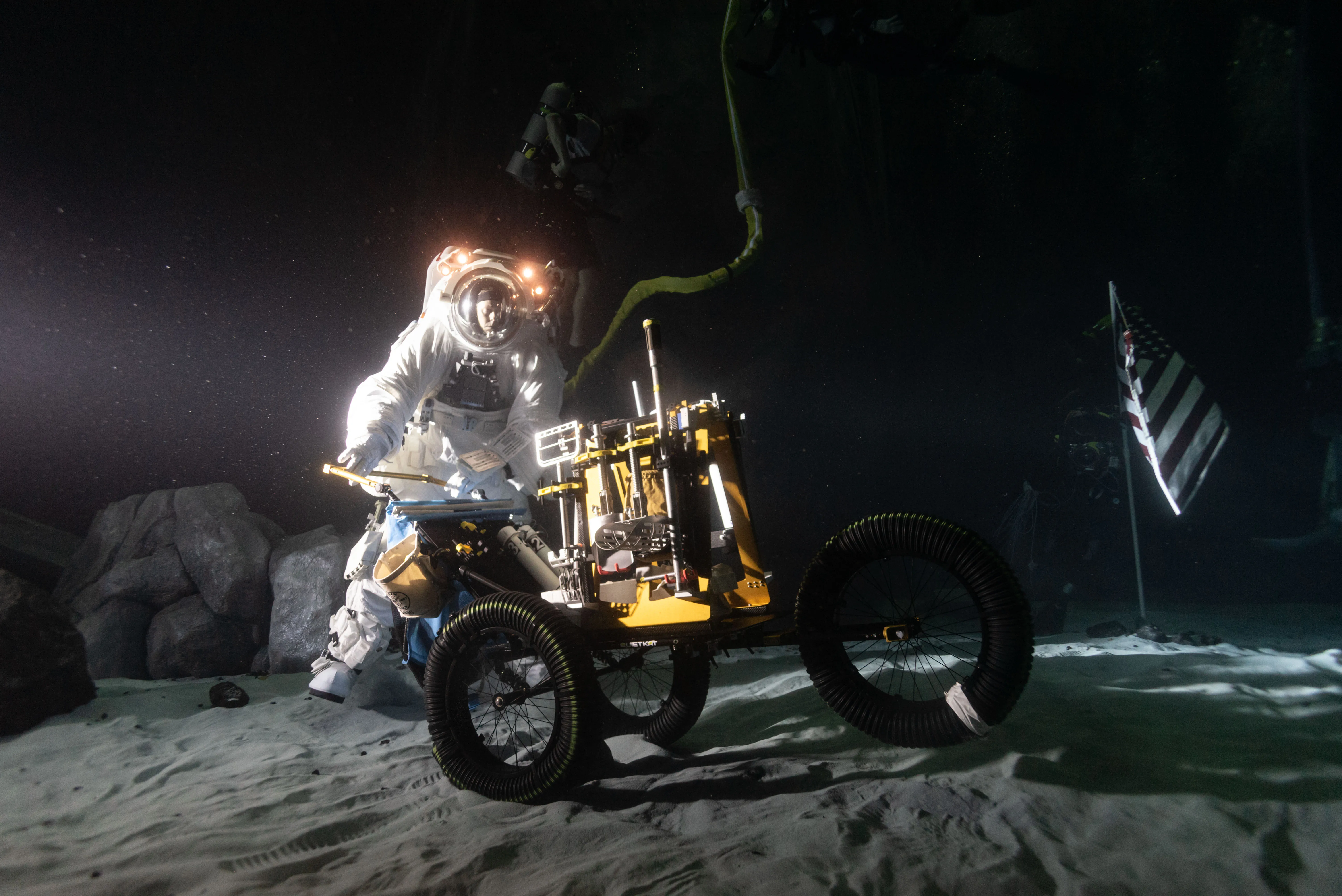
NASA has published a profile of Scott Wray, the Artemis Extravehicular Activity (EVA) training lead at Johnson Space Center. Wray oversees the development of training programmes to prepare astronauts for lunar surface operations, integrating geology and complex EVA techniques. The article details his career history, including his role in the 2013 Luca Parmitano spacesuit incident, and his work adapting EVA protocols for the Artemis missions.
Wray’s responsibilities have shifted to preparing Artemis crew members for missions to the Moon, a challenge NASA has not faced in over 50 years. The new curriculum integrates geology, covering topics such as impact cratering, volcanology, sample collection, and traverse planning. Training environments include the Neutral Buoyancy Laboratory, the Active Response Gravity Offload System, virtual reality, lighting laboratories simulating the Moon’s South Pole conditions, and suit simulators.
Wray transitioned to a civil servant position in 2021 after working under various contracts. Wray recently performed on stage in productions of “Rock of Ages” and “Something Rotten,” inspired by his daughter.
Wray has more than 16 years of experience at NASA’s Johnson Space Center, having started as a child fascinated by spaceflight and later studying aerospace engineering at Embry-Riddle Aeronautical University. He participated in NASA’s Contractor Co-op Program with United Space Alliance and worked on procedures for the Space Shuttle and International Space Station programs. The 2013 incident involving ESA astronaut Luca Parmitano, where water filled his spacesuit helmet, taught Wray the importance of vigilance and adaptability in human spaceflight.
Wray previously worked as a dog mushing guide in Alaska, which he says honed his expeditionary skills and ability to make repairs in remote conditions. The Artemis missions involve a completely new spacesuit and environment, requiring astronauts to walk rather than translate with their hands as done on the space station.