NASA outlines Moon Base strategy at FIRST Robotics Championship
At the 2026 FIRST Robotics World Championship in Houston, NASA engaged 51,000 attendees while detailing its permanent lunar outpost vision and technical support for student teams.
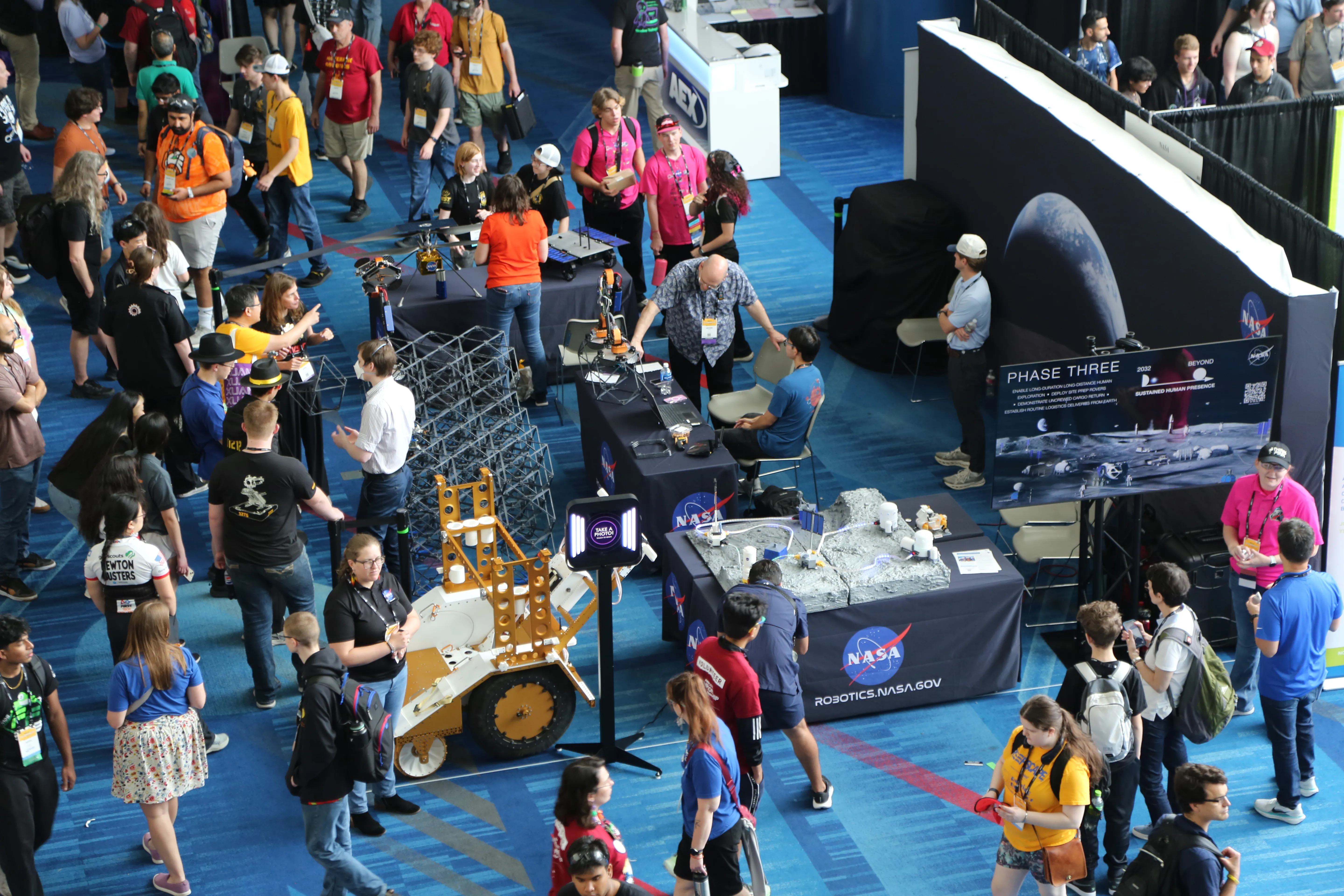
NASA presented its strategy for establishing a permanent lunar outpost, designated as Moon Base, at the 2026 FIRST Robotics World Championship in Houston. The agency used the event, which convened more than 1,000 student teams, to engage 51,000 students, parents, and mentors through interactive exhibits and discussions. The permanent outpost is described as a hub for scientific research and technology demonstration, intended to lay the foundation for future missions to Mars and beyond.
Phase 1 of the Moon Base plan focuses on a rapid series of robotic and early uncrewed missions to scout and prepare for surface operations prior to crewed Artemis missions. This phase includes an accelerated schedule of Commercial Lunar Payload Services flights, with up to 30 robotic lunar landings targeted for 2027. These missions aim to expedite the delivery of science and technology payloads, including rovers, hoppers, and drones, to the lunar surface.
A physical model of the Moon Base served as a focal point of the agency’s exhibit, alongside displays highlighting key innovations in lunar robotics. NASA emphasised that its robotics programme will play a critical role in supporting the ambitious plan for a long-term presence on the Moon, offering opportunities for the next generation of engineers and technologists to contribute to the agency’s vision.
Multiple NASA centres participated in the event, bringing unique technologies and expertise to the exhibit floor. Participating facilities included Johnson Space Center in Houston; Kennedy Space Center in Florida; Langley Research Center in Virginia; Ames Research Center in California; Michoud Assembly Facility in New Orleans; Armstrong Flight Research Center in Edwards, California; Glenn Research Center in Cleveland; Goddard Space Flight Center in Greenbelt, Maryland; White Sands Test Facility in Las Cruces, New Mexico; and Wallops Flight Facility in Wallops Island, Virginia.
Since 1996, NASA has supported and mentored FIRST Robotics teams across the country. This year, the agency sponsored more than 160 teams, with 50 receiving direct NASA mentorship. NASA Johnson Space Center specifically mentored six teams, two of which advanced to the FIRST Championship. To support the competitors, NASA operated a Mobile Machine Shop that completed over 600 repairs for teams during the event.