NASA Launches 'Shock Detectives' to Decode Solar Wind Boundaries
Volunteers will help sort chaotic and peaceful plasma regions using over a decade of Magnetospheric Multiscale mission data to improve understanding of space weather impacts.
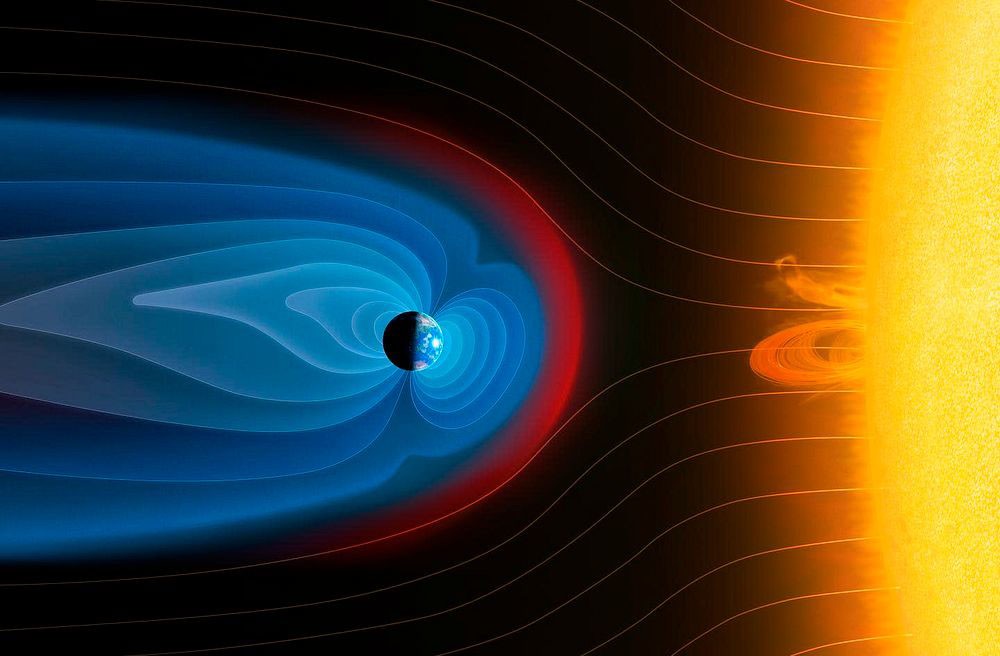
NASA has launched the 'Shock Detectives' citizen science project, inviting volunteers to assist in analysing data from the Magnetospheric Multiscale (MMS) mission. The initiative seeks to classify regions of the Earth-Sun bow shock as either 'chaotic' or 'peaceful', aiming to clarify how solar wind energy interacts with Earth’s magnetosphere.
The Sun emits a high-speed stream of charged particles known as solar wind. Approximately 56,000 miles (90,000 kilometres) in front of Earth, this wind collides with the planet’s protective magnetic field, creating a long-lasting shock wave that stretches for hundreds of thousands of miles. This boundary, known as the bow shock, is where the solar wind encounters Earth’s magnetic shield.
At this boundary, the magnetic field can cause the solar wind to become messy and dynamic, described as 'chaotic', or leave it smooth and stable, termed 'peaceful'. When chaotic plasma dominates, more energy may reach Earth's magnetosphere, which could potentially lead to disruptions in GPS signals, communications, and power grids. However, scientists do not yet fully understand the mechanisms that cause plasma to shift between these states or the precise impact of these changes on energy transfer.
The project utilises over ten years of data collected by the MMS mission, a volume that exceeds what scientists can analyse alone. Participants will help sort this data, providing researchers with crucial clues about the transition region located just outside the magnetic shield. This region can be up to 10 miles (17 kilometres) thick and is critical for understanding plasma behaviour near the shock.
The findings from 'Shock Detectives' are expected to aid understanding of stellar systems beyond our own, helping scientists determine how the solar wind of other stars impacts their orbiting planets. The initiative is closely connected to another NASA-supported project, 'Space Umbrella', which uses MMS data to examine the broader boundary between Earth’s magnetic shield and the surrounding solar wind. Together, these efforts aim to build a more complete picture of Earth’s space environment.