NASA identifies rare 222-metre crater on the Moon
The McGetchin crater is believed to have formed after a comet or asteroid struck the Moon in spring 2024, in an impact scientists estimate occurs about once every 132 years.
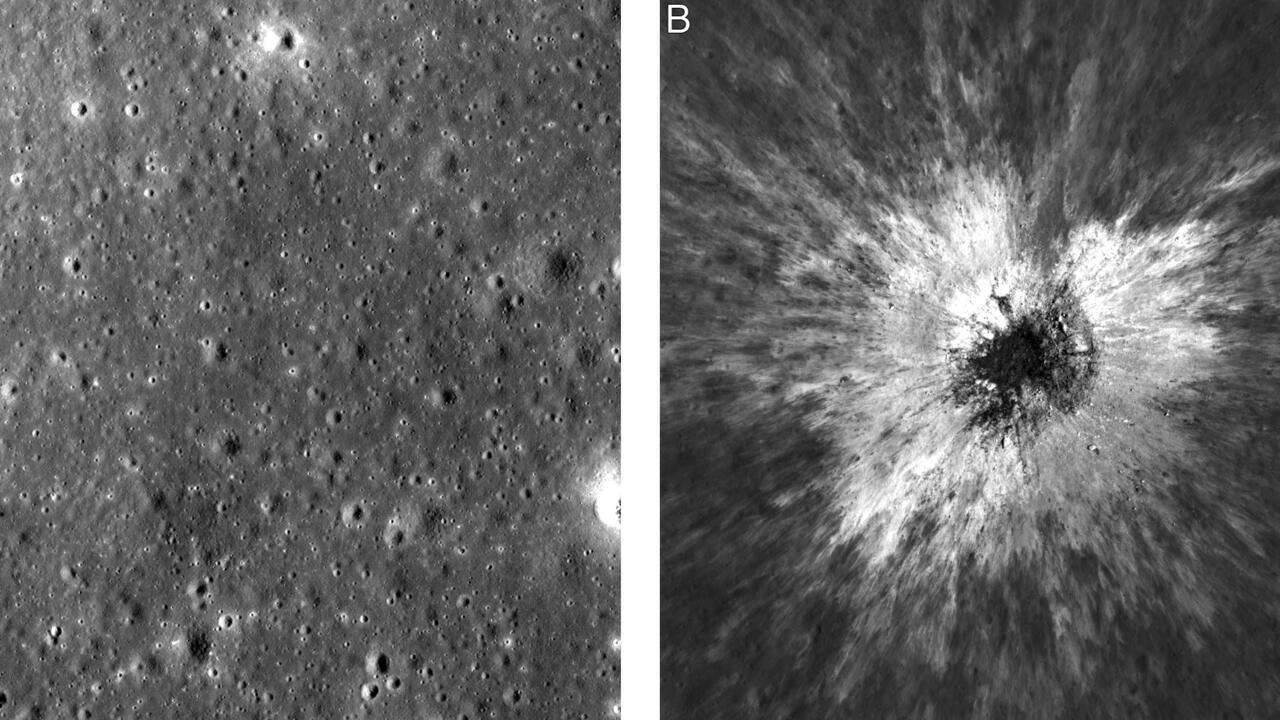
NASA researcher Robert Wagner has identified a newly formed crater on the Moon that measures 222 metres across. Named McGetchin, the crater was detected in a new scan by NASA’s Lunar Reconnaissance Orbiter.
Scientists believe the crater was created when a comet or asteroid hit the lunar surface in spring 2024. The impactor is estimated to have been comparable in size to a three-to-six-storey building, although its identity and the precise date of the impact remain unknown.
NASA said impacts of this scale occur about once every century or longer. Researchers have estimated the recurrence interval at roughly once every 132 years, a statistical assessment rather than a directly observed cycle.
The crater went undetected despite the Lunar Reconnaissance Orbiter observing the Moon since 2009. It appeared in the latest scan as a large bright spot surrounded by a dark halo.
Studies published in Science Advances describe the discovery as a rare opportunity to examine a fresh lunar impact. Researchers say analysing the crater’s formation could improve understanding of lunar geology and help inform planning for future crewed missions.
The Moon’s negligible atmosphere means space debris is not significantly slowed or burned up before reaching the surface. Planned lunar missions by the United States and China could benefit from the evidence provided by newly formed craters.