NASA Glenn marks eight decades of flight research ahead of operational shift
From validating early jet engines to testing hydrogen fuel systems, NASA’s Glenn Research Center has spent more than 80 years bridging laboratory theory and airborne performance, with a major restructuring of flight operations set for October 2025.
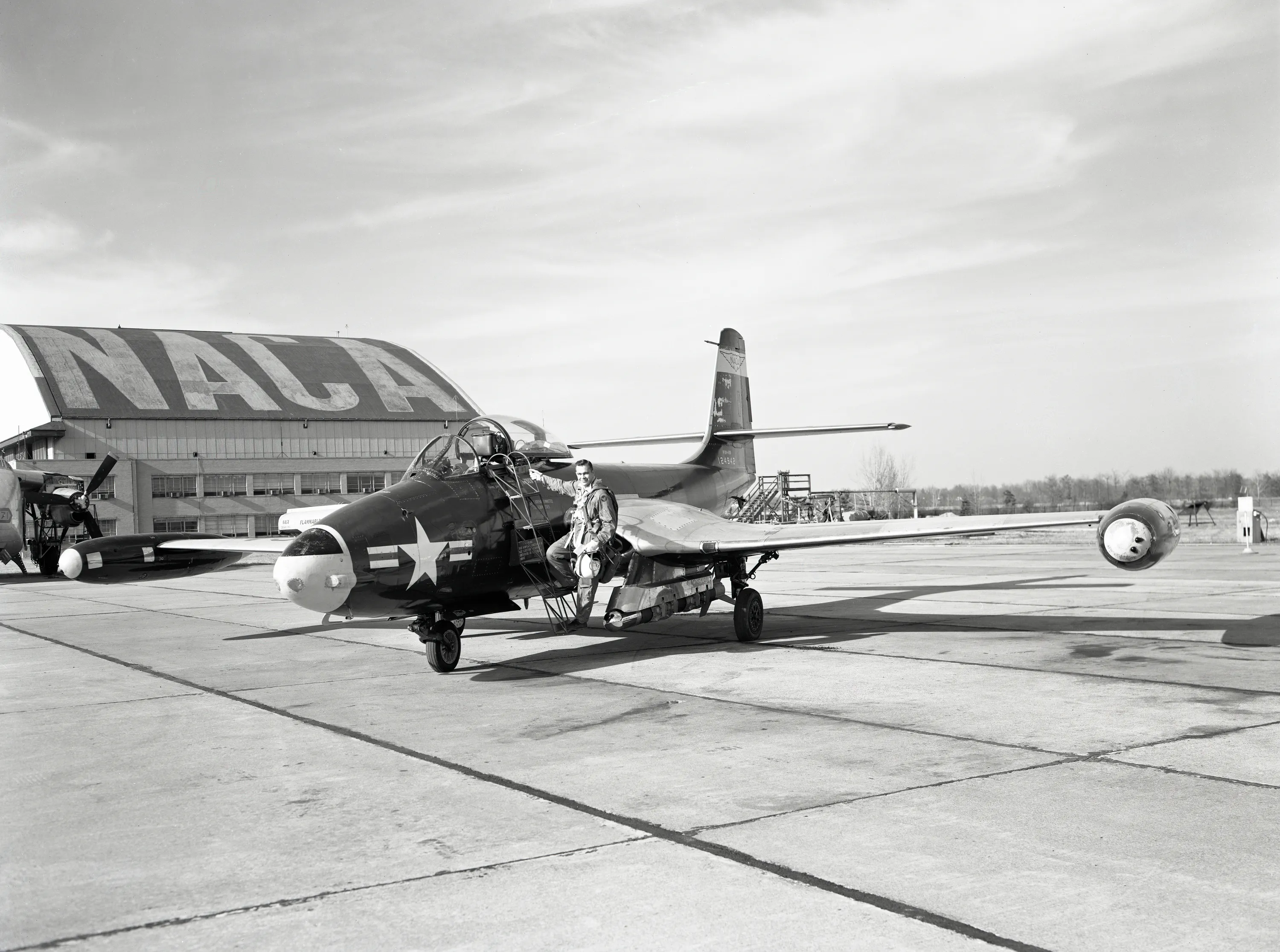
NASA’s Glenn Research Center in Cleveland is marking more than 80 years of flight research, tracing its origins to the 1940s when it operated as the Aircraft Engine Research Laboratory under the National Advisory Committee for Aeronautics. For decades, the centre has conducted flight tests to validate technologies, transforming laboratory discoveries into practical aerospace innovations.
The centre’s early work in the mid-to-late 1940s helped make early jet and ramjet engines practical. Pioneering pilots including Howard Lilly, Joseph Walker, William Swann, and William “Ed” Gough laid the groundwork for future astronauts Neil A. Armstrong and Fred Haise. Their efforts demonstrated how flight testing could bridge the gap between ground testing and full-scale flight, proving measurements needed to connect theory with performance.
Historical milestones include the successful testing of a hydrogen fuel system on a Martin B-57B Canberra aircraft between February and April 1957, which showed reliable operation and advanced efficiency. Since 1963, modified aircraft such as Learjets were used to test solar cell performance under conditions resembling space. For nearly 40 years, the De Havilland DHC-6 Twin Otter served as the primary aircraft for in-flight icing research, contributing to modern aviation safety standards.
Researchers also applied these airborne capabilities to environmental science, using the Twin Otter and S-3B Viking over the Great Lakes to track harmful algal blooms on Lake Erie. This data improved satellite systems used to monitor water quality. Additionally, microgravity research was advanced through in-flight testing on specially modified DC-9 aircraft using parabolic maneuvers to study fluids and materials in near-zero gravity.
Recent activities include optical communications studies. In 2024, Glenn’s Flight Operations used a Pilatus PC-12 NG aircraft to demonstrate optical communications via laser transmission across NASA’s legacy infrastructure. NASA further tested optical communications on the Artemis II mission, transmitting data from the Orion capsule to ground stations over a 10-day journey.
In October 2025, NASA streamlined flight operations by relocating aircraft to the Armstrong Flight Research Center in Edwards, California. This structural shift allows Glenn to continue collaboration on icing, propulsion, and communications research while centralising flight operations at the California facility.