NASA engineers confirm next-generation Mars helicopter rotors can exceed Mach 1
A unique wind tunnel configuration allowed rotor tips to surpass the speed of sound without structural failure, marking a significant leap beyond the subsonic limits of the Ingenuity mission.
Engineers at NASA's Jet Propulsion Laboratory have confirmed that next-generation rotor blades for Mars helicopters can operate at supersonic speeds without sustaining structural damage. The breakthrough comes from ground-based testing conducted in November 2025, which successfully pushed the aerodynamic limits of future Martian aircraft.
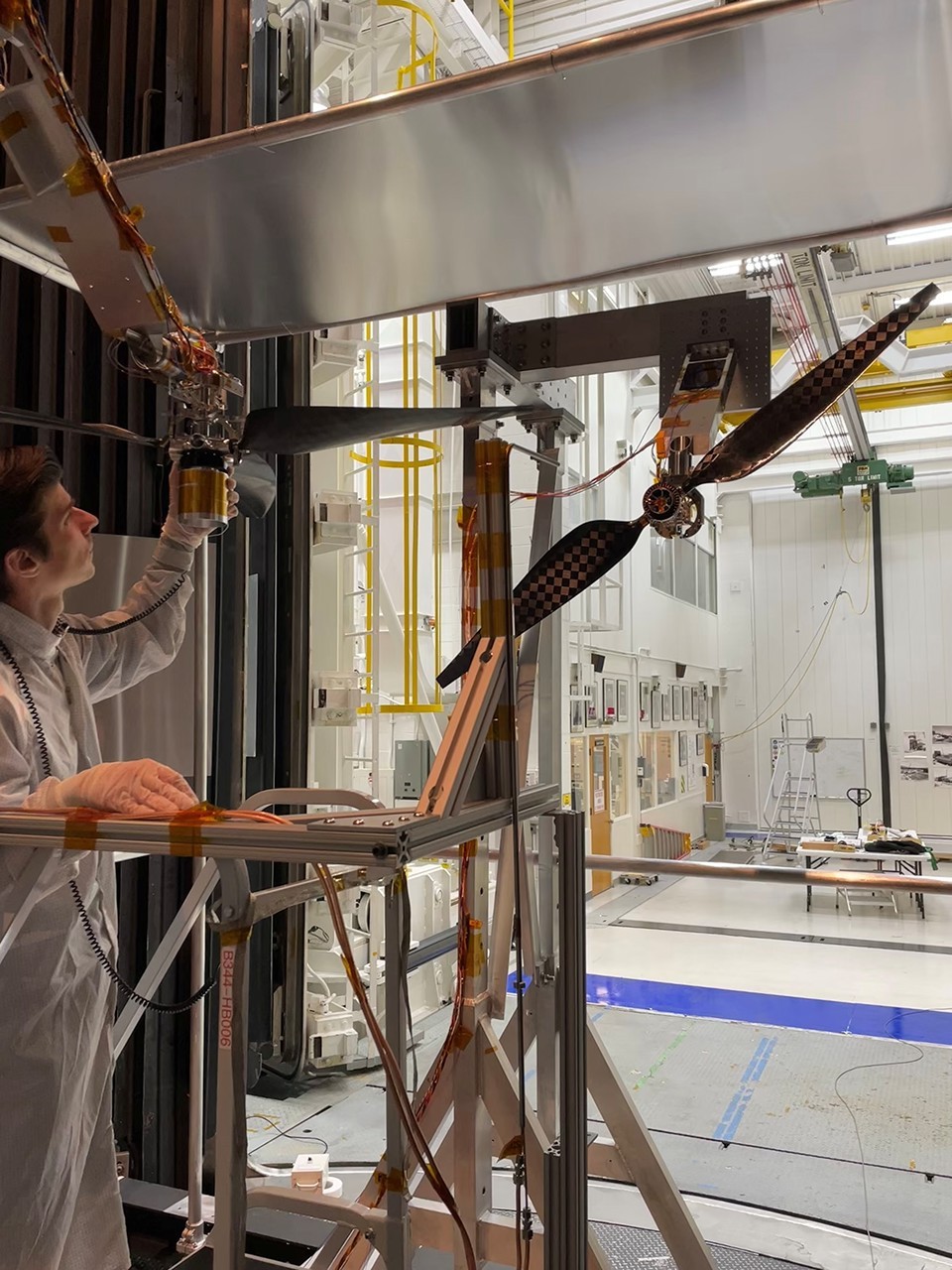
The trials took place within the 25-Foot Space Simulator at the laboratory in Southern California. To achieve the necessary velocity, researchers employed a specific configuration where a vertically aligned two-bladed rotor generated a powerful headwind against a horizontally suspended three-bladed test rotor. This setup allowed the tips of the next-generation rotor to accelerate beyond Mach 1, the speed of sound.
Data collected from the simulation indicates that the new design can surpass the sound barrier while remaining intact. This finding represents a substantial advancement over previous missions, such as the Ingenuity helicopter, which operated strictly within subsonic speed limits. The results suggest that future aerial vehicles on Mars could utilise significantly faster and more efficient flight profiles.
Engineer Jaakko Karras oversaw the inspection of the rotor blade prior to the high-speed trial. The testing was funded by the Mars Exploration Program, which aims to maximise the capabilities of future aircraft operating at the Red Planet. The program is managed by the Jet Propulsion Laboratory, a division of the California Institute of Technology in Pasadena, for NASA's Science Mission Directorate.
While the ground-based simulation provides strong evidence of the rotor's durability at supersonic speeds, the specific duration of the exposure or the exact margin of safety beyond Mach 1 was not detailed in the initial reports. Nevertheless, the successful completion of the test campaign marks a critical step toward expanding the operational envelope for robotic flight on Mars.