NASA-developed 3D printing technique transforms terrestrial construction
A Freeform 3D Printing process, originally supported by NASA for lunar habitat construction, is now being used to manufacture lightweight, efficient wall panels and cladding for buildings on Earth.
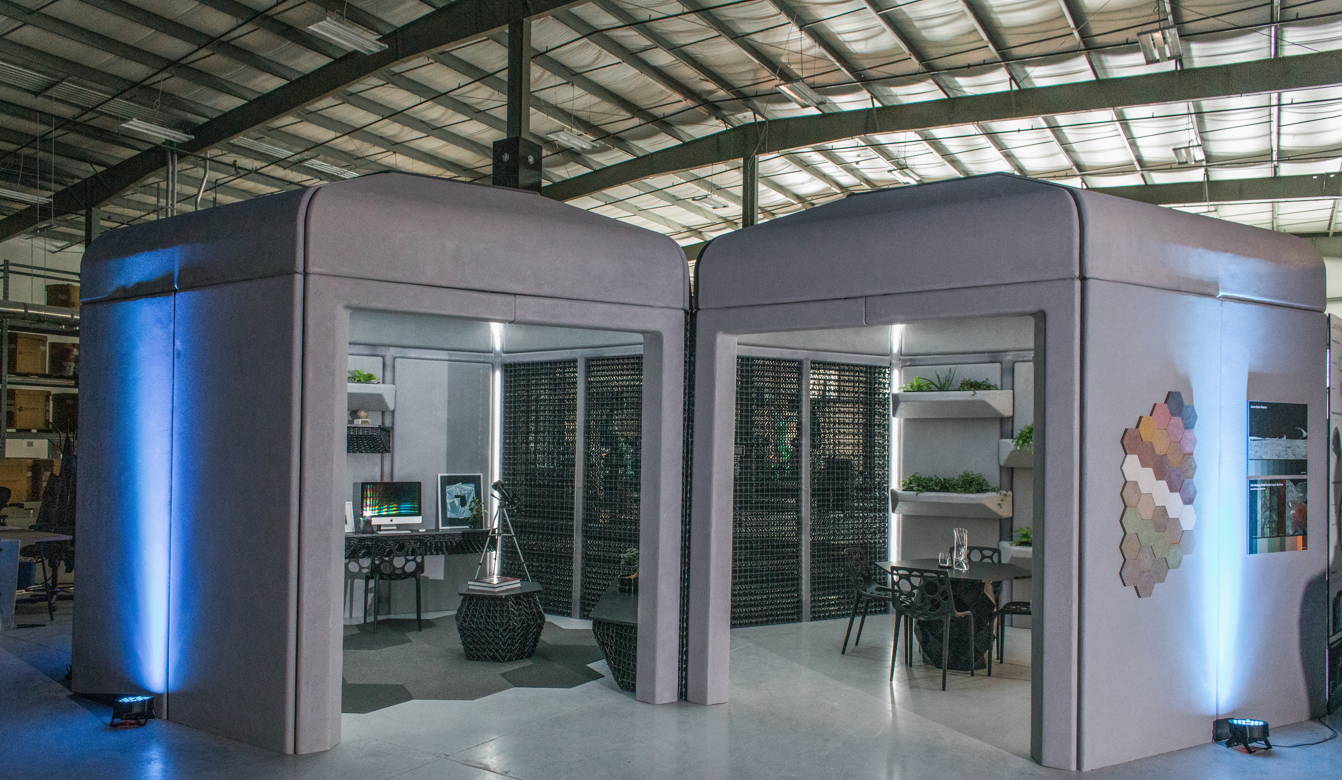
Branch Technology Inc. of Chattanooga, Tennessee, has applied a Freeform 3D Printing process, originally supported by NASA for lunar habitat construction, to manufacture modular building elements such as wall panels and cladding. The technique creates lightweight lattice structures, reducing material usage compared to solid printing. The technology stems from the company's work on NASA's 3D-Printed Habitat Challenge, utilising basalt fibre-reinforced plastic and innovative nozzle designs for terrestrial applications.
Instead of building structures layer by layer, the company has developed a process that creates shapes with lightweight lattice structures that can be filled or covered. This approach allows for the production of visually interesting, modular building elements. David Goodloe, who leads Branch Technology’s Advanced Concepts team and manages the company’s NASA collaborations, stated that the process eliminates a significant amount of material that would otherwise be printed solid all the way through.
The technology originated from Branch Technology’s participation in NASA’s 3D-Printed Habitat Challenge, a public competition focused on building habitats for deep space exploration. In 2017, the company won Phase II of this challenge. The competition required teams to consider materials similar to Martian surface dust and rocks, as well as mission recyclables. This led Branch to develop a basalt fibre-reinforced plastic, which informed the optimal loading recipe for its terrestrial 3D printing 'inks'.
Tracie Prater, a technical manager at NASA’s Marshall Spaceflight Center in Huntsville, Alabama, served as a subject matter expert for the challenge and collaborated with Branch Technology on a cooperative agreement regarding on-demand fabrication for interior systems. Prater noted that while the challenge focused on large habitat structures, the cooperative agreement addressed how to populate pressurised habitats with systems and supplies through novel designs.
NASA’s parameters for the habitat challenge led Branch to develop nozzles capable of extruding unique lattice structures as well as more traditional layers. The company uses this dual capability frequently in its wall panels, where traditionally printed sections offer solid substrates for attaching fasteners. These innovations exemplify the purpose of NASA’s Technology Transfer program within the Space Technology Mission Directorate, which uses space-based solutions to improve life on Earth. For 50 years, NASA has documented the everyday benefits of space technology through the agency’s Spinoff publication.