NASA deploys aircraft and balloons to study solar corona and atmosphere during August 2026 eclipse
A NASA-funded campaign will utilise a high-altitude jet and scientific balloons to investigate solar dynamics and atmospheric changes during the total solar eclipse on 12 August 2026.
NASA-funded science teams will conduct research during the total solar eclipse on Wednesday, 12 August 2026, as it sweeps over Greenland, Iceland, and Spain. The mission involves a coordinated effort to study the Sun’s dynamics and how the temporary darkening of skies affects Earth’s atmosphere. Kelly Korreck, eclipse program manager at NASA Headquarters in Washington, noted that the unique perspective from Earth during a total solar eclipse allows scientists to study the Sun’s corona in ways not possible from elsewhere in the solar system.
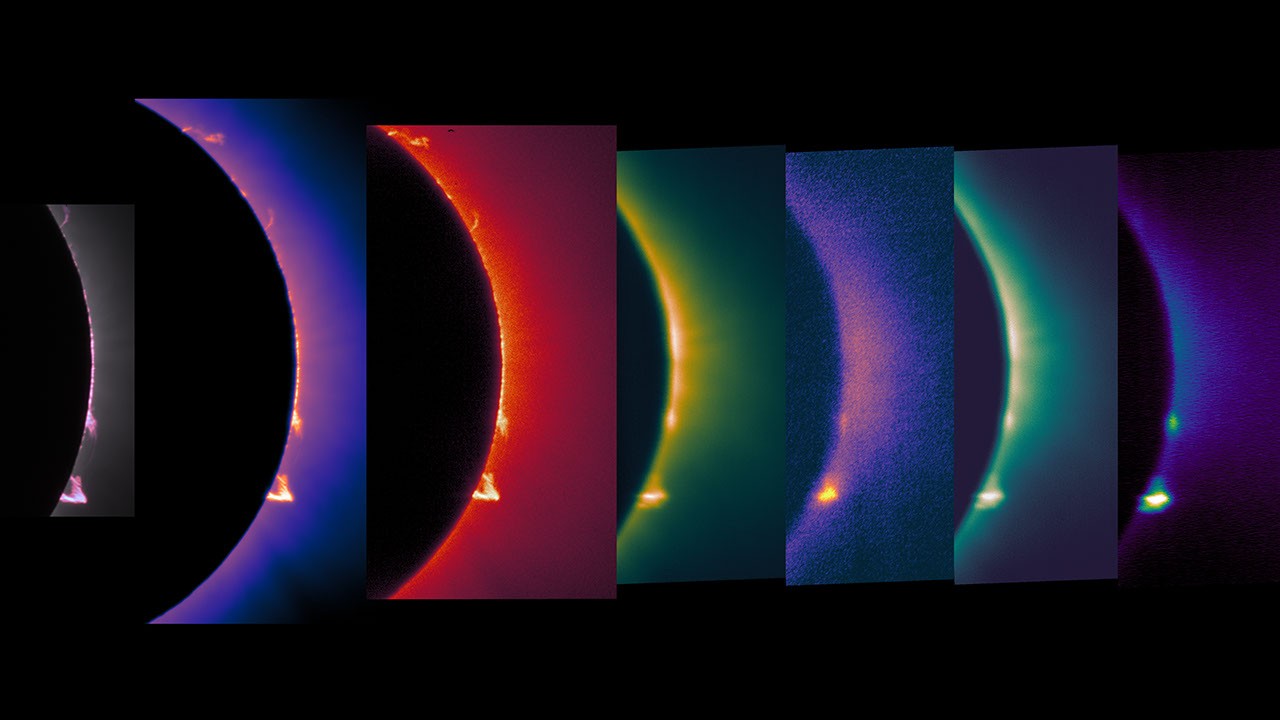
A NASA WB-57 high-altitude research aircraft will chase the Moon’s shadow at 50,000 feet to capture high-resolution images of the Sun’s corona using the SCIFLI Multispectral Airborne Imager (SAMI). The aircraft will fly at 460 miles per hour, extending the observation time of the corona to nearly three minutes, compared to the maximum two minutes and 18 seconds visible from the ground. The altitude also allows the cameras to observe some infrared wavelengths that are absorbed by the lower atmosphere before reaching the ground.
The SAMI instrument, developed by the NASA Scientifically Calibrated In-Flight Imagery team at NASA’s Langley Research Center, includes a suite of four cameras capable of capturing at least 20 images per second. These images will help scientists investigate the formation of prominences, understand how the corona gets heated to nearly a million degrees, and examine the relationship between corona material and the solar wind. The instrument previously flew on a WB-57 during the total solar eclipse on 8 April 2024.
Amir Caspi of the Southwest Research Institute, the study’s principal investigator, stated that each total solar eclipse provides new opportunities to learn more about the corona because the Sun is always changing. His team is making enhancements for the 2026 campaign based on lessons learned in 2024, including adjusting exposure times to better capture bright features that were overexposed in previous imagery. The team will also leverage software developed since 2024 to process and analyse the data sooner than before.
Simultaneously, the Nationwide Eclipse Ballooning Project, led by Angela Des Jardins at Montana State University, will deploy scientific balloons in Iceland and Spain to study atmospheric changes. In Iceland, two teams will launch a total of 80 balloons to study how the eclipse affects Earth’s boundary layer, the part of the atmosphere that touches the ground. Scientists are investigating whether the boundary layer will collapse in Iceland in 2026, given that the days are long and nights are short in August, which may reduce nighttime influences compared to previous eclipses.
In Spain, three balloon teams will launch a total of six balloons with 360-degree cameras to image the eclipse shadow from above. These balloons will also include instruments designed to measure levels of ozone in the atmosphere, which requires sunlight to form. Similar balloon experiments showed that ozone decreased during totality in April 2024, and scientists are examining whether there will be differences in this eclipse due to the later time of day and different season. The experiment is funded by NASA’s Heliophysics Low Cost Access to Space Program.