NASA Crew Marks 200 Days in Simulated Mars Mission Amid Communications Blackout
Commander Ross Elder's crew has completed two-fifths of their 378-day CHAPEA mission, currently navigating a two-week period with no contact with mission control to mimic the realities of Mars exploration.
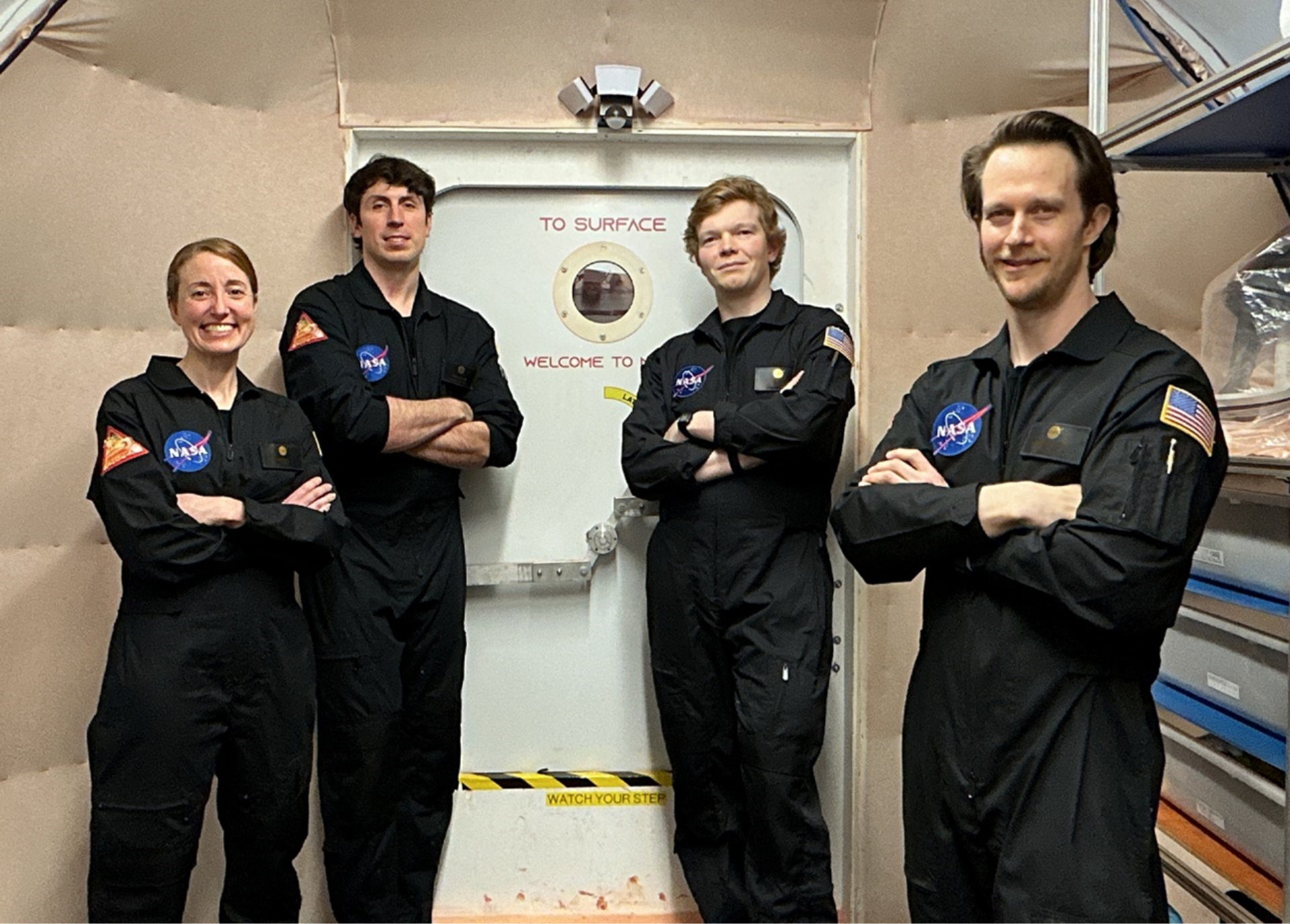
On 7 May 2026, the four-member crew of NASA's CHAPEA mission marked 200 days into their 378-day simulated Mars exploration at the Johnson Space Centre in Houston. Commanded by Ross Elder, the team has now reached the halfway point of their extended isolation, entering the 3D-printed habitat on 19 October 2025 with the scheduled exit date set for 31 October 2026. This milestone highlights the rigorous nature of the Crew Health and Performance Exploration Analog, which aims to replicate the conditions of a future mission to the Red Planet.
Currently, the crew is undergoing a two-week simulated loss-of-signal period designed to mimic the communications blackouts that occur when Mars moves behind the Sun relative to Earth. During this phase, the team operates without contact with mission control, relying entirely on preplanned procedures to conduct essential tasks. This includes managing robotic operations, maintaining the habitat, and overseeing crop growth, all while dealing with simulated equipment malfunctions and strict resource constraints that mirror the limitations of deep space travel.
Medical officer Ellen Ellis praised the crew's fortitude, noting their daily improvements in performance and efficiency over the past 200 days. Flight engineer James Spicer highlighted the team's commitment to contributing directly to NASA's deep space exploration objectives through a diverse range of daily activities. These tasks include simulated spacewalks, geological surveys, exercise routines, and medical procedures, ensuring that every aspect of life in confinement is scrutinised for future missions.
Science officer Matthew Montgomery observed that the limited resources available, such as tools, software, and internet access, force the crew to find creative and clever solutions to problems. This constraint is a deliberate element of the simulation, intended to understand how humans adapt to isolation, confinement, and resource limitations. The data gathered regarding how the crew manages stress and maintains productivity under these conditions is critical for informing the development of sustainable lunar presence and longer-term objectives for crewed Mars missions.
The mission serves as a vital ground-based analog for NASA's Human Research Program, which scrutinises how spaceflight affects human bodies and behaviours. Researchers are monitoring the crew's cognitive and physical performance to refine mission planning, habitat design, and support systems. As project scientist Sara Whiting noted, the operational lessons learned and detailed health data provided by this crew come at a perfect time to support the advancement of human exploration to the Moon and Mars.
As NASA advances toward its long-term goal of human exploration of Mars, simulated missions like CHAPEA remain essential. They provide the necessary insights into keeping astronauts healthy, safe, and mission-ready both during the journey and on the surface of another world. Through science conducted in laboratories, ground-based analogs, and commercial missions, the program continues to innovate ways to ensure astronaut safety as human space exploration expands to the Moon, Mars, and beyond.