NASA chief attends rare launch at Russian spaceport amid ISS cooperation
The US and Russia continue their partnership on the International Space Station despite geopolitical tensions, with NASA Administrator making his first visit to the Russian-operated facility in eight years.
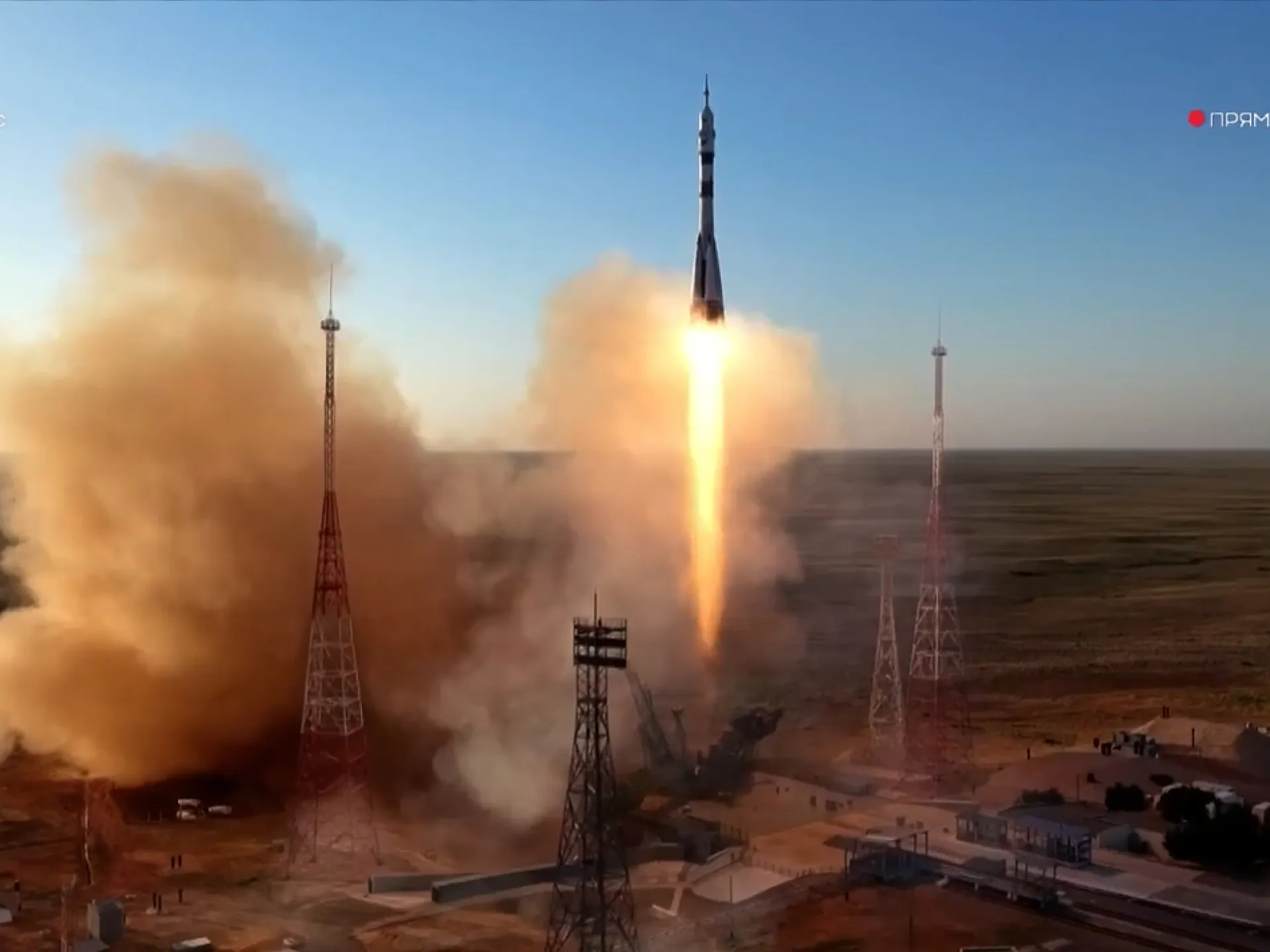
A joint US-Russian crew launched aboard Russia’s Soyuz MS-29 spacecraft from the Baikonur Cosmodrome in Kazakhstan on Tuesday, marking a continued operational partnership between Washington and Moscow despite broader geopolitical friction. The mission carries Russian astronauts Pyotr Dubrov and Anna Kikina, alongside NASA astronaut Anil Menon, as they head for the International Space Station (ISS).
NASA Administrator Jared Isaacman attended the launch, signifying his first visit to the Russian-operated spaceport in eight years. Prior to the liftoff, Isaacman met with Dmitry Bakanov, head of Roscosmos, and expressed gratitude for the agency’s preparation efforts. During a meeting with the crew on Monday, Isaacman noted that the integrated work over the preceding months reflected the professionalism and dedication of all involved.
The Soyuz MS-29 crew is scheduled to dock with the ISS at 17:56 GMT, where they will remain for eight months. This mission marks Anil Menon’s first space flight, while Dubrov and Kikina are undertaking their second mission. The trio will join existing ISS crew members, including NASA astronauts Jessica Meir, Jack Hathaway, and Chris Williams; European Space Agency astronaut Sophie Adenot; and Roscosmos astronauts Sergei Kud-Sverchkov, Sergei Mikaev, and Andrei Fedyaev.
The launch underscores a complex diplomatic reality. While the US and Russia were once bitter rivals during the Cold War space race, they have maintained cooperation on the ISS. This collaboration has persisted even after tensions escalated following Russia’s invasion of Ukraine in 2022, with both nations continuing to fly crews to the orbiting outpost on their respective spacecraft.
However, broader strategic alignment has fractured. Plans for expanded cooperation, including potential Russian involvement in NASA’s Artemis lunar programme, have previously fallen apart. Concurrently, Roscosmos has increasingly relied on China for energy exports and key technology imports due to Western sanctions, leading to new cooperation with Beijing on its own lunar mission.