NASA Chandra Observatory identifies mysterious X-ray dot bridging black hole evolution gap
Scientists suggest the discovery may link intermediate-mass black holes to growing supermassive black holes.
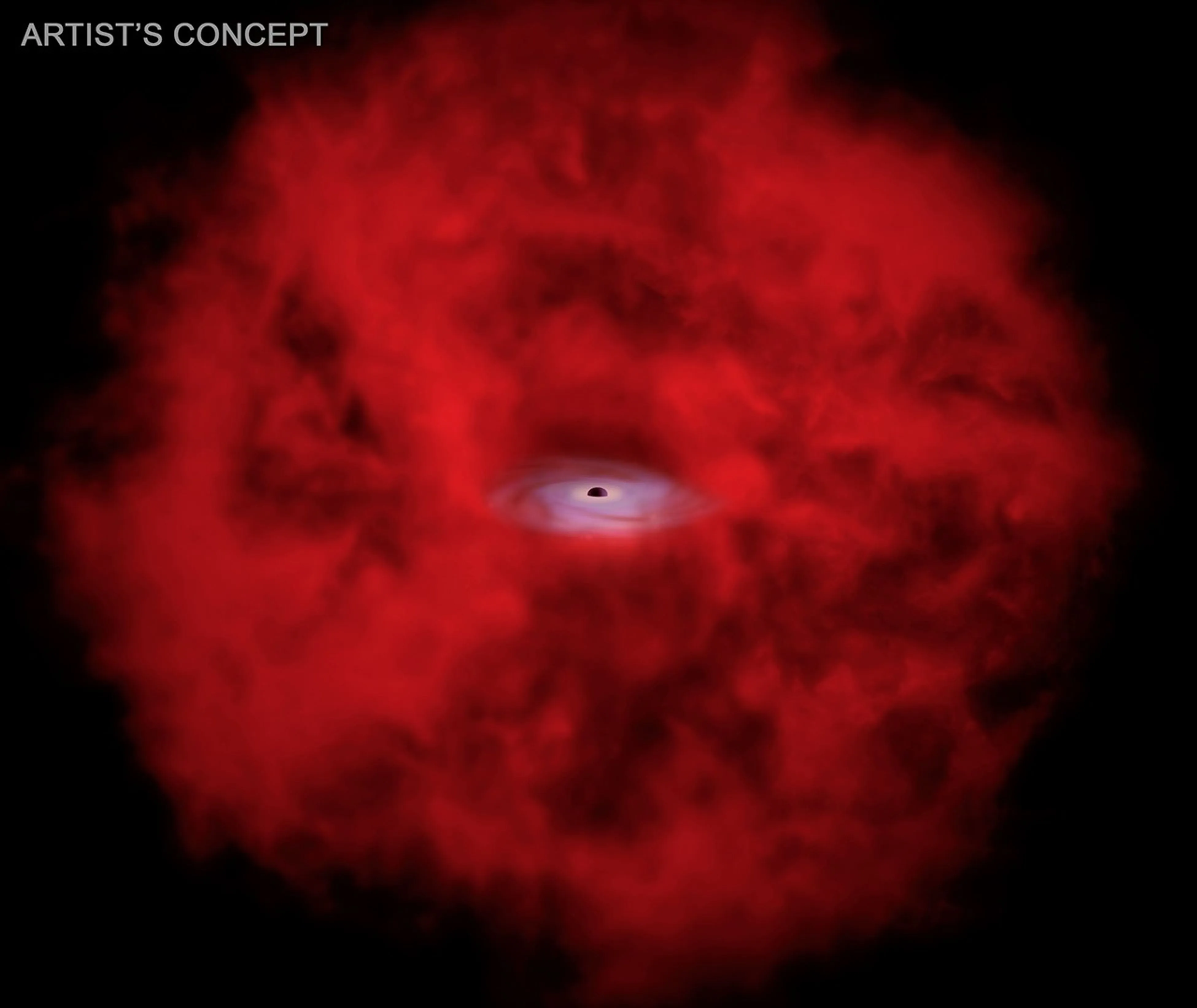
NASA's Chandra X-ray Observatory has identified a new cosmic object, officially designated 3DHST-AEGIS-12014, situated approximately 11.8 billion light-years from Earth. While the object shares physical characteristics with previously observed little red dots, specifically their diminutive size, red hue, and extreme distance, it uniquely emits X-ray light. This distinctive feature has led astronomers to classify it as an X-ray dot, distinguishing it from other members of the mysterious little red dot population which do not glow in X-rays.
The discovery emerged shortly after the James Webb Space Telescope began its science operations, a period during which reports of these small, red objects at vast distances first surfaced. Although the new object exhibits most of the defining features of a little red dot, the emission of X-ray radiation provides a critical clue regarding its nature. An artist's illustration depicting the object was released on 28 April 2026, offering a visual representation based on modelling rather than direct optical imaging of the X-ray source itself.
Scientists propose that this discovery may provide a crucial link between intermediate-mass black holes and typical growing supermassive black holes. The hypothesis suggests that the X-ray dot could bridge the gap between these two categories, potentially explaining the hundreds or potentially thousands of little red dots observed in the early universe. However, the exact nature of the object remains a mystery, with the connection to black hole evolution currently framed as a significant scientific possibility rather than a confirmed solution.
The identification of 3DHST-AEGIS-12014 highlights the complementary roles of different space telescopes in modern astronomy. While the James Webb Space Telescope revealed the population of little red dots through visible and infrared observations, Chandra's ability to detect high-energy X-ray emissions has allowed for the differentiation of this specific object. This distinction is vital for understanding the evolutionary pathways of cosmic structures in the distant past.
The distance of 11.8 billion light-years implies that the object is observed as it existed very early in the universe's history. Precise redshift measurements were not provided in the initial reports, but the vast distance places the discovery within the context of the early cosmic environment. The object's unique signature offers a rare opportunity to study phenomena that may have been obscured in other little red dots that lack X-ray emission.
As researchers continue to analyse the data, the focus remains on confirming whether the object truly represents an evolutionary bridge or if alternative explanations exist. The ambiguity surrounding the term black hole stars in current literature suggests that further observation is required to clarify the classification. Until then, the X-ray dot stands as a pivotal anomaly in the study of little red dots and the formation of supermassive black holes.