NASA cancels Swift telescope rescue mission after spacecraft failure
The Neil Gehrels Swift Observatory is expected to re-enter Earth’s atmosphere later this year after Katalyst Space’s LINK spacecraft failed to boost it to a higher orbit due to an attitude control issue.
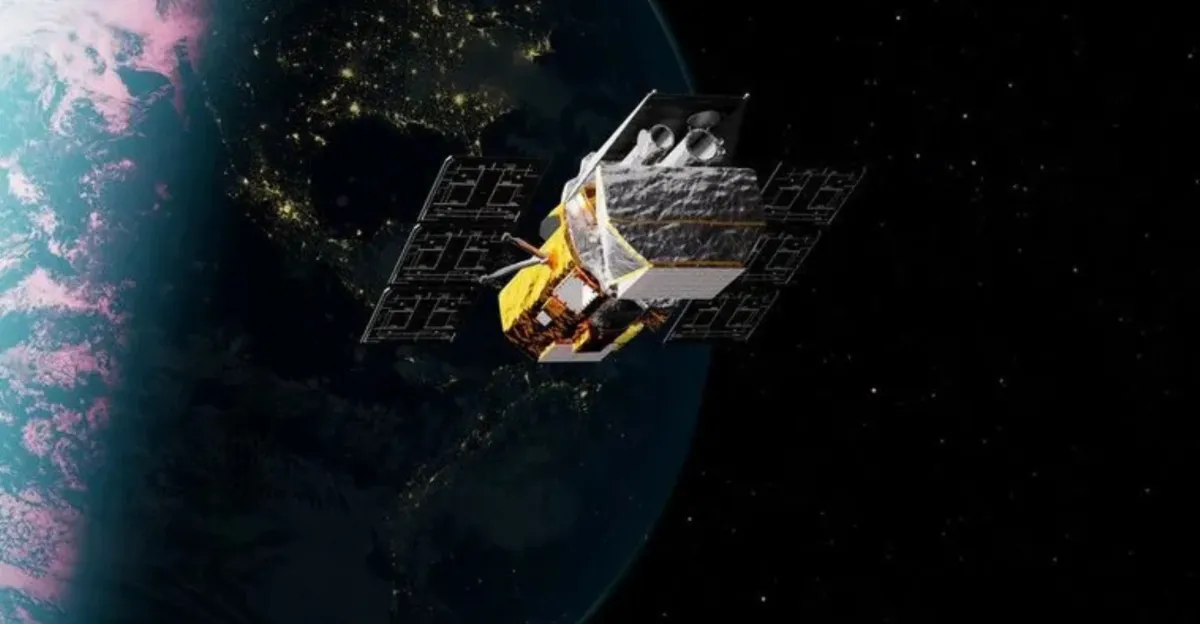
NASA and Katalyst Space have confirmed the cancellation of the mission to boost the Neil Gehrels Swift Observatory to a higher orbit. The decision follows an ongoing attitude control issue with the Katalyst LINK spacecraft, which rendered it unable to perform the necessary capture and boost manoeuvres.
The Swift Observatory, launched in 2004 to study gamma-ray bursts, had operated for over two decades as a general-purpose multi-wavelength observatory. However, a recent increase in solar activity lowered the satellite’s orbit, prompting the agency to seek a rescue mission to extend its operational life.
NASA astrophysics director Shawn Domagal-Goldman described the effort as a high-risk, high-reward attempt developed on an unprecedented timeline. While the agency hoped for more science from the telescope, Domagal-Goldman noted that the takeaways from the mission would be worthwhile regardless of the outcome.
Instead of boosting the telescope, the LINK spacecraft will now conduct rendezvous and proximity operations to collect data for future space exploration. This pivot allows the mission to continue testing key servicing capabilities despite the failure to save the Swift Observatory.
Katalyst Space was awarded a $30 million contract in September last year to carry out the boost. The LINK spacecraft was launched on 3 July but began experiencing technical difficulties at the end of that month.
NASA Administrator Jared Isaacman stated that while this is not the outcome the team was working toward, it does not change why the mission was worth attempting. Without additional intervention, NASA expects the Swift telescope to re-enter and burn up in Earth’s atmosphere later this year.