NASA Awards Contracts for Lunar Rovers and Landers as Moon Base Vision Takes Shape
New agreements under the Commercial Lunar Payload Services initiative aim to establish America’s first permanent outpost on another celestial world, with additional drone surveys and cargo delivery systems in development.
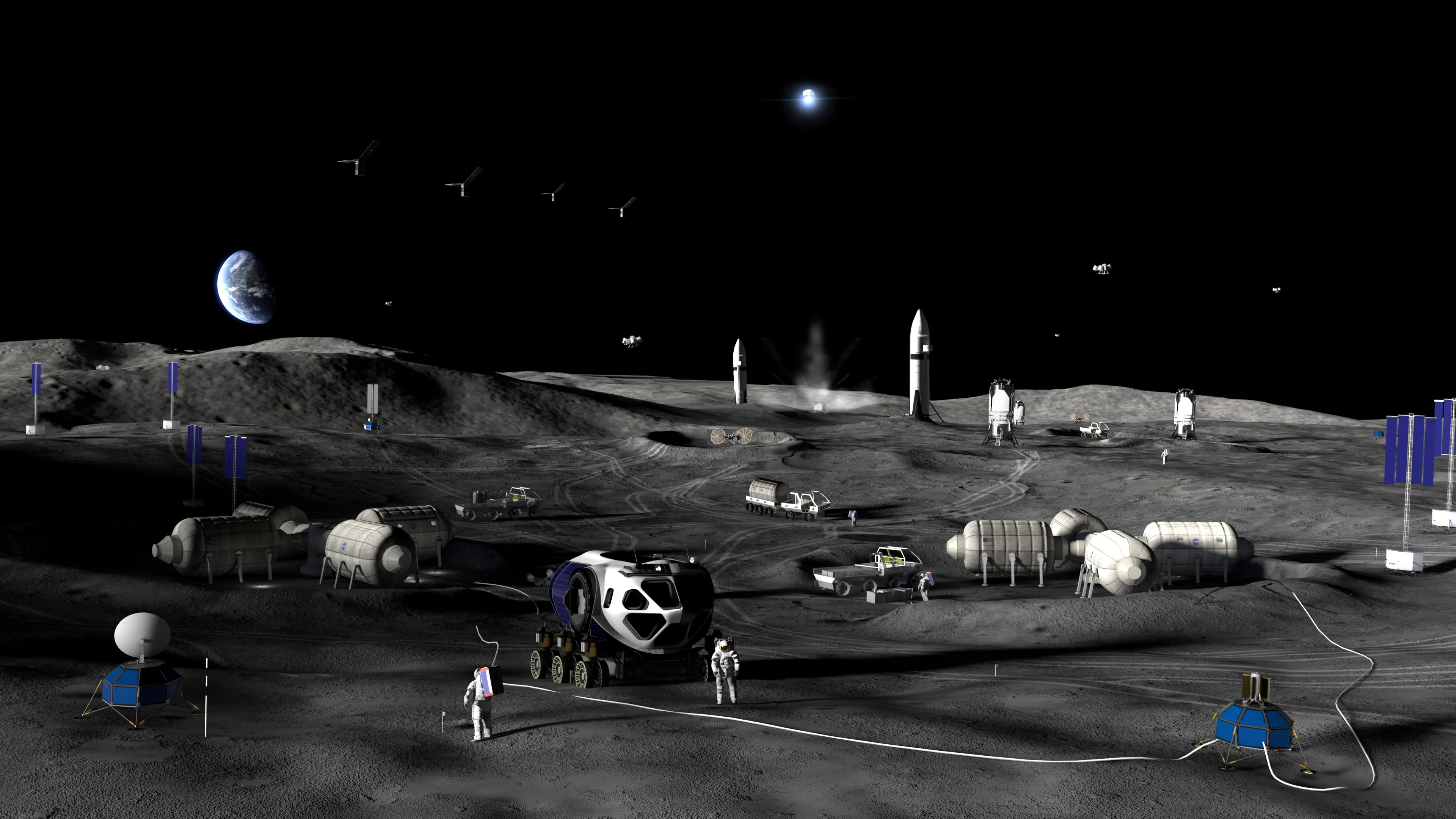
NASA announced a series of new contracts for lunar rovers and uncrewed cargo landers during a Moon Base event at its headquarters in Washington on Tuesday. The agency outlined target launch timeframes and milestones for the first infrastructure missions to the lunar South Pole region, setting the stage for future Artemis astronaut landings.
NASA Administrator Jared Isaacman described the Moon Base as “America’s and humanity’s first outpost on another celestial world.” He emphasised that every mission, whether crewed or uncrewed, would serve as a learning opportunity to build infrastructure and master operations in one of the most demanding environments imaginable. Isaacman also acknowledged the bipartisan commitment from Congress and the leadership of President Trump in enabling these efforts.
The agency awarded Astrolab $219 million and Lunar Outpost $220 million to build and deliver the first phase of Lunar Terrain Vehicles (LTVs). These firm-fixed-price, performance-based milestones are designed to deploy crewed and uncrewed mobility systems to the lunar surface by 2028 through the Commercial Lunar Payload Services (CLPS) initiative.
Astrolab’s Crewed Lunar Vehicle, or CLV-1, is adapted from its FLEX architecture and weighs approximately 2,000 pounds. It is capable of reaching speeds of more than 6 mph on level terrain. Complementing this, Lunar Outpost’s Pegasus rover is designed to operate for up to a year and reach speeds of more than 9 mph. Pegasus incorporates Apollo-heritage technologies and supports manual, autonomous, or teleoperated driving.
To deliver these rovers, NASA awarded Blue Origin $188 million, with an option period worth $280.4 million, for two cargo lander task orders under the CLPS 1.0 framework. This competitive procurement is intended to play a critical role in enabling mobility and infrastructure development for sustained lunar operations.
NASA also provided updates on the MoonFall mission, which will deploy four drones to survey potential landing sites at the lunar South Pole. Firefly Aerospace has been selected to build the spacecraft that will transport the drones from Earth orbit to the Moon, with launch targeted for 2028. After each drone’s final flight, its survive-the-night payload will continue to operate for several months.
The final request for proposals for CLPS 2.0 was released on 15 May, with responses due on 30 June. This next phase introduces enhanced flexibility, allowing NASA to order turn-key delivery services or integrate hardware into its own missions. NASA stated that additional CLPS 1.0 task awards are forthcoming in the coming weeks.