NASA awards contracts for Lunar Base rovers and cargo landers
The US space agency has allocated hundreds of millions of dollars to develop crewed rovers and uncrewed delivery systems, aiming to establish a sustained human presence on the Moon to support future Artemis missions and travel to Mars.
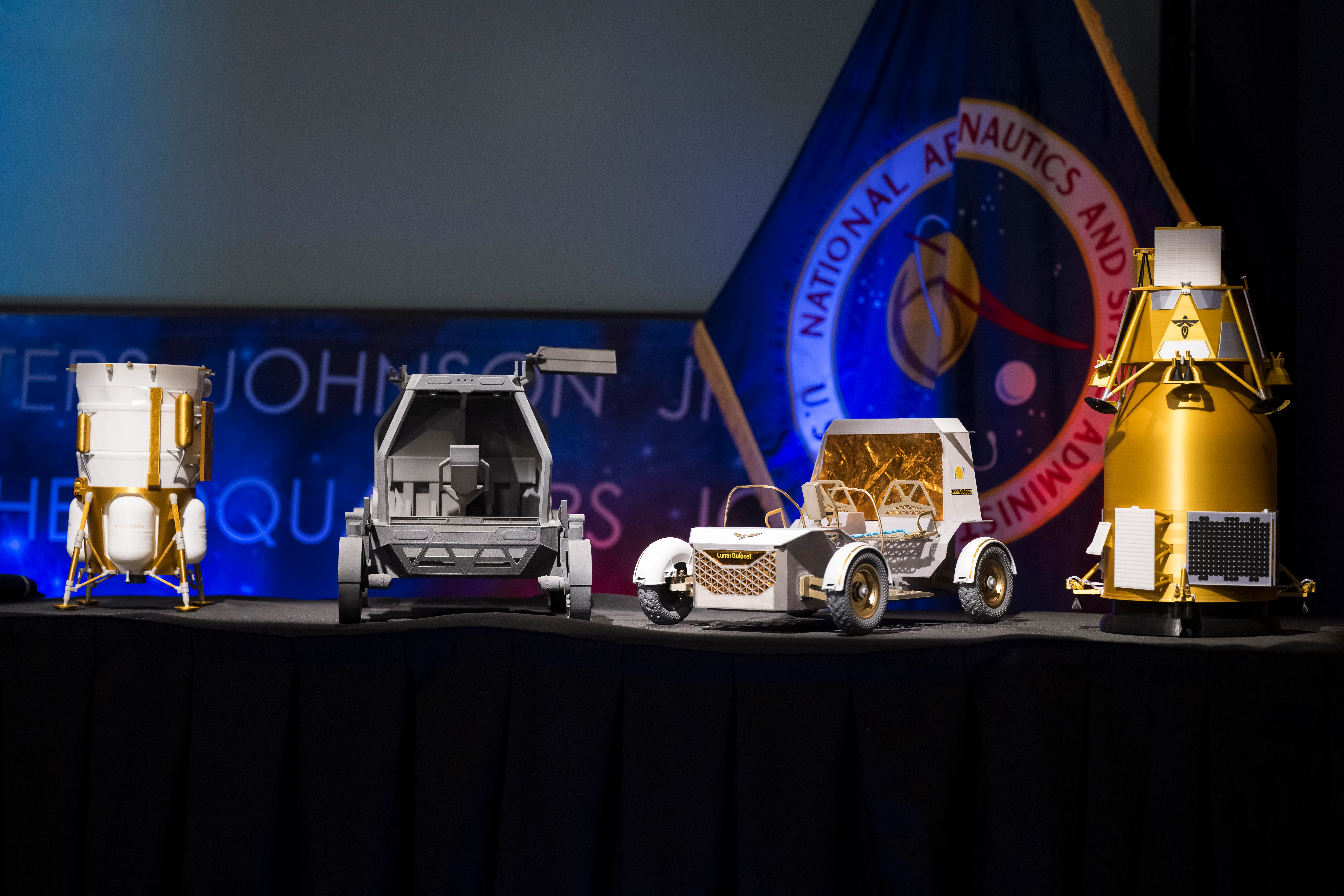
During a briefing at its Washington headquarters, NASA announced new contracts for the development of crewed lunar rovers and uncrewed cargo landers for the Lunar Base program. The agency awarded $219 million to Astrolab and $220 million to Lunar Outpost for the first phase of Lunar Terrain Vehicles (LTVs), with deployment targeted for 2028. Additionally, NASA awarded Blue Origin a $188 million contract, with an option for $280.4 million, for cargo lander delivery services under the Commercial Lunar Payload Services (CLPS) initiative.
The briefing also detailed the MoonFall mission, scheduled for 2028, which will deploy four drones to inspect landing sites at the lunar south pole. NASA Administrator Jared Isaacman emphasized the goal of establishing a sustained human presence on the Moon to support future Artemis missions and eventual travel to Mars. Isaacman described the Lunar Base as the first outpost of the United States and humanity on another celestial world, noting that each mission would serve as a learning opportunity to build necessary infrastructure and master skills for living and working in one of the most demanding environments imaginable.
Astrolab’s Crewed Lunar Vehicle (CLV 1) is adapted from the company’s FLEX architecture and is designed to transport astronauts, move supplies and support remote operations. The rover has a folded mass of approximately 907 kilograms and can reach speeds of more than 9.6 kilometres per hour on flat terrain. Lunar Outpost’s Pegasus rover is a lighter evolution of its Eagle model, featuring an operational autonomy of up to a year and the ability to drive manually, autonomously or teleoperated at speeds exceeding 14 kilometres per hour.
For the delivery of these rovers to the lunar south pole region, NASA selected Blue Origin under the CLPS 1.0 indefinite delivery/indefinite quantity phase. The contract includes options for extension based on performance in the initial phase. This strategic investment aims to enable mobility and infrastructure development for sustained lunar operations, marking a significant step toward establishing a permanent human presence on the Moon.
The agency also outlined the MoonFall mission, developed by NASA’s Jet Propulsion Laboratory in southern California, with Firefly Aerospace selected to build the spacecraft transporting the drones. The four drones will land autonomously and collect high-resolution images of difficult terrain during a single lunar day. After their final flights, the drones’ survival payloads will continue to operate for several months, ensuring a continued US presence at the lunar south pole.
NASA plans to announce additional CLPS 1.0 task orders in the coming weeks and will issue requests for proposals for CLPS 2.0, which offers greater flexibility for key-hand delivery services or hardware integration. The agency reiterated that establishing a sustained lunar presence aligns with its broader exploration strategy, supporting scientific discovery, economic benefits and the foundation for future crewed missions to Mars.