NASA awards contract for CAPSTONE 02 lunar technology mission
Advanced Space selected to deploy two 400-kilogram spacecraft for autonomous navigation and rendezvous demonstrations in cislunar space.
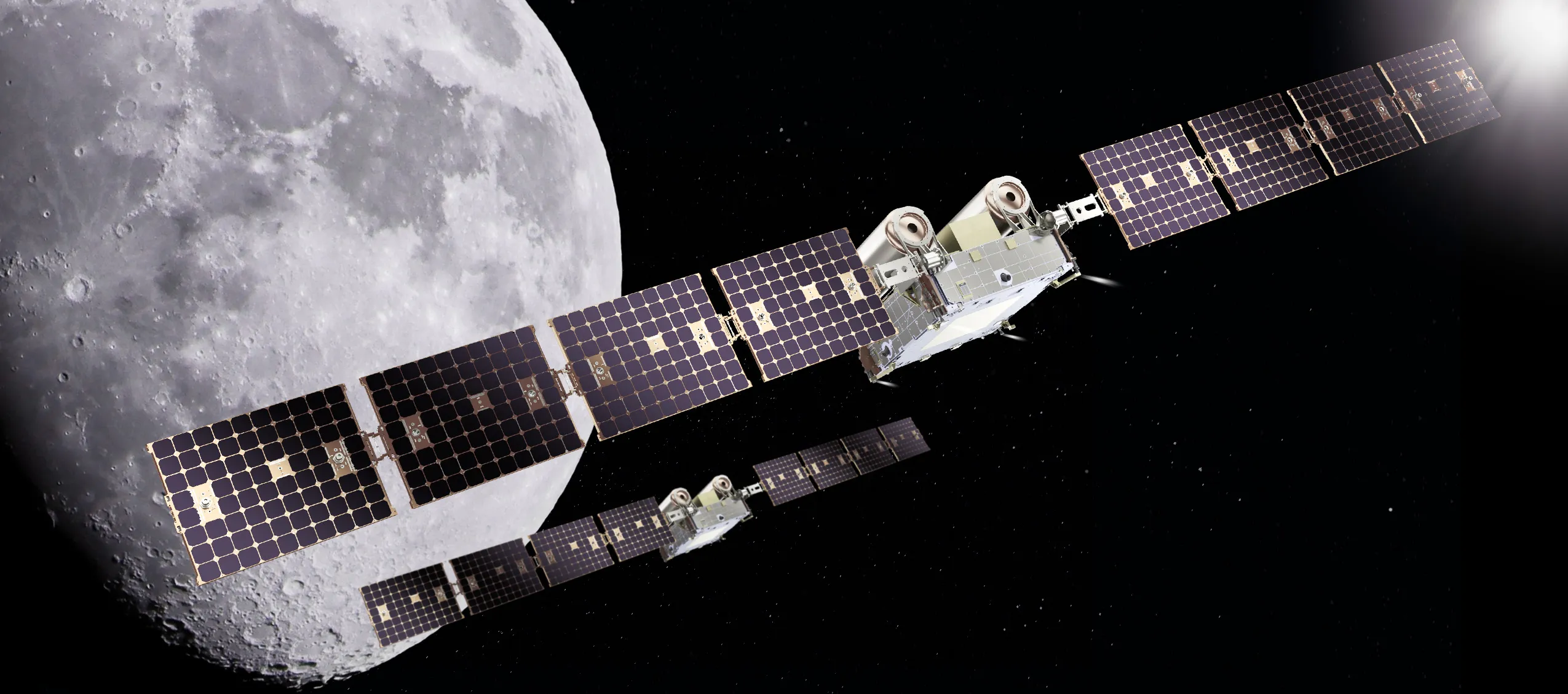
NASA has awarded a Small Business Innovation Research Phase III contract to Advanced Space for the CAPSTONE 02 mission, a new Small Spacecraft Technology Demonstration Mission targeting a launch in 2027. Managed by Small Spacecraft & Distributed Systems at NASA’s Ames Research Centre in California, the initiative aims to advance cislunar infrastructure for the agency’s Artemis program and Moon Base. The mission will deploy two identical 400-kilogram spacecraft, manufactured by Terran Orbital Systems, to validate critical technologies for future lunar exploration.
The mission will demonstrate rendezvous and proximity operations, autonomous navigation, and cislunar communication capabilities in lunar orbit. These techniques are more sophisticated than those used in low Earth orbit and are designed to support astronauts as they dock with Moon landers in cislunar space. By validating these systems, NASA seeks to enable safe crew transfers between lunar orbit and the surface, reducing reliance on traditional Earth-based tracking networks.
CAPSTONE 02 will utilise a low energy transfer trajectory, taking the spacecraft from Earth to beyond the Moon before settling into lunar orbit. During this phase, the spacecraft will carry an optical imaging payload from Lawrence Livermore National Laboratory to support navigation demonstrations and capture imagery of the Moon. The mission also continues to characterise the radiation environment at the Moon, providing valuable data for future deep space missions.
Mission operators will conduct a series of rendezvous and proximity operations, including loitering or formation flying techniques. The two spacecraft will switch between ‘chaser’ and ‘target’ roles to test various operational scenarios under the simultaneous influence of Earth and Moon gravities, known as three-body orbits. This approach allows NASA to better understand trajectories and refine navigation strategies similar to those planned for Orion’s approach to a lunar lander.
The mission will serve as an operational testbed for three NASA-developed navigation software suites and further mature the Cislunar Autonomous Positioning System (CAPS). CAPS, first demonstrated on the original CAPSTONE mission, determines spacecraft position relative to other spacecraft without relying on Earth-based tracking. The suite of technologies on CAPSTONE 02 is designed to automate routine navigation tasks and enable new mission concepts derived from increased inter-satellite coordination.
Sean Fuller, Moon Base CAPSTONE manager, described the mission as an important step in the maturation of cislunar capabilities. He noted that by expanding on lessons learned from the original CAPSTONE demonstration, CAPSTONE 02 lays the foundation for lunar infrastructure and commercial services that support Artemis and future missions to deep space. The mission is funded by NASA’s Human Spaceflight Mission Directorate with support from the Research and Technology Mission Directorate.