NASA astronaut Chris Williams concludes eight-month International Space Station mission
Williams’ work aboard the orbiting laboratory contributed to advancements in medical therapies, computer technology, and future lunar and Mars missions.
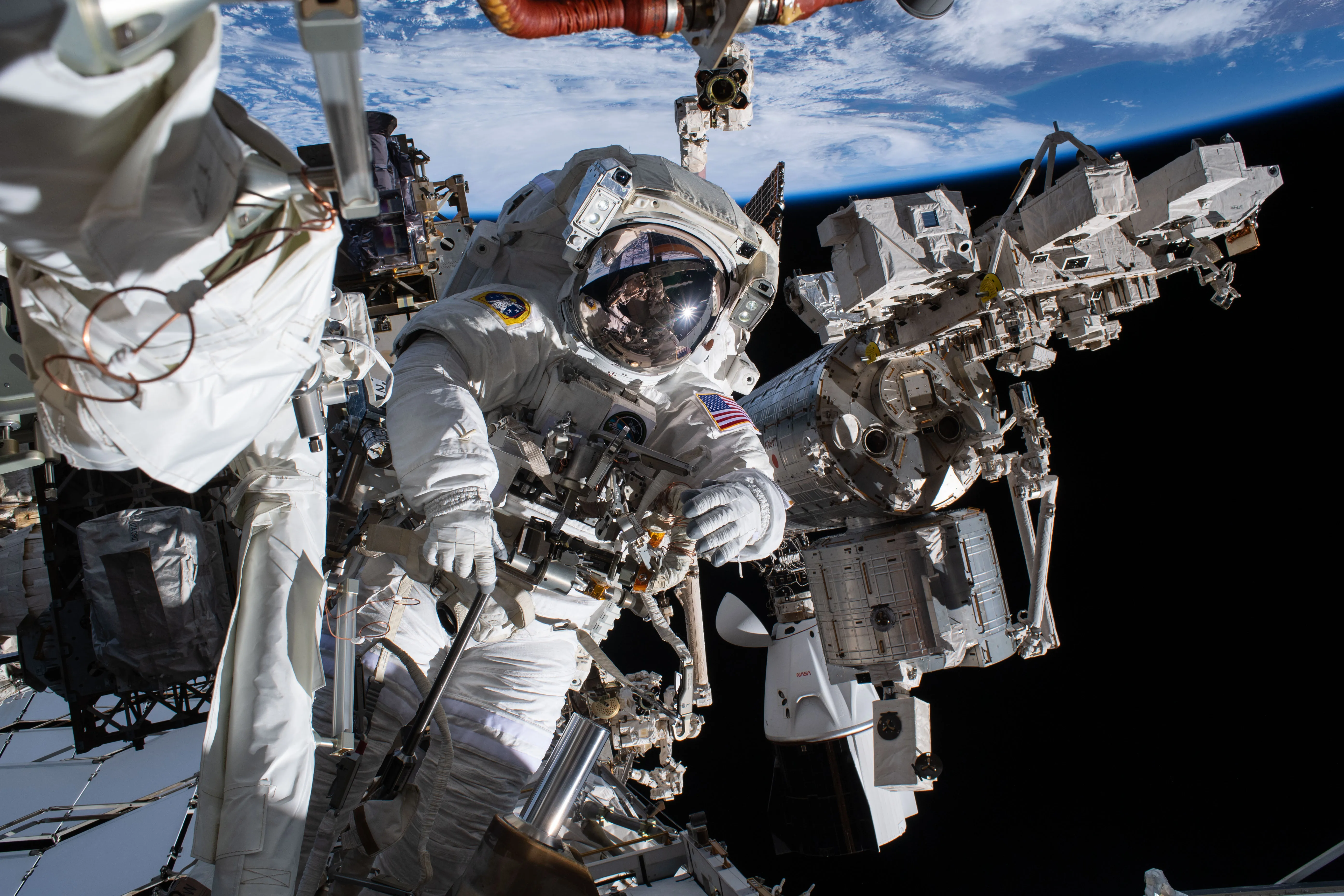
NASA astronaut Chris Williams is preparing to return to Earth after completing an eight-month mission aboard the International Space Station. During his first assignment, Williams conducted research into new cancer treatments, semiconductor crystal growth, and microbial inhibition, performed two spacewalks to repair Canadarm2 and prepare for new solar arrays, and assisted in capturing the Northrop Grumman Cygnus XL cargo spacecraft. His work contributed to advancements in medical therapies, computer technology, and future lunar and Mars missions.
Williams and European Space Agency astronaut Sophie Adenot processed DNA-inspired materials that could advance new cancer treatments for people on Earth. In space, these rod-shaped materials form more evenly and consistently, which may improve their performance and readiness for treatments on Earth. This research aims to enable targeted cancer therapies that reach deep into tumors, stay in the body longer, and release medicine in a more controlled way.
Williams also conducted research to grow semiconductor crystals in space. In microgravity, researchers can grow more crystals of the desired size than can be produced on Earth. Previous research shows that space-grown crystals can offer increased performance to help advance technologies like high-performance computers, artificial intelligence, and medical devices. This research lays the groundwork for commercial semiconductor manufacturing in space and advances the semiconductor industry.
During his mission, Williams ventured into the vacuum of space to complete two spacewalks. In June, he helped make repairs to Canadarm2, a robotic arm that captures cargo spacecraft and deploys external research. In March, Williams prepared the orbiting laboratory for new solar arrays to be added to the station in a future spacewalk. Once installed, the final set of International Space Station Roll Out Solar Arrays will complete the full suite of additional solar power, increasing the station’s power generation by about 30 per cent.
The astronaut also assisted in the capture of the Northrop Grumman Cygnus XL cargo spacecraft, which delivered approximately 11,000 pounds of supplies as part of NASA’s Commercial Resupply Services 24 mission. Additionally, Williams worked on investigations testing the use of ultraviolet light to prevent the formation of microbial colonies and studied the growth of protein crystals for pharmaceuticals, including a project aiming to develop a new formula for an oral cancer treatment.