NASA Armstrong outlines flight testing protocols for new aviation and space technologies
From laminar flow experiments on F-15s to preparations for Artemis II, the centre’s methodologies transform theoretical concepts into certified, operational systems through rigorous preflight and in-flight evaluation.
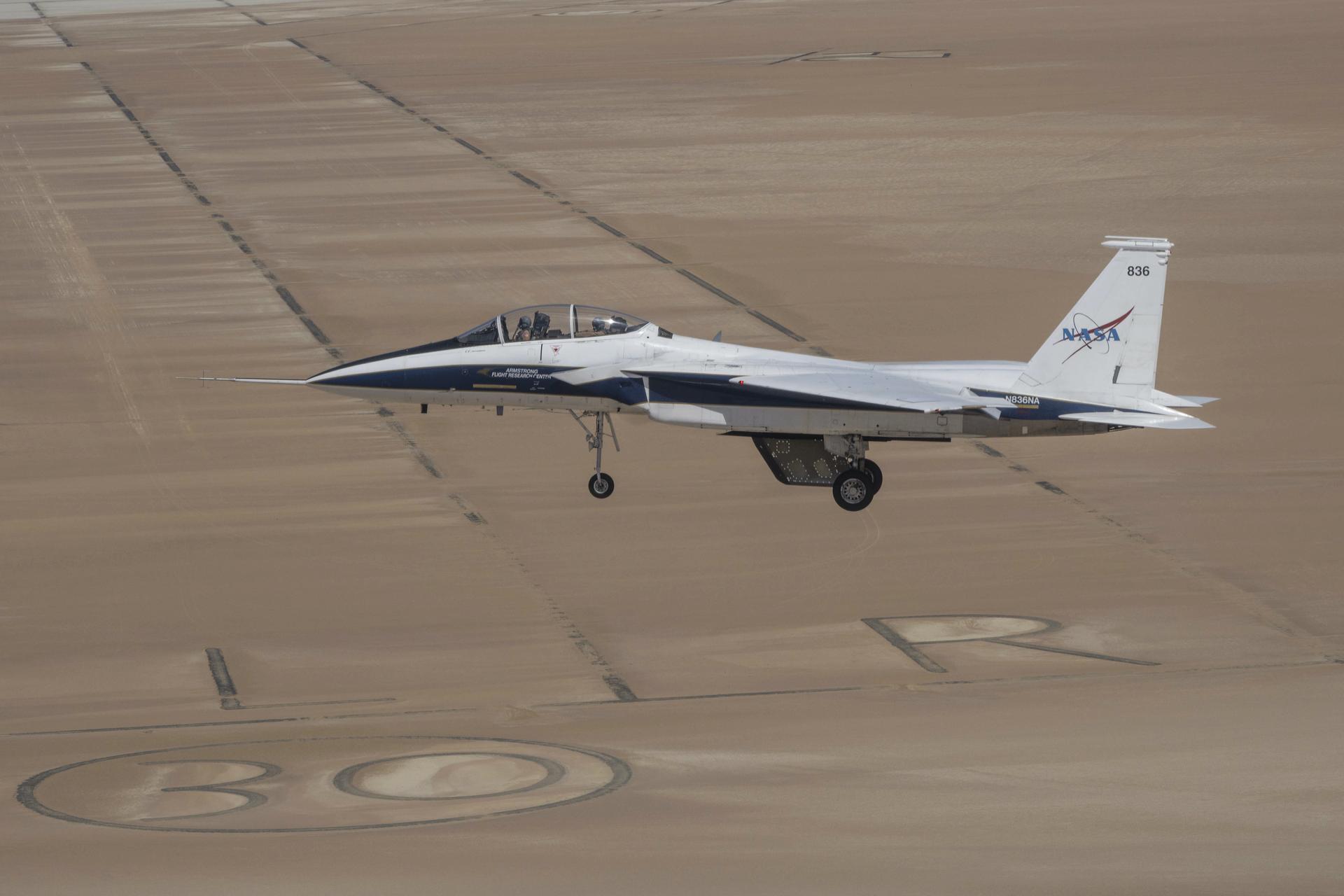
NASA’s Armstrong Flight Research Centre in Edwards, California, has published detailed methodologies for its flight testing processes, which are used to validate new aviation and space technologies. Chief pilot Wayne Ringelberg stated that these tests are critical for the safe certification of equipment and help industry partners iterate and improve systems. The centre has utilised these methods for nearly 80 years to advance aerodynamics, with resulting innovations now present on every US commercial aircraft.
Recent testing activities included attaching a scale model wing to an F-15 to study laminar flow and reduce drag for future airliners. NASA collaborates with academia, the Department of War, and industry partners to advance US aviation. The centre’s approach ensures that bold concepts are transformed into safer, more efficient technologies that benefit the public, ranging from supersonic flight to space shuttle design principles.
Preflight tests often include computer analysis, simulation, wind tunnel testing, and ground tests focused on an aircraft’s ability to withstand the forces of flight. Once hardware or software is deemed safe to fly, researchers turn the mission over to the flight test team. NASA Armstrong maintains an aircraft fleet modified to create space for new hardware or instruments, effectively serving as flying laboratories where pilots are trained to accomplish experimental missions.
For example, researchers strapped the Crossflow Attenuated Natural Laminar Flow (CATNLF) model wing to the belly of an F-15 to collect data without extensive aircraft modifications. This arrangement allowed the team to gather critical information on how the wing concept could reduce drag for future airliners, complementing earlier work in computer modeling and wind tunnels.
The space side of NASA also relies on these flight test protocols. Ringelberg noted that every mission, such as Artemis II, is never routine and involves new or different elements. After a flight series is complete, engineers and researchers analyze the data to determine if instruments worked as designed and if the experimental aircraft performed safely at high altitudes.