NASA Armstrong Hangar Renovation Complete for X-59 Supersonic Demonstrator
The 1960s-era facility received extensive upgrades including new wiring, fire suppression, and an epoxy-coated floor to accommodate the X-59 ahead of ongoing test flights.
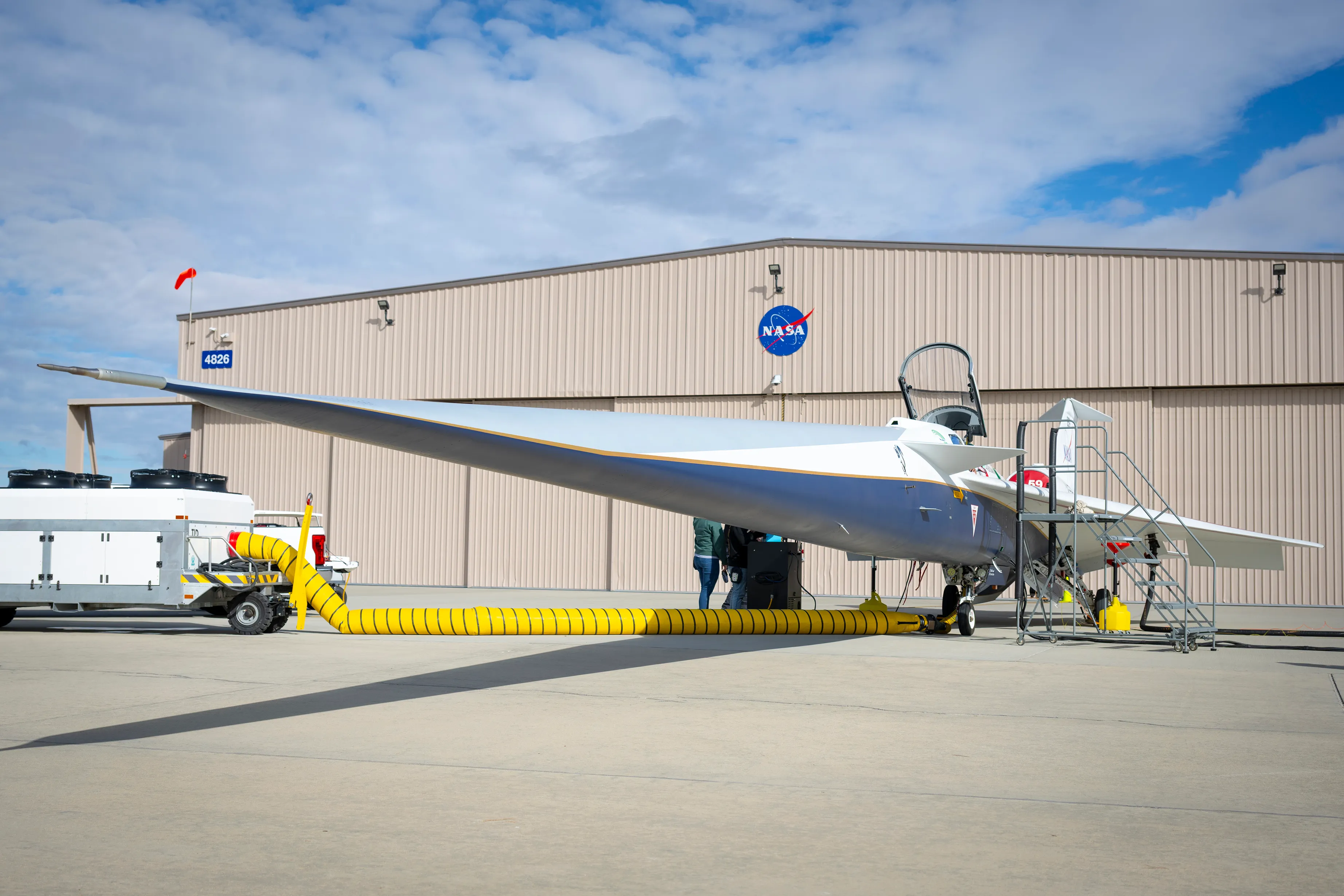
NASA has completed a comprehensive renovation of Building 4826 at the Armstrong Flight Research Center in Edwards, California, establishing it as the new home for the X-59 quiet supersonic demonstrator. The facility, originally constructed in the 1960s, has been gutted and modernised to meet the specific requirements of the experimental aircraft.
The refurbishment project involved significant structural and safety upgrades, including the installation of new electrical wiring, fire suppression systems, and air conditioning. A key feature of the renovation is a 32,000-square-foot floor coated with epoxy. This specialised surface is designed to prevent chemical spills from seeping into the concrete, thereby protecting the aircraft and the underlying structure.
The X-59, which measures just under 100 feet long and 30 feet wide, was selected as the new residence for Building 4826 because it offered sufficient length to house the entire aircraft without any part being exposed to the elements. Bryan Watters, the NASA project manager at Armstrong who led the renovation effort, noted that transforming a 1960s hangar into a facility suitable for a 2020s X-plane was a particularly special achievement for the team.
First flight tests for the program began in October 2025, with the aircraft flying from the Lockheed Martin Skunk Works assembly site in Palmdale to the newly renovated hangar at Armstrong. Since that initial flight, test operations have continued from the Edwards facility, marking a significant milestone in the Quesst mission.
The X-59 serves as the centerpiece of NASA's Quesst mission, which aims to enable a new era of commercial supersonic air travel over land by reducing the intensity of sonic booms to a quiet thump. The project is supported under the agency's Aeronautics Research Mission Directorate, with F-15 research jets scheduled to act as chase planes to support the flights in the coming months.
The renovation process faced notable challenges, with supply chain issues stemming from the COVID-19 pandemic cited as a significant obstacle during the refurbishment. Despite these hurdles, the team has successfully prepared the facility, allowing the Quesst project to proceed with the aircraft now settled in its new digs.