NASA and GE Aerospace demonstrate hybrid-electric flight at Farnborough
The successful flight validates over 15 years of collaborative research aimed at reducing fuel burn and operating costs for regional-class jets.
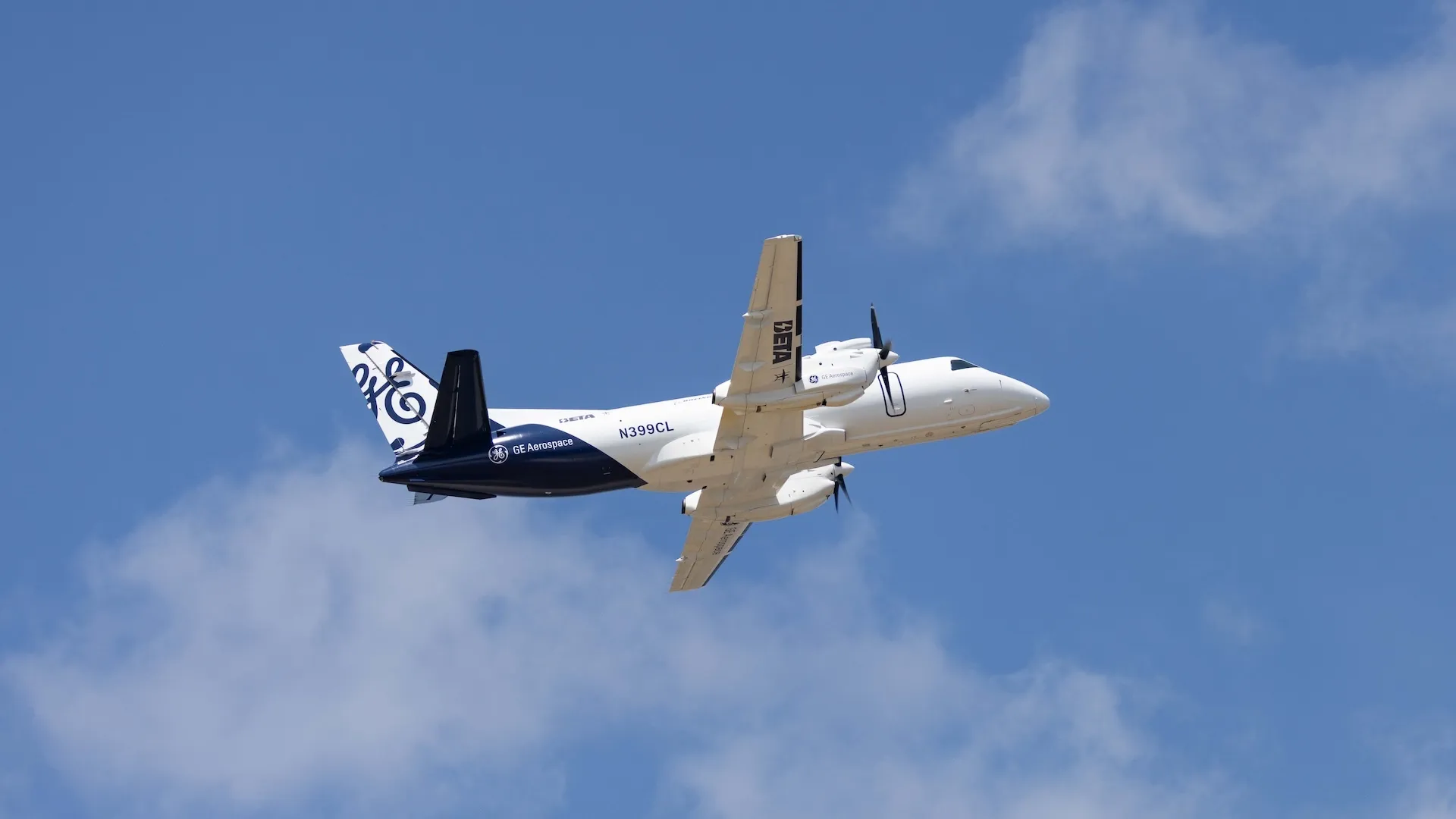
An aircraft powered by a megawatt-class hybrid-electric engine has successfully demonstrated flight at the Farnborough International Air Show in the United Kingdom. The system, developed through a collaboration between NASA and GE Aerospace and mounted on a Saab 340B aircraft, marks the public debut of technology that has previously achieved historic benchmarks in aviation testing.
The engine integrates electric motors, a gas turbine, and energy storage capabilities. It was designed to demonstrate the capacity to power an aircraft the size of a regional-class jet, with the aim of reducing fuel burn and operating costs without sacrificing performance. The demonstration flight follows recent test flights where the technology became the first hybrid-electric aircraft to fly above 30,000 feet and completed the longest hybrid-electric flight of over two hours.
This achievement validates more than 15 years of collaborative research under NASA’s former Electrified Powertrain Flight Demonstration project and the ongoing Subsonic Vehicle Technologies and Tools project. The work involved hundreds of personnel across NASA centres, GE Aerospace, and partner companies, addressing significant engineering challenges that once made hybrid aviation propulsion seem beyond the horizon of possibility.
For NASA, the project represents a long journey from preliminary research to operational validation. The agency spent approximately seven years conducting initial studies to overcome barriers related to power, thermal management, battery technology, and system integration. During this period, researchers worked to develop lighter and more efficient power systems and shrink key components to improve commercial viability.
In 2022, GE Aerospace tested an integrated version of the propulsion system at NASA’s Electric Aircraft Testbed in Sandusky, Ohio. This testing allowed the system to operate in conditions simulating 45,000 feet in altitude, the range in which commercial single-aisle aircraft typically fly. The team added components including electric motors, power converters, propellers, and a GE Aerospace commercial engine before proceeding to ground tests and eventual flight tests.
Laurie Grindle, director of NASA’s Aeronautics Division, stated that the achievement reflects the agency’s approach to aeronautics: exploring bold possibilities, validating them through rigorous research, and working with industry to turn breakthrough ideas into technologies that bring real value. The technology and designs from this project are expected to inform new generations of fuel-saving aircraft power systems.
Ralph Jansen, an aerospace engineer at NASA’s Glenn Research Center in Cleveland, described the demonstration as the culmination of more than 15 years of work. He noted that the goal was to define and execute the research and development needed to make hybrid systems a reality, helping to reduce energy use and support U.S. companies and the public.