NASA and ESA Launch Citizen Science Project to Decode Early Universe Galaxies
Volunteers will help train machine learning algorithms to identify star-forming clumps, addressing a long-standing mystery regarding why these structures were common in the early universe but are rare today.

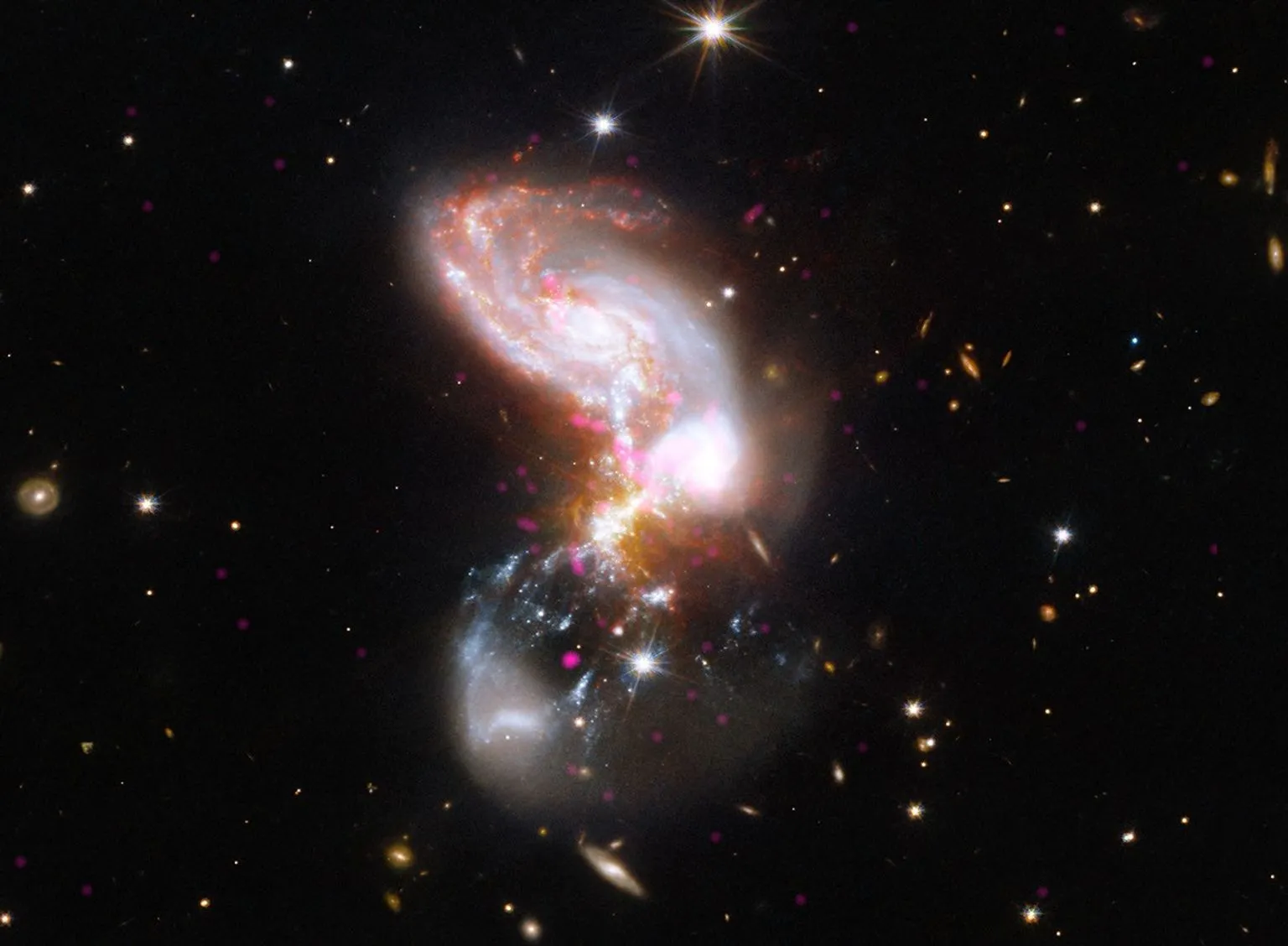
NASA and the European Space Agency (ESA) have launched the Galaxy Zoo: Clump Scout II project, a citizen science initiative inviting volunteers to assist in classifying galaxy images captured by the Euclid space telescope. The Euclid mission, which involves critical contributions from NASA, has begun capturing millions of high-definition images of galaxies. The volume of this data exceeds the capacity for professional scientists to catalogue manually, necessitating a collaborative approach to analysis.
In the mid-20th century, astronomers discovered "clumpy" galaxies characterised by massive stellar nurseries where stars are born at an explosive rate. These structures were significantly more common in the early universe than they are in the present day. The reasons for the disappearance of these clumpy galaxies over cosmic time remain unknown, and the exact mechanisms of their formation are still under investigation.
To address this data challenge, scientists are utilising machine learning algorithms as a digital assistant. The current project builds upon results from an earlier initiative called Galaxy Zoo: Clump Scout. The machine algorithm has been partially trained on previous data but requires further refinement to accurately distinguish star-forming clumps from other celestial features.
Volunteers participating in Clump Scout II will examine images where the algorithm has already placed squares around potential clumps. The AI often becomes confused by distant stars or camera glitches, leading to classification errors. Participants will refine these labels by moving, deleting, or adding squares to correct these mistakes, thereby helping the algorithm learn to better identify these structures.
This effort aims to help astronomers understand which galaxies host clumps, where they are located, and how they evolved. By improving the accuracy of these machine learning tools, the project seeks to reveal more about how star formation works in galaxies and solve the mystery of why giant star-forming nurseries vanished from the universe.
All participants require only a laptop or smartphone to contribute to the project. The initiative represents a continued effort to leverage public participation in advancing astronomical research and refining artificial intelligence applications in space science.