NASA and Boeing complete wind tunnel trials for revolutionary truss-braced wing design
Researchers are currently analysing full data from the December trial of a semispan model to determine the magnitude of potential efficiency gains
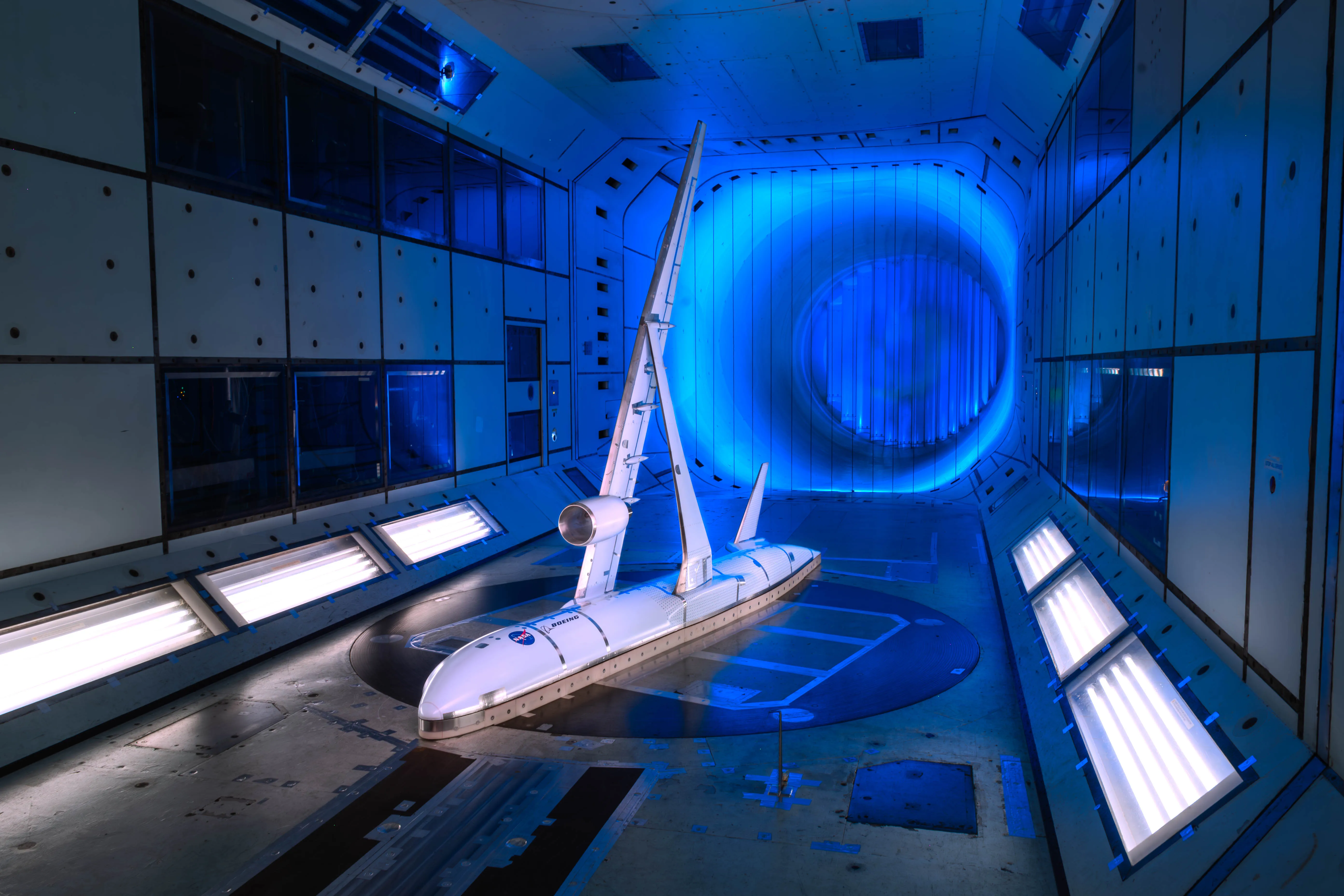
NASA and Boeing have completed wind tunnel testing of a truss-braced wing model as part of the Subsonic Ultra Green Aircraft Research concept. The trial, conducted at QinetiQ in Farnborough, England, utilised a semispan model to evaluate aerodynamic efficiency and structural forces on a long, thin wing design. Preliminary results indicate that this configuration has the potential to reduce fuel and operational costs for future commercial airliners.
The testing took place in December at the QinetiQ facility, which uses pressurised conditions to better predict aircraft behaviour during takeoff and landing. The large size of the wind tunnel provided the model fidelity necessary to assess aerodynamic performance with confidence. NASA and Boeing research teams analysed data in real time to ensure the model performed as expected throughout the trial.
The experiment employed a semispan model, representing half an aircraft mounted on the wind tunnel floor. This model featured built-in mechanisms to simulate lift-increasing controls, allowing the team to configure it for low-speed, high-lift takeoff and landing conditions. By adjusting the model's slats, flaps, and other moving control surfaces, researchers collected detailed data on how air flows around the wing and the forces exerted during flight.
A truss-braced wing configuration involves a long, thin wing with aerodynamically shaped structural supports that connect the wing to the fuselage. While this design offers significant potential for efficiency, implementing it would require a revolutionary redesign of existing aircraft rather than a simple tweak. The work originated from NASA's Advanced Air Vehicles Program and continues as part of the Subsonic Flight Demonstrator project under the Integrated Aviation Systems Program.
Researchers are currently reviewing the full data from the test to determine the exact magnitude of potential fuel and cost reductions. Because the trial used a semispan model, performance data must be extrapolated to predict the behaviour of a full-scale aircraft. This step is essential before final conclusions regarding the practical application of the design can be drawn.
This collaboration represents a move from an idea to a practical reality for the transonic truss-braced wing concept. NASA serves as an incubator for breakthrough technology with profound commercial applications, having tested the concept at multiple NASA facilities prior to the QinetiQ trial. The project continues to build a comprehensive understanding of this advanced airframe concept through test-by-test collaboration between the two organisations.