NASA and Alabama Forestry Commission deploy thermal sensors to protect bulldozer operators
Following successful pilot tests, the Alabama Forestry Commission plans to equip its entire fleet of fire dozers with the new technology, while scientists prepare to integrate advanced instruments for improved fire modelling.
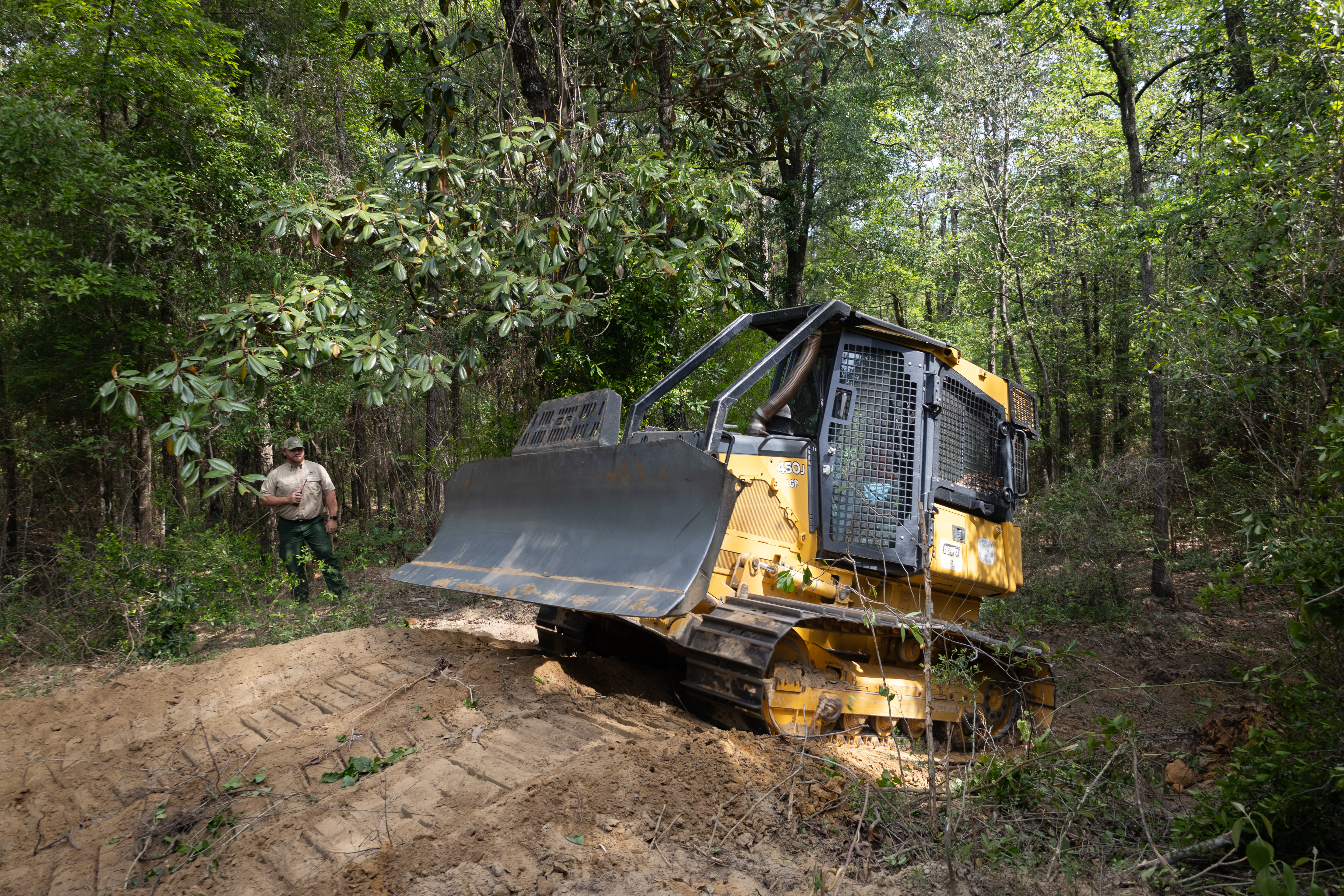
Scientists with NASA’s FireSense project, in collaboration with the Alabama Forestry Commission (AFC), have developed and installed low-cost thermal sensors on fire bulldozers to enhance firefighter safety. The initiative addresses a specific hazard for operators of fire dozers equipped with enclosed “envirocabs.” While these cabs protect against debris and smoke, they obscure the operator’s ability to gauge dangerous radiant heat, which can melt electrical wiring and strand the vehicle.
The sensors utilise commercial off-the-shelf components, including standard oven-grade thermocouples and simple LED indicators powered by AA batteries. When the thermocouple senses an unsafe temperature, the LED blinks to warn the operator. Jennifer Fowler, science integration manager for the wildland fires program at NASA’s Langley Research Center, noted that the thermocouple used is identical to those found in ovens or kilns, highlighting the project’s focus on practical, immediate solutions rather than novel instrumentation.
Installation of the pilot sensors occurred in September 2025 and March 2026. AFC fire analyst Ethan Barrett confirmed that operators report improved situational awareness and that the sensors function as intended during wildfires and prescribed burns. “They work exactly as intended,” Barrett said, adding that based on the success of this pilot, the commission is looking at outfitting all the dozers in its fleet.
The collaboration between NASA and the AFC has been developing for over a year, including previous training on weather and soil moisture and testing of airborne instruments on active wildfires. Ian Brosnan, program manager for wildland fires at NASA’s Ames Research Center, emphasised the value of ground observations for contextualising satellite data. He stated that ground observations are vital to provide context for what is seen from space, allowing researchers to better understand what happens beneath the canopy during a fire.
Future plans include integrating additional instruments such as the Fire Thermal InfraRed Spectrometer (FireTIRS) to enhance fire modelling and situational awareness. Fowler is also evaluating anemometers and compact cameras for the dozers to measure wind speed, burn severity, and fuel consumption. Fowler described this suite of instruments as the dataset that will lead to the next generation of fire models, providing firefighters with more advanced notice of fire behaviour.