NASA Ames recognises seven September Stars of the Month
The internal NASA Ames programme honoured staff and researchers whose work spans facility safety, astrophysics, planetary science and Earth science.
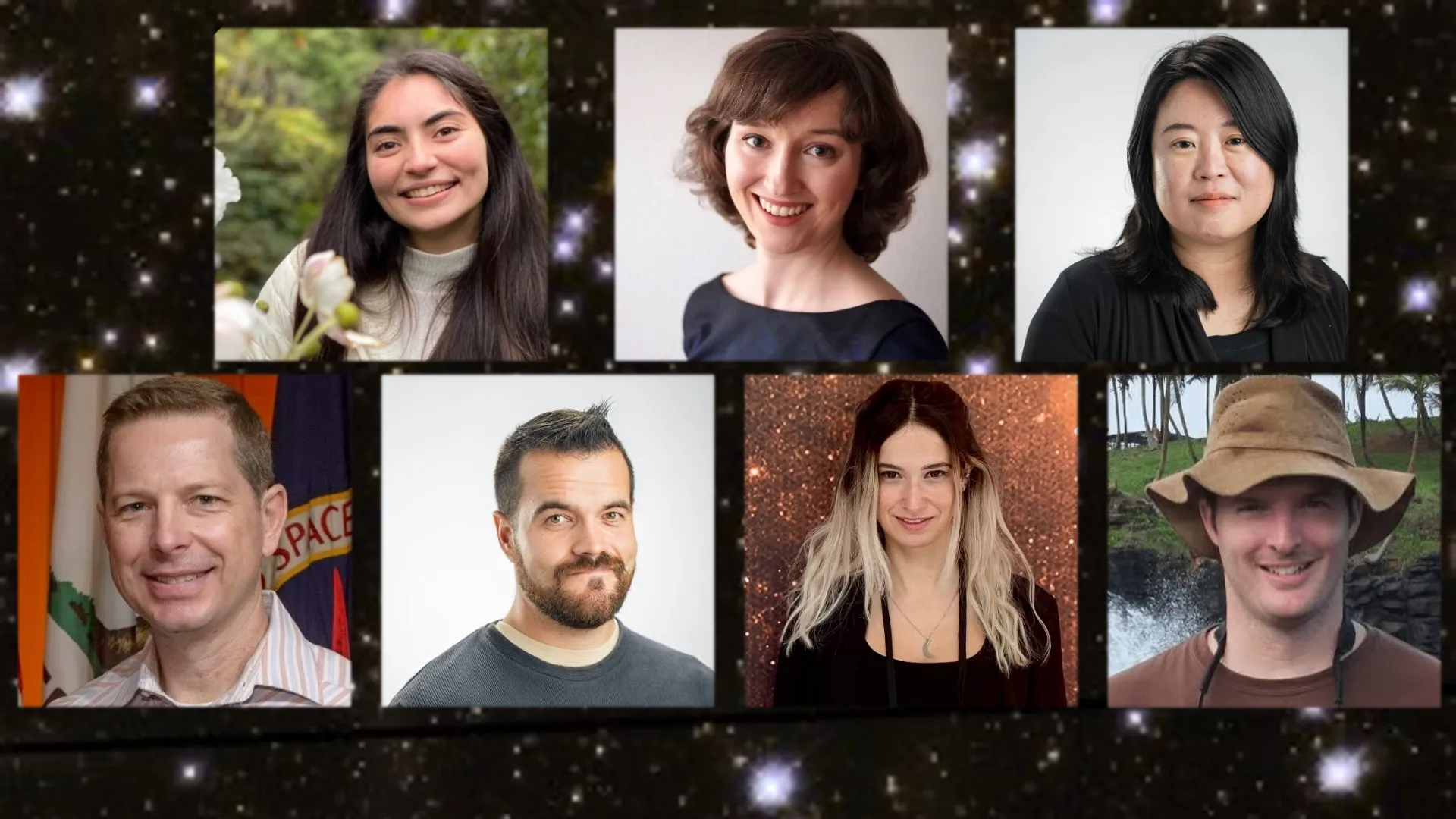
NASA Ames’ Science Directorate has recognised seven people as its September 2026 Stars of the Month, citing contributions across facility safety, astrophysics, planetary science and Earth science.
Steve Ormsby and Aphrodite Kostakis were recognised for work supporting facility safety, inspections, infrastructure maintenance and improvements within the Space Biosciences Division.
In astrophysics, Alejandro Borlaff was honoured for developing image-reduction pipelines for observations from the Hubble Space Telescope and the Roman Space Telescope’s Wide Field Instrument. Sarah Nickerson was recognised for analysing and curating data from the EXES instrument aboard NASA’s Stratospheric Observatory for Infrared Astronomy.
Martina Caussi was recognised for finite element simulations indicating that topographic relaxation helped shape Tegid, an unusually shaped impact crater on Europa. NASA Ames described the work as precursory science ahead of further observations by the Europa Clipper mission.
Keiko Nomura was cited for leadership, stakeholder engagement and coordination on the recently funded NEX-GeoAI project. NASA Ames described the project as a step towards supporting ground-truthing for GeoAI modelling activities.
Stephen Broccardo was recognised for technical leadership in sustaining and advancing Ames’ atmospheric remote-sensing capabilities, including work connected with future satellite-validation and science activities.