NASA aircraft chases Moon’s shadow to solve solar mystery
A high-altitude WB-57F flight over the North Atlantic captured critical infrared data during the August total solar eclipse, offering new insights into the Sun’s unexpectedly hot outer atmosphere.
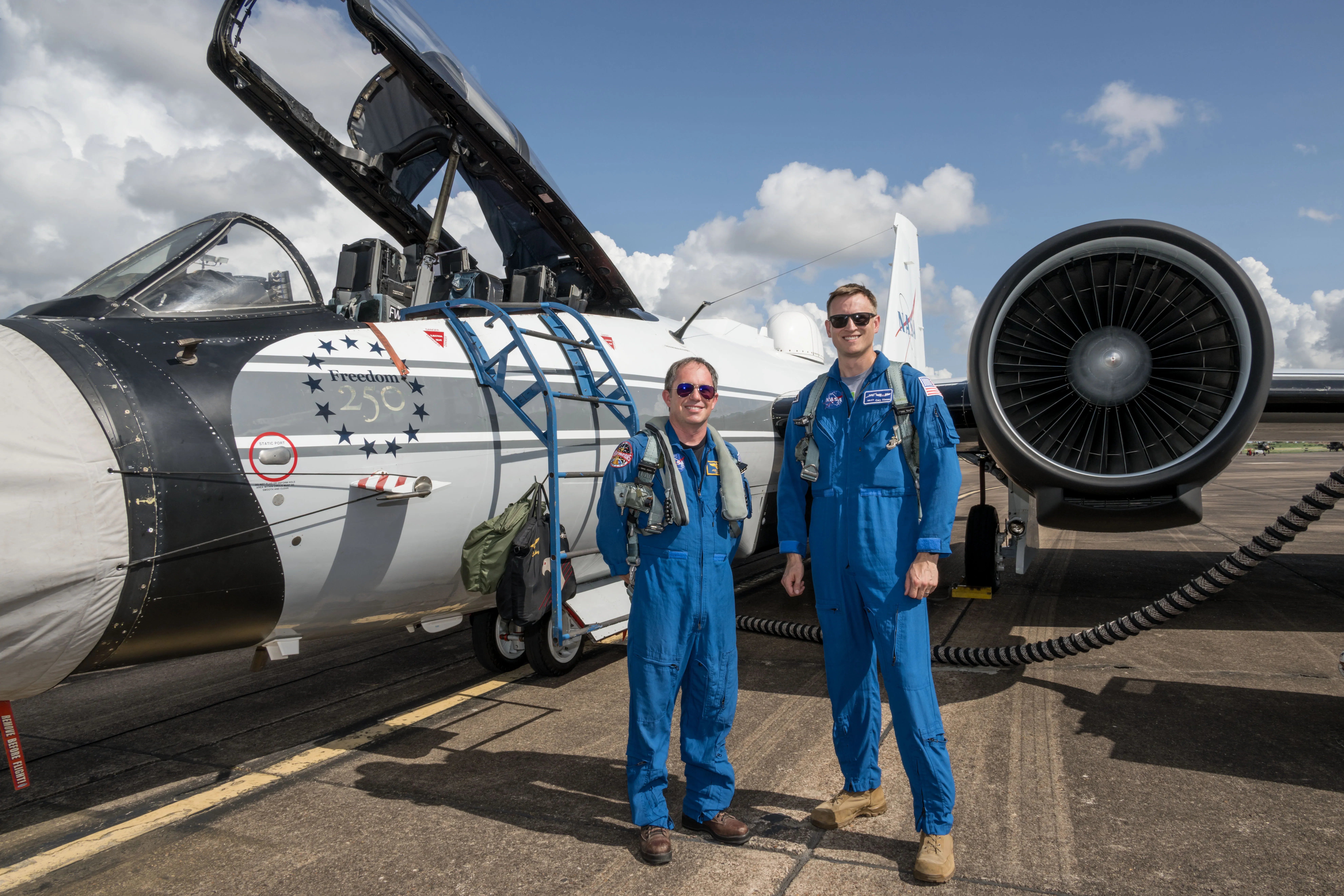
Pilots from NASA’s Johnson Space Center have completed a high-altitude research mission to study the Sun’s corona during the total solar eclipse of 12 August. The team flew a WB-57F aircraft from Ellington Field in Houston to Iceland, positioning the plane within the path of totality to capture data that is difficult to observe from the ground.
The primary scientific objective of the mission was to investigate a long-standing mystery in solar physics: why the Sun’s outer atmosphere, or corona, is significantly hotter than its visible surface. A total solar eclipse provides a unique window for this study, as the Moon temporarily blocks the Sun’s bright surface, revealing the fainter outer atmosphere.
Flying at approximately 50,000 feet, the WB-57F operated above most clouds, dust, and water vapour that typically interfere with ground-based observations. This altitude was crucial for minimising atmospheric interference and allowing science instruments to detect infrared wavelengths that are largely absorbed lower in Earth’s atmosphere. The flight path crossed the North Atlantic, an area noted for common cloud cover, making the high-altitude platform essential for data collection.
During the brief period of totality, pilot John Gustine positioned the aircraft to maximise time in the Moon’s shadow, while sensor equipment operator Cary Klemm managed the camera systems from the back seat. Klemm adjusted focus and exposure times to track features of interest, ensuring that every second of the eclipse was used to gather as much data as possible.
Amir Caspi, principal investigator for the study at Southwest Research Institute in Boulder, Colorado, noted that the aircraft’s unique capabilities were crucial for accessing valuable wavelengths during an eclipse whose path crossed mostly over the ocean. He emphasised that the success of the mission relied on the coordinated efforts of ground, air, and science crew members.
The data collected will help scientists better understand how energy and material move through the corona and away from the Sun. These processes influence space weather around Earth and are part of broader physical phenomena that occur elsewhere in the universe. Analysis of the observations is ongoing, providing researchers with another opportunity to investigate the Sun’s complex behaviour.