NASA Advances Regenerative Fuel Cell Testing for Artemis Lunar Missions
Following five years of development, the unit undergoes final trials before simulation of harsh surface conditions.
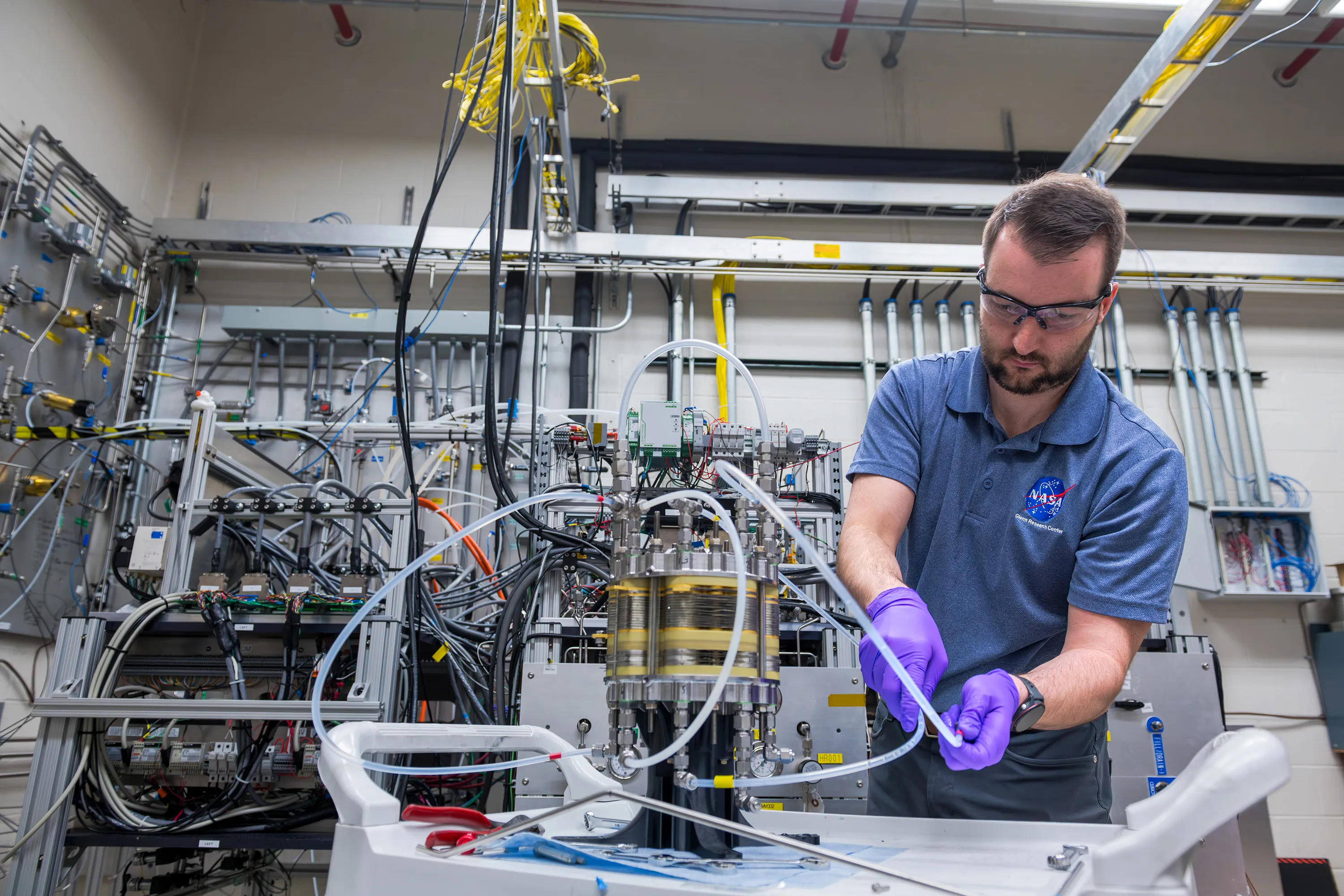
NASA's Glenn Research Center is conducting advanced tests on a novel regenerative fuel cell system designed to provide power and energy storage for future human missions to the Moon under the Artemis programme. The system operates like a rechargeable battery by combining hydrogen and oxygen to generate electricity and water, and then splitting water back into gases for storage. This capability aims to support habitats and rovers during the lunar nights, a critical period lasting nearly two weeks when solar power is unavailable.
Following five years of development and initial testing completed in 2025, the team is now preparing to operate the complete system to store generated gases for the first time. Lead engineer Dr Kerrigan Cain describes the unit as a behemoth containing nearly 270 sensors and 1,000 components. The device measures approximately the length of a sedan and the height of a person, representing a significant step forward in energy storage technology for deep space exploration.
The upcoming tests mark a major milestone where the system will store the hydrogen and oxygen gas generated during the recharge cycle. Currently, the unit is undergoing final laboratory tests at NASA Glenn's Fuel Cell Testing Laboratory before being moved to simulate harsh lunar surface conditions. Researchers will secure the test cell and operate the system remotely, allowing it to function autonomously while gathering essential data to identify any additional challenges.
Unlike standard batteries, these systems can operate during the cold, dark lunar night by recharging using available resources rather than requiring new supplies delivered from Earth. This technology was designed and assembled at NASA Glenn, with the project funded by the Space Technology Mission Directorate's Game Changing Development Program. The program is managed at NASA's Langley Research Center in Hampton, Virginia, ensuring a collaborative approach to creating a sustainable presence on the Moon.
While the specific duration of the upcoming laboratory tests is not specified beyond the phrase over the next few months, the team plans to simulate harsh lunar surface conditions before deployment. Although the exact parameters of these simulations, such as specific temperature ranges or vacuum levels, are not detailed in the source text, the goal is to prove the system can work under much harsher conditions compared to a controlled laboratory environment. The timeline for when this specific system will be deployed to the lunar surface remains pending successful completion of further testing.