Moscow's Victory Day truce collapses as Russia and Ukraine resume active hostilities
Both sides accuse the other of breaching the short ceasefire; infrastructure in southern Russia disrupted while Ukraine targets oil facilities deep inside enemy territory
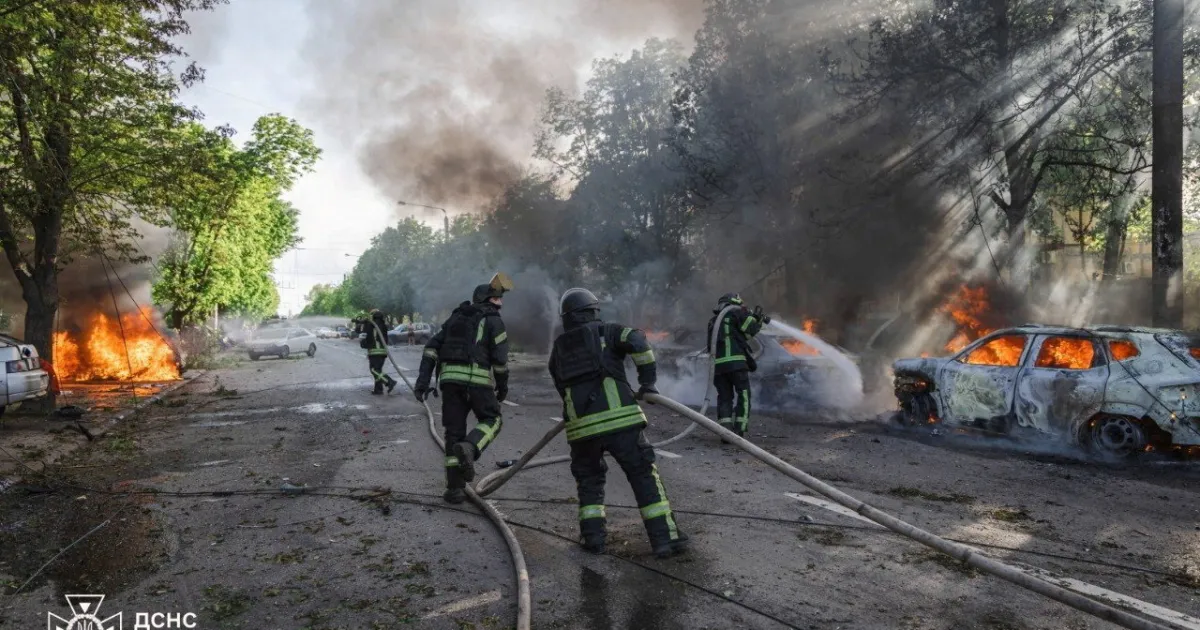
Russia and Ukraine have engaged in active hostilities, exchanging fire and accusing one another of violating a short ceasefire declared by Moscow for Victory Day commemorations. The truce, announced to coincide with the annual celebrations marking the Soviet Union's defeat of Nazi Germany, was intended to last from May 8 to May 10. However, fighting has resumed across front lines with both capitals issuing stark warnings regarding the fragility of the pause.
The Kremlin reported that its forces downed 264 Ukrainian drones early on Friday, citing attempted attacks on the capital and in the Perm region within the Ural Mountains. In a separate announcement, the Russian transport ministry stated that 13 airports in Russia's south halted operations due to drone attacks. Officials noted that operations at the regional centre in Rostov-on-Don were temporarily suspended after a Ukrainian drone struck the administrative building of the 'Southern Russia Air Navigation' branch.
Ukrainian President Volodymyr Zelenskyy dismissed the truce as ineffective, citing over 140 attacks on front-line positions and more than 850 drone strikes during the period. He stated that Russian forces continued to attack positions overnight and noted that the Russians are already discussing strikes after May 9. Kyiv also reported striking a Russian oil facility in Yaroslavl, deep inside Russian territory, describing the action as retaliation for attacks on its cities and villages.
The conflict has reignited diplomatic tensions, with the Kremlin warning that any disruption to the ceasefire would trigger a large-scale missile response against Kyiv. Moscow has urged foreign diplomats to leave the Ukrainian capital before potential escalation. This warning comes after Kyiv had previously proposed an open-ended ceasefire beginning on May 6, a proposal which Moscow did not adopt and which neither side ultimately accepted.
Zelenskyy criticised Moscow's approach to the commemorations, suggesting the pause was intended only to allow for a safe parade before resuming the war. He noted that the Russians are already talking about strikes after May 9, a stance he described as strange and inappropriate. The President called for American support to view Russia as an aggressor, emphasising that it is important for the American people to see the situation precisely in this light.
Victory Day commemorations mark the Soviet Union's loss of 27 million people during World War II, honouring the raising of the Victory Banner over the Reichstag in May 1945. Despite the historical significance of the date, the exchange of fire underscores the deep divisions between the two nations, with both sides maintaining their respective narratives on the validity of the temporary cessation of hostilities.