Moscow warns UK of consequences as British-made drones strike Russian mainland
Russia accuses London of escalation following reports of UK-manufactured unmanned aerial vehicles used in deep-strike campaigns against domestic targets.
Russia has issued warnings of consequences to the United Kingdom following reports that British-made drones were utilised by Ukrainian forces to strike targets on Russian mainland territory for the first time. The Russian embassy in London accused the UK of deliberately escalating the crisis and seeking to inflict maximum damage on Moscow by proxy, stating that London’s actions would carry significant repercussions.
A spokesperson for the UK Ministry of Defence rebuffed the threats, asserting that Britain remains committed to providing Ukraine with the necessary equipment to defend itself against what it describes as President Putin’s illegal invasion. The ministry emphasised that the UK stands shoulder to shoulder with Kyiv and maintains a firm resolve to counter Russian aggression both in Ukraine and against British allies.
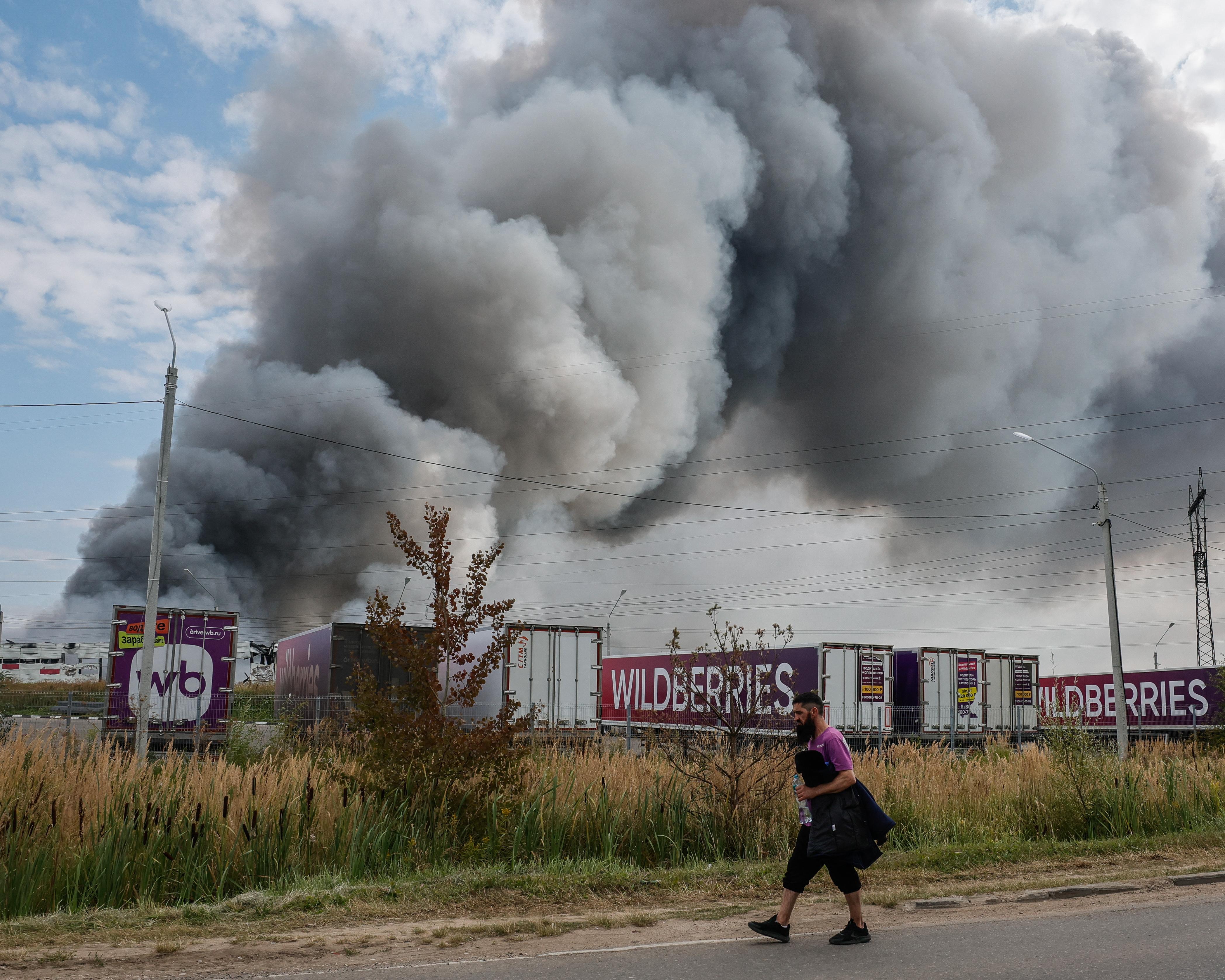
The diplomatic row follows a report by the Sunday Times, which indicated that drones manufactured by two UK companies were employed in a deep-strike campaign against Russian infrastructure. This development coincides with an intensification of Ukraine’s long-range attacks, which have increasingly targeted military industries, energy facilities, and logistics hubs for Wildberries, Russia’s largest online retailer, aiming to disrupt war revenue and impact the Russian public.
Data from independent conflict monitor Acled reveals a significant escalation in these operations, showing that Ukraine launched three times as many long-range drone strikes in July as it did in January. The strategy appears designed to stretch Russian air defences over a wider area, with Russia’s defence ministry reporting the interception of 598 Ukrainian drones across 19 regions, the Black Sea, the Azov Sea, and Crimea.
Civilian casualties continue to mount as both sides’ air defence systems face near exhaustion. Ukrainian long-range attacks resulted in seven deaths in Russia overnight, while Russian strikes killed ten people and injured eight in the village of Pechenihy in Ukraine’s Kharkiv oblast. Ukraine’s deep-strike capability has expanded through homegrown technologies such as the Flamingo cruise missile and the Fire Point FP-1 drone, enabling strikes up to 1,500 miles from its border, though it still lacks the high-speed ballistic missiles frequently used by Moscow.