Moscow Victory Day Parade Drastically Reduced Amidst Escalating Security Concerns
Official celebrations in the capital will proceed without military hardware or cadets, while regional commemorations face similar cancellations across the country.
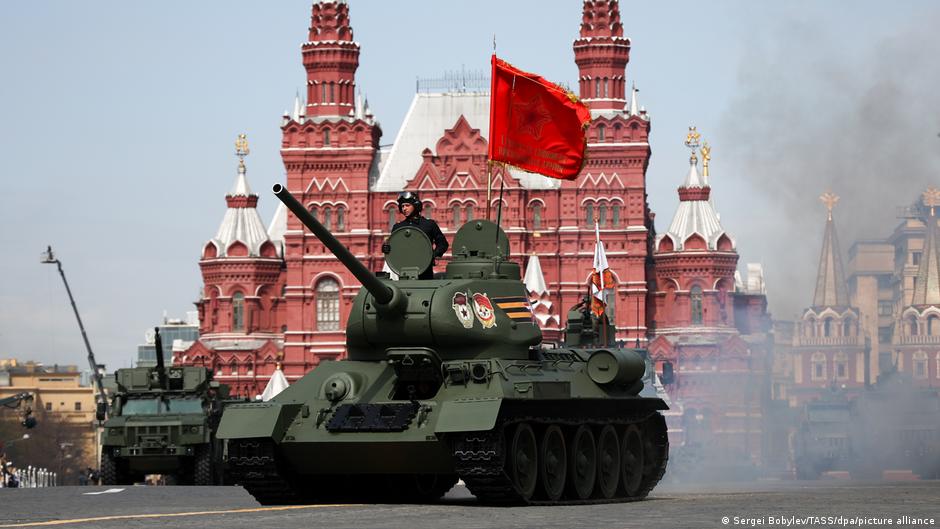
Russia has announced a significant reduction to its traditional May 9 Victory Day parade in Moscow, marking a departure from decades of ceremonial normality. For the first time in recent history, the event on Red Square will not feature the customary display of military vehicles or cadets from prestigious academies. The Ministry of Defense explicitly stated that no military hardware would be shown, attributing the decision to the current operational situation.
President Vladimir Putin's press secretary, Dmitry Peskov, reinforced this narrative by citing a specific terrorist threat posed by Ukraine as the primary justification for the absence of armed assets. While the Kremlin maintains that the parade is necessary to demonstrate state control, the visual spectacle of military might has been entirely removed from the capital's central square. This shift contrasts sharply with previous years, including the 2020 pandemic, when the event proceeded to maintain an appearance of stability and regime legitimacy.
The scaling back extends beyond the capital, with several regions cancelling their Victory Day celebrations entirely. Parades have been called off in Nizhny Novgorod, Saratov, Chuvashia, and Kaluga, while fireworks displays have been suspended in Voronezh, Kursk, Bryansk, and Belgorod. In St. Petersburg, the second-largest city, the display will be notably subdued, featuring only a single tribune instead of the usual three and omitting the traditional restored T-34 tank that has been a staple of recent ceremonies.
Experts suggest the Kremlin fears that displaying equipment could make it a viable target for Ukrainian forces, particularly given recent drone attacks on western cities like Perm. Historian Markus Reisner noted that these strikes demonstrate Ukraine's capability to reach deep inside Russian territory, increasing the risk of saturation attacks despite Moscow's air defences. Military analyst Jan Matveyev added that while sufficient equipment exists, the logistics of moving it back and forth from the front lines would be disproportionate, and the state likely wishes to avoid drawing attention to military assets during a prolonged conflict.
Political scientist Ivan Fomin argued that the reduced scale might signal the state's inability to maintain normal life during wartime, potentially fueling anti-Ukrainian sentiment among the public. He observed that the commemoration of World War II remains a key instrument in the Kremlin's memory politics, used to underpin regime legitimacy by drawing parallels between the current conflict and the Soviet victory. However, the disruption of critical infrastructure, including the halting of operations at 13 southern Russian airports due to drone attacks, highlights the ongoing impact of the war on logistical networks deep within the country.
Ultimately, the decision reflects a recalibration of how the state presents itself to both domestic and international audiences. While the parade must take place to preserve the rhythm of commemoration, the absence of military hardware suggests a government prioritising security over the traditional demonstration of power. As the conflict continues to strain resources and infrastructure, the symbolism of the day has shifted from a showcase of strength to a more cautious observance of history.