Modi seeks strategic realignment with Nordic bloc amid energy and Arctic tensions
Prime Minister Narendra Modi’s first visit to Norway in 43 years underscores New Delhi’s push to diversify energy supplies and expand its role in the Arctic, even as diplomatic friction persists over press freedom and minority rights.
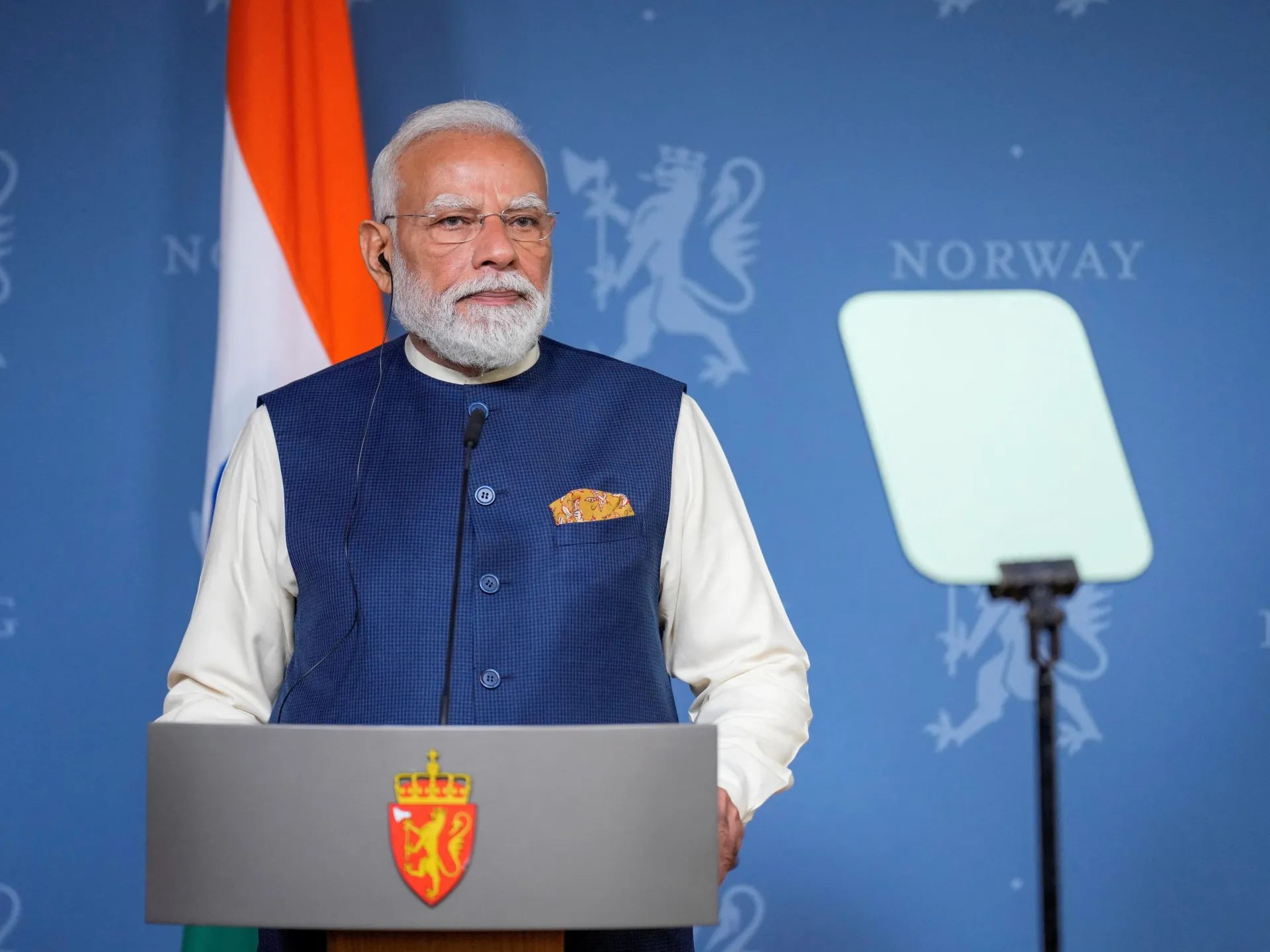
Indian Prime Minister Narendra Modi attended the third India-Nordic Summit in Oslo on Tuesday, meeting with leaders from Norway, Sweden, Finland, Iceland, and Denmark. The gathering, which marks the first visit by an Indian prime minister to Norway in 43 years, focused on strengthening strategic and trade ties, with key agenda items including technology, the green transition, energy security, and India’s expanding role in the Arctic region.
The summit follows recent trade agreements between India and the European Union, as well as India and the EFTA bloc comprising Iceland, Liechtenstein, Norway, and Switzerland. India’s trade with Nordic nations collectively stood at $19bn in 2024. Discussions also addressed geopolitical challenges, including Russia’s war in Ukraine and the economic impacts of the US-Israel conflict with Iran, as well as efforts to diversify energy supplies and expand cooperation in the Arctic region.
Nordic leaders, including Norwegian Prime Minister Jonas Gahr Store, Swedish Prime Minister Ulf Kristersson, Danish Prime Minister Mette Frederiksen, Finnish Prime Minister Petteri Orpo, and Icelandic Prime Minister Kristrún Frostadottir, joined the talks. The agenda emphasised a more strategic dimension to relations, particularly in innovation, renewable energy, sustainability, the blue economy, defence, space, and Arctic policy.
India aims to establish an India-Nordic Arctic mechanism to enhance cooperation within the Arctic Council framework. This effort builds on India’s historical access to the region via the 1920 Svalbard Treaty, which grants signatories rights to scientific research, fishing, and industrial operations. India has utilised this access to establish the Himadri research station and the IndARC underwater observatory, supporting its broader Arctic policy released in March 2022.
Bilateral engagements prior to the summit included upgrades to a "Green Strategic Partnership" with Norway and discussions on doubling trade with Sweden. However, diplomatic tensions surfaced during a preceding visit to the Netherlands, where Dutch Prime Minister Rob Jetten expressed concerns regarding press freedom and minority rights in India, remarks that India’s External Affairs Secretary Sibi George dismissed as a lack of understanding.