MoD eyes military variant as Vertical Aerospace secures further UK government funding
Vertical Aerospace demonstrates prototype at Farnborough and confirms hybrid-electric model interest from defence sector
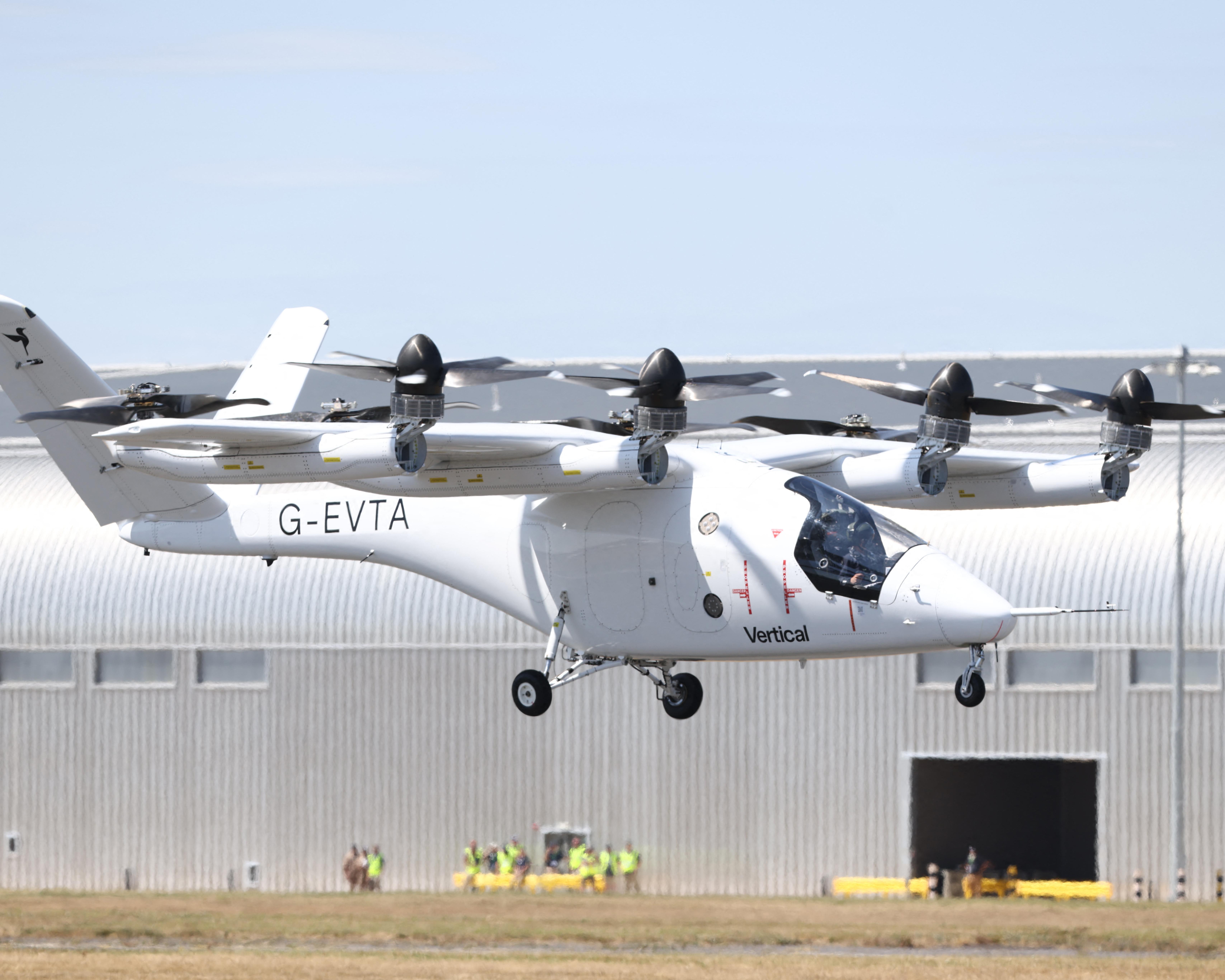
Vertical Aerospace has secured an additional £10 million grant from the UK government, bringing total state funding for the electric vertical takeoff and landing (eVTOL) manufacturer to £48 million. The latest investment is linked to the company’s finalisation of site selections for its aircraft and battery manufacturing facilities within the United Kingdom.
The Ministry of Defence has expressed interest in acquiring a military variant of Vertical’s aircraft. The company stated that the defence sector is particularly interested in a hybrid-electric model that combines gas turbines with electric motors. This configuration is designed to offer dual-use capabilities, providing silent takeoff and landing, low noise and heat signatures, and a range of up to 1,000 miles.
Chief Executive Stuart Simpson indicated that the hybrid powertrain leverages the commercial airframe while offering the military greater range and quicker refuelling compared to pure electric models. The government confirmed its interest in the defence applications for Vertical’s eVTOL, hybrid-electric, and autonomous capabilities, citing the strategic value of these operational characteristics.
During a demonstration at the Farnborough International Airshow, Vertical showcased its prototype aircraft transitioning from conventional winged flight to vertical hover mode. This marked the first public display of the four propellers tilting upwards for hovering, following a landing on the runway. The event highlighted the company’s progress in demonstrating the technical feasibility of its design to regulators and industry observers.
Commercial passenger flights are now targeted for launch in 2029, a revision from the original 2025 goal. Simpson confirmed that the UK Civil Aviation Authority and the EU Aviation Safety Agency are comfortable with the 2029 timeline, having previously agreed to a 2028 target. The company plans to produce approximately 150 aircraft annually at its existing Kemble, Gloucestershire facility, with long-term ambitions to scale production to 1,000 units per year at a larger site.