Mladić funeral exposes Serbia’s unresolved wartime legacy
Thousands attended Ratko Mladić’s funeral in Belgrade, prompting renewed criticism of genocide denial and historical revisionism in Serbia.
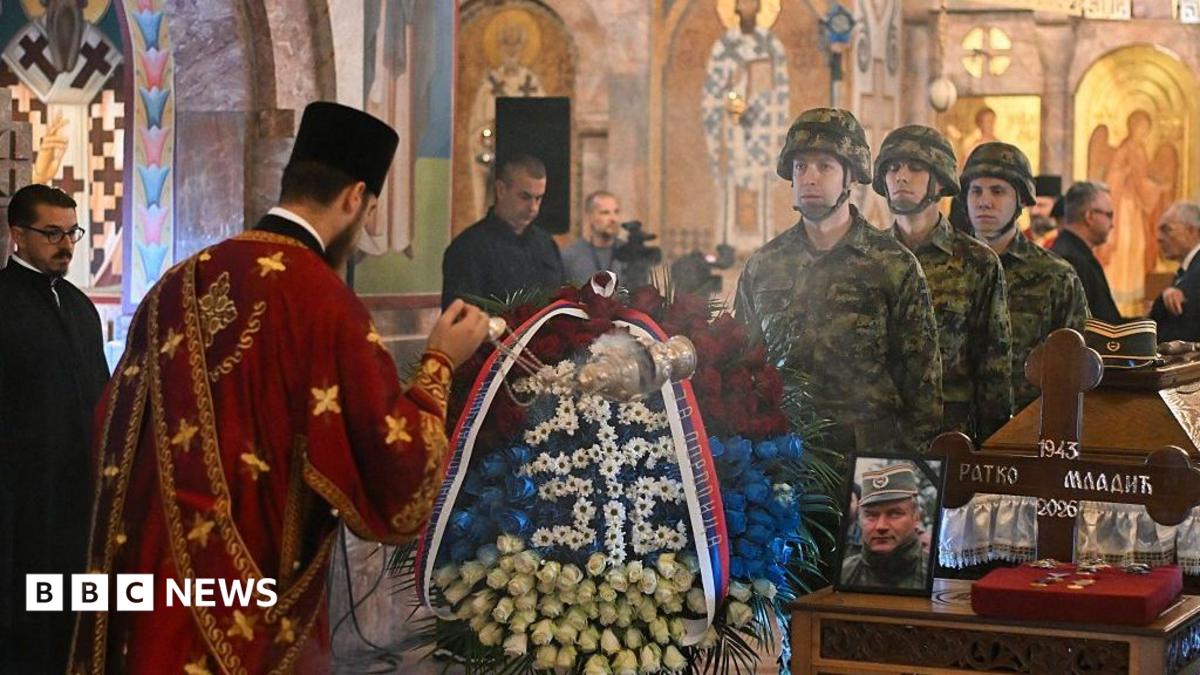
Thousands gathered in Belgrade for the funeral of Ratko Mladić, the former Bosnian Serb commander convicted of genocide, war crimes and crimes against humanity for his role in the 1992–1995 Bosnian war.
Mladić was convicted over the 1995 Srebrenica massacre, in which about 8,000 Bosniak Muslim men and boys were killed. His forces also besieged Sarajevo, where more than 10,000 people died. He was arrested in 2011 and sentenced to life imprisonment in 2021 after a nine-year trial.
The funeral drew veterans, supporters and Serbian government ministers, according to local media. The Serbian Orthodox Church’s Patriarch Porfirije led the service, while crowds gathered outside a Belgrade church to pay their respects.
The European Union condemned what it described as Mladić’s “glorification”, saying that glorifying convicted war criminals, denying genocide and promoting historical revisionism conflicted with European values. Serbia has been an EU candidate since 2012, although membership talks have stalled.
The public tributes have renewed painful memories among victims and survivors of the war. Supporters continue to regard Mladić as a national figure, while critics say the commemoration reflects Serbia’s failure to confront the established record of his crimes and the perspectives of those affected.