Mladic burial with military honours prompts condemnation in Serbia
Thousands attended the Belgrade funeral of the convicted war criminal, while civil society groups and international officials warned against glorifying his wartime role.
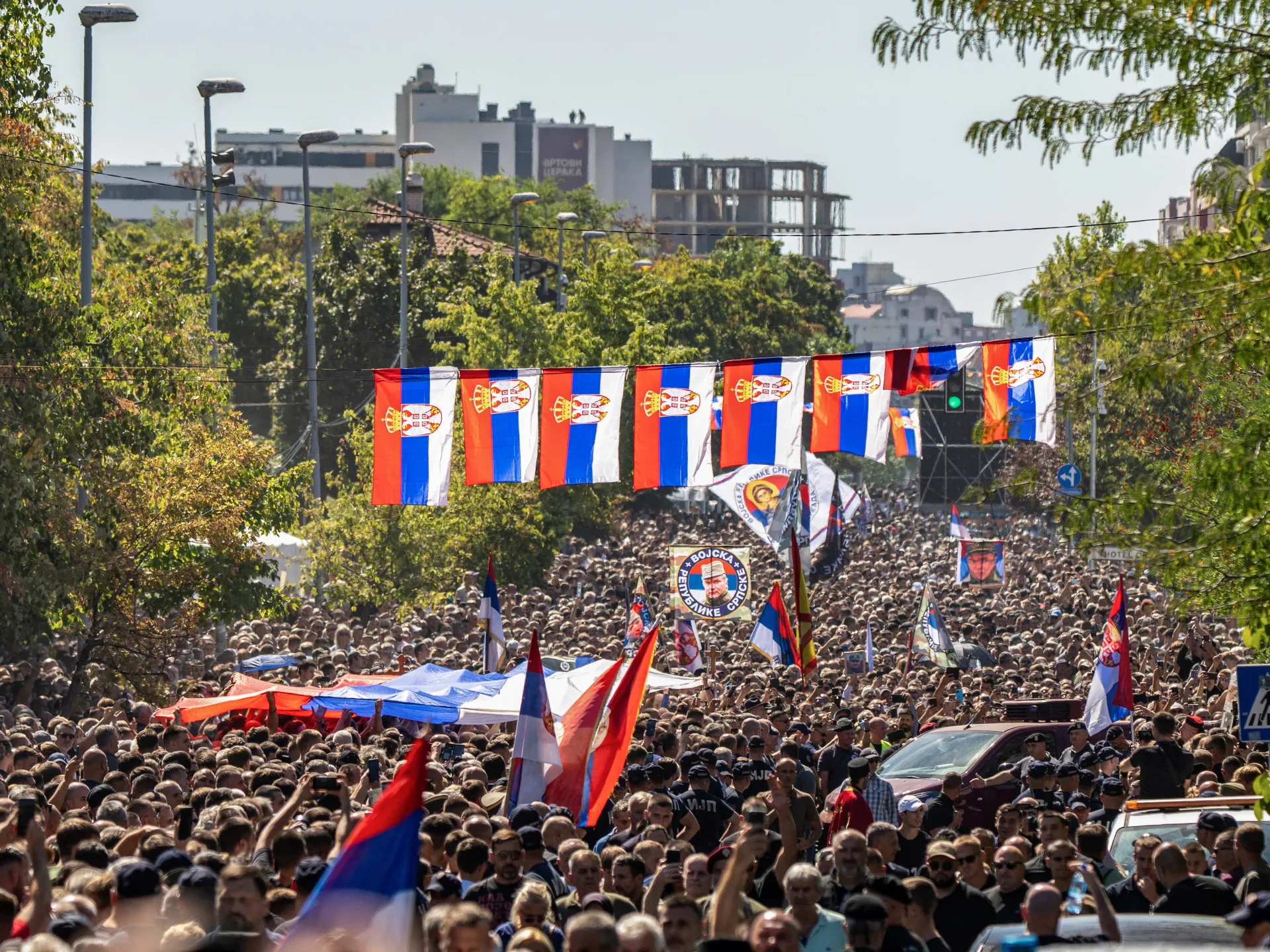
Ratko Mladic, the former commander of the Bosnian Serb army, has been buried in Belgrade with full military honours, drawing protests and condemnation over the public celebration of a man convicted of genocide, war crimes and crimes against humanity.
Mladic died aged 84 on 27 August while serving a life sentence imposed by the International Criminal Tribunal for the former Yugoslavia. His coffin was wrapped in the Serbian flag and the funeral was attended by Serbian government members, opposition figures, Republika Srpska officials, pro-Serbian politicians and Russia’s ambassador to Serbia.
President Aleksandar Vucic did not attend, although his son Danilo was present. Vucic supported what he described as a dignified funeral. The Serbian Orthodox Church’s Patriarch Porfirije led the main religious service.
European Commissioner for Enlargement Marta Kos cancelled a visit to Belgrade, saying the glorification surrounding Mladic’s death was incompatible with the values underpinning the European Union’s path. UN Secretary-General Antonio Guterres also warned against glorifying convicted war criminals.
Serbian civil society groups protested the military honours, saying they insulted victims and survivors. The response reflects the continuing division over Mladic’s legacy in Serbia and Bosnia and Herzegovina, where disputes over genocide denial and historical revisionism remain politically sensitive.
Forces under Mladic’s command killed more than 8,000 Bosniak men and boys after capturing Srebrenica in July 1995 during the Bosnia and Herzegovina war. The killings were legally recognised as genocide. Mladic was arrested in Serbia in 2011 after nearly 16 years in hiding and later extradited to The Hague.