Miyagi Earthquake Triggers Transport Suspension and Nuclear Safety Checks
Authorities confirm no tsunami threat as Shinkansen services halt and Onagawa facility reports normal operations following the 2026 event.
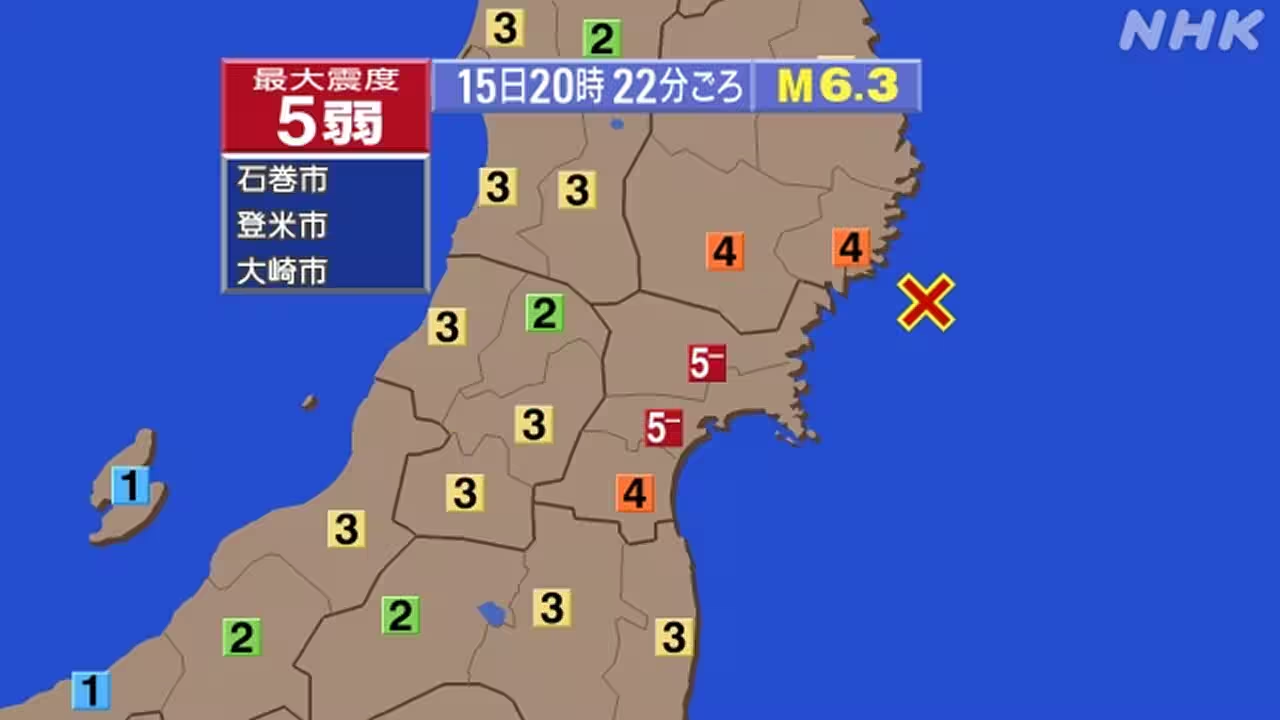
A magnitude 6.3 earthquake struck off the coast of Miyagi Prefecture in Japan’s Tohoku region on the evening of May 15, 2026, prompting immediate operational responses from transport and energy regulators. The Japan Meteorological Agency (JMA) reported that the epicentre was located at a depth of 50 kilometres, with seismic intensity registering at 5-lower on the Shindo scale in northern and central parts of the prefecture.
The Japan Meteorological Agency confirmed that no tsunami warning was issued, stating there was no threat of a tsunami following the seismic activity. This determination distinguishes the event from larger historical occurrences in the region, allowing authorities to focus on infrastructure safety and structural integrity checks rather than coastal evacuation protocols.
In the immediate aftermath, the Tohoku Shinkansen bullet train service was suspended as a precautionary measure. NHK reported that the suspension was confirmed at 8:44 pm JST, disrupting high-speed rail connectivity between Tokyo and northern Japan. Miyagi serves as a key stop on this major line, and the halt in service reflects standard protocol for high-speed rail operations in seismic zones.
Simultaneously, officials conducted safety assessments at the Onagawa Nuclear Power Plant, a facility located within Miyagi Prefecture. By 8:41 pm JST, authorities had confirmed there were no abnormalities at the plant. The facility remains subject to strict monitoring during seismic events, and the confirmation of normal operations alleviated immediate concerns regarding nuclear safety in the region.
While the Japan Meteorological Agency’s data indicates strong shaking capable of damaging poorly constructed buildings, detailed reports on structural damage or injuries were not immediately available in the initial briefings. The duration of the Shinkansen suspension and the timeline for the resumption of normal rail services remain to be determined as assessments continue.