Minor seismic activity recorded in Fukushima as authorities confirm no tsunami threat
A shallow earthquake struck western Fukushima Prefecture on Tuesday afternoon, prompting immediate monitoring by national agencies but posing no risk of coastal inundation.
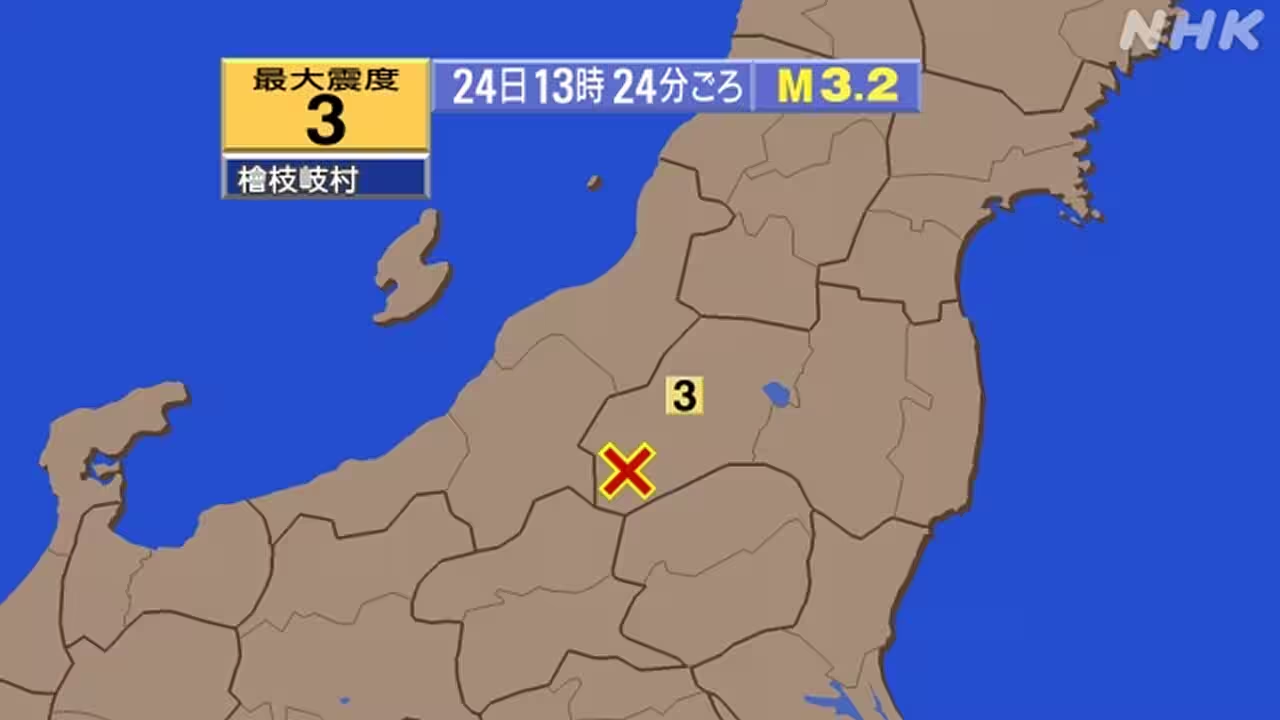
A magnitude 3.2 earthquake struck the Aizu region of Fukushima Prefecture at approximately 1:24 pm on June 24, 2026. The Japan Meteorological Agency (JMA) confirmed that the epicentre was located 10 kilometres beneath the surface.
According to data released by the JMA and reported by NHK News Japan, the seismic intensity recorded in Hinoemata Village was 3 on the Japanese Shindo scale. This scale measures the strength of shaking at a specific location, distinct from the magnitude which quantifies the energy released at the source.
Authorities moved quickly to assess the potential for secondary hazards. The JMA confirmed there was no risk of a tsunami resulting from this event. This stands in contrast to other recent seismic activity in Japan, such as the magnitude 8.2 earthquake that triggered tsunami advisories for the Pacific coast, highlighting the varying risk profiles of different tremors.
The incident occurred during a period of heightened weather vigilance, with the Japan Meteorological Agency also issuing warnings regarding stagnant rain fronts and heavy rainfall across various regions. However, the seismic event itself remained isolated to the Aizu district in western Fukushima.
While the initial reports focused on Hinoemata Village, the JMA noted that seismic intensity data for other municipalities was being compiled. The agency continues to monitor the region for any aftershocks or changes in seismic activity, though no further significant events have been reported since the initial tremor.