Milky Way Rises Above Earth's Airglow in New Image from the International Space Station
NASA releases a striking photograph taken from the SpaceX Dragon spacecraft, illustrating the distinct difference between airglow and auroras.
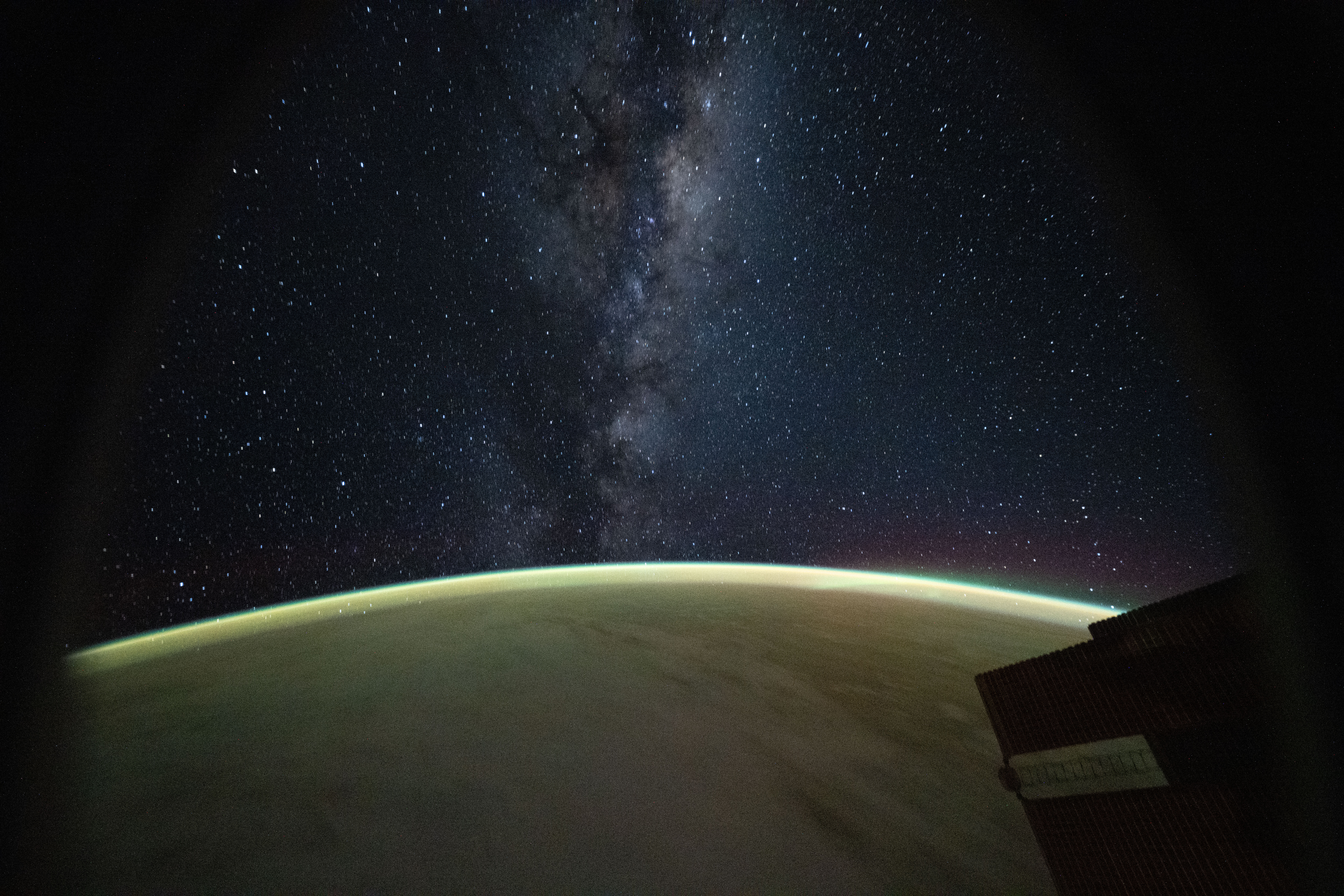
NASA astronaut Chris Williams has captured a compelling image of the Milky Way rising above the Earth's atmospheric glow, known as airglow. The photograph was taken on 13 April 2026 while the astronaut was aboard a SpaceX Dragon spacecraft docked to the International Space Station. The visual highlights the contrast between the distant galaxy and the luminous layer of our own planet's upper atmosphere.
This atmospheric phenomenon, referred to as airglow, occurs when atoms and molecules in the upper atmosphere are excited by sunlight. As these particles emit light to shed their excess energy, they create a soft, natural illumination. Alternatively, the effect can happen when atoms and molecules that have been ionised by sunlight collide with and capture a free electron. In both instances, a photon is ejected to allow the particles to return to a stable state.
While the resulting light show bears a resemblance to auroras, the mechanisms driving them are distinct. Airglow is energised by ordinary, day-to-day solar radiation rather than the high-energy particles that originate from the solar wind. This difference means airglow is a constant, albeit faint, presence in the upper atmosphere, unlike the sporadic and intense displays of the aurora.
The image, credited to NASA/Chris Williams, serves as a reminder of the unique vantage point provided by low Earth orbit. From the vantage of the SpaceX Dragon, the boundary between the Earth's protective atmosphere and the vastness of space is clearly defined by this natural emission. It offers a clear view of how our planet glows from within, independent of the dramatic light shows often associated with solar storms.
The release of this image underscores the ongoing scientific interest in atmospheric phenomena visible from space. By documenting such events, researchers and the public can better appreciate the complex interactions between solar radiation and the Earth's atmosphere. The photograph stands as a testament to the clarity and beauty of the cosmos as seen from the International Space Station.