Military pressure in Lebanon fails to secure political resolution as clashes intensify
Despite a partial ceasefire and US-backed diplomatic proposals, fighting persists between Israel and Hezbollah, with casualties mounting and international observers warning that military tactics are eroding the prospects for a sustainable political settlement.
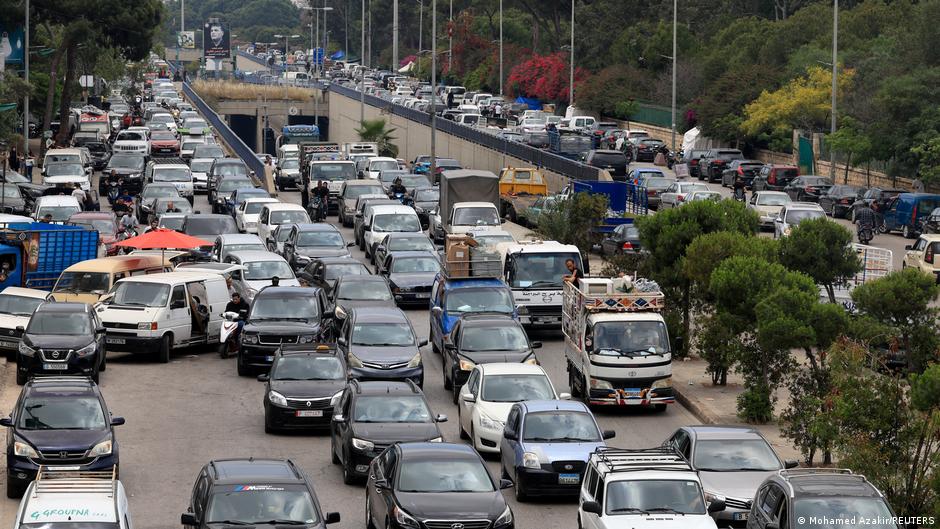
Clashes between the Israeli military and the Iran-aligned Hezbollah militia continue in southern Lebanon, despite a partial ceasefire agreement and recent diplomatic overtures. Israeli forces have advanced north of the Litani River and launched strikes on what they describe as Hezbollah strongholds in the southern suburbs of Beirut, citing repeated violations of the truce. The fighting has displaced residents and prompted German Development Minister Reem Alabali Radovan to cut short a visit to Lebanon due to the deteriorating security situation.
Lebanese President Joseph Aoun has condemned the "brutal Israeli aggression," while Iranian officials argue that Israel’s military actions are delaying a broader ceasefire agreement with the United States. Media reports indicate renewed displacement in Beirut’s southern suburbs, where Merin Abbass of the Friedrich Ebert Foundation noted specific threats to bomb the area, leading to evacuations. "You can feel the tension," Abbass told Deutsche Welle, describing a situation where an official ceasefire is effectively nullified by ongoing hostilities.
The conflict has resulted in significant loss of life, with Lebanese authorities reporting more than 3,400 deaths since March 2. On the Israeli side, the military reports 24 soldiers and four civilians killed. The asymmetry of the conflict remains a central point of contention, with Israel possessing significant military superiority while the Lebanese state maintains limited influence over Hezbollah, which is designated as a terror organisation by the United States, Germany, and several Sunni Arab governments.
Analysts warn that the military offensive risks undermining Lebanese state institutions and breaching international law regarding state sovereignty. Jan Wilkens of the German Institute for Global and Area Studies (GIGA) stated that Israel’s actions are limiting the Lebanese government’s room for manoeuvre. He argued that the more Israel attempts to impose a unilateral solution, the more the grounds for a long-term, consensus-based agreement shrink.
The Center for Strategic and International Studies (CSIS) has raised concerns that the attacks could indirectly bolster Hezbollah’s narrative that armed resistance is the only viable security guarantee. This dynamic complicates diplomatic efforts, as Hezbollah’s ongoing rocket and drone attacks on northern Israel are viewed by some analysts as an attempt to sabotage the diplomatic process. Meanwhile, internal political pressure in Israel has intensified, with criticism that the fight against Hezbollah is not being waged with sufficient resolve.
Diplomatic efforts have faced immediate setbacks. US President Donald Trump claimed to have persuaded Israeli Prime Minister Benjamin Netanyahu to halt troop movements into southern Beirut, asserting that all shooting would stop. However, hours after this claim, Israeli air defences intercepted projectiles from Lebanon. Although the Lebanese presidential office indicated that Hezbollah had accepted a US proposal for a reciprocal cessation of attacks, fire resumed almost immediately, underscoring the fragility of the agreement.
Experts argue that sustainable de-escalation requires a dual approach: Hezbollah must cease its military operations, and Israel must withdraw from Lebanese territory. Abbass emphasised that while Israel has a right to protect its population, the wholesale destruction of Lebanese neighbourhoods is disproportionate. He called for clearer international political responses rather than mere expressions of concern, noting that military pressure alone is insufficient to achieve a lasting political solution.