Middle East tensions trigger supply chain delays in Japan’s appliance and dairy sectors
NHK reports that geopolitical friction involving Iran is disrupting domestic logistics, with Fukuoka retailers facing one-month delays and Kumamoto dairy farmers citing feed material shortages.
Ongoing tensions in the Middle East are continuing to exert pressure on Japan’s domestic economy, manifesting in tangible disruptions to supply chains for consumer goods and agricultural inputs. According to reporting by NHK, the geopolitical instability has created a ripple effect across various industries, forcing businesses to adjust operational timelines and raising concerns among producers regarding the availability of essential materials.
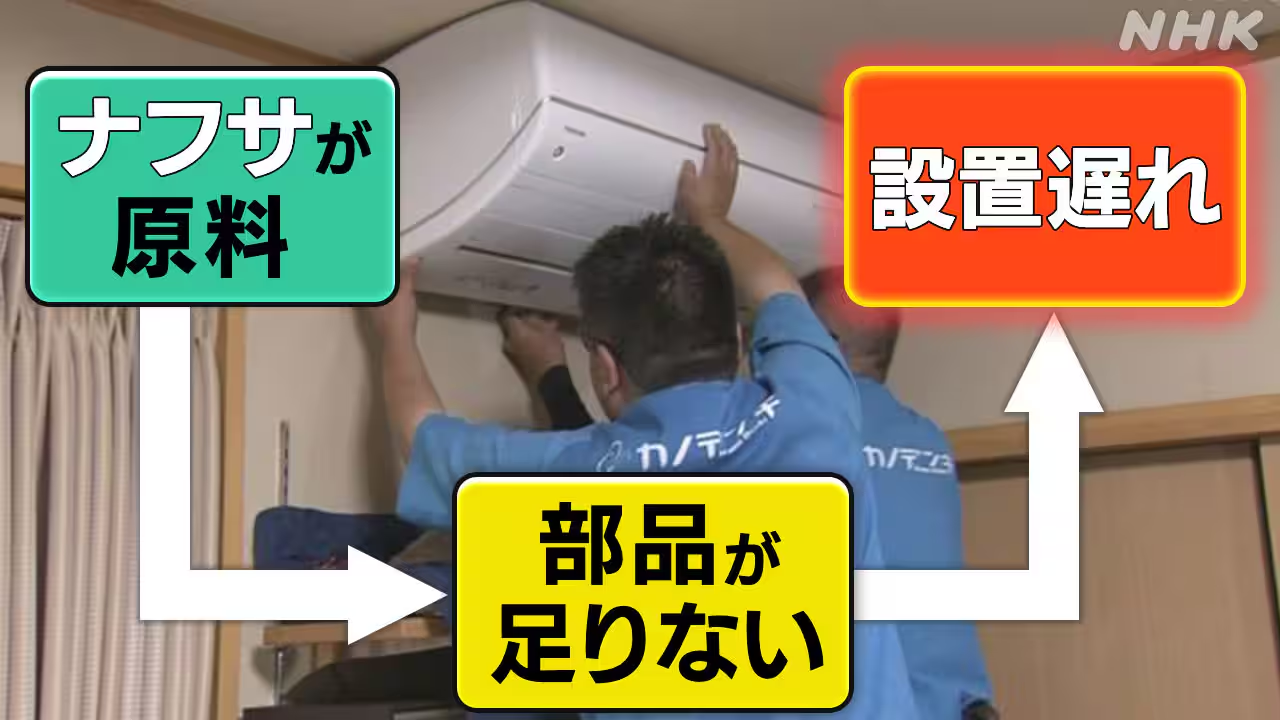
In Fukuoka City, the impact is visible in the home appliance sector. Retailers have informed customers that there is now an approximate one-month delay between the placement of an order for an air conditioner and the scheduled installation. This bottleneck suggests that logistical constraints or component shortages, potentially linked to broader regional instability, are affecting the timely delivery and servicing of household equipment.
Simultaneously, the agricultural sector is facing its own set of challenges. Dairy farmers in Kumamoto Prefecture have raised concerns regarding the procurement of feed materials. While the specific nature of the shortages or the exact feed types affected has not been detailed in initial reports, the emergence of these concerns highlights the vulnerability of agricultural supply chains to external geopolitical shocks.
The broader economic context indicates that these supply-side disruptions are part of a wider trend affecting industrial inputs. Previous reports have linked similar tensions to shortages in naphtha, a key petrochemical feedstock, which has contributed to price increases for air conditioners and created unstable supply conditions for medical containers. The current disruptions in Fukuoka and Kumamoto appear to be consistent with these earlier indicators of material scarcity.
Government data further underscores the scale of the economic anxiety surrounding petroleum products and related industries. The Ministry of Land, Infrastructure, Transport and Tourism reported receiving 9,500 consultations regarding petroleum products as of 9 June 2026, with 850 cases identified and resolved. This high volume of inquiries reflects significant market uncertainty and the active efforts by authorities to monitor and mitigate the economic fallout from the Middle East situation.