Mexico deploys 100,000 security forces as World Cup opens amid social unrest
As Mexico prepares to host the opening match against South Africa, authorities have mobilised a massive security apparatus across three host cities to counter social tensions and residual fears from February’s cartel violence in Guadalajara.
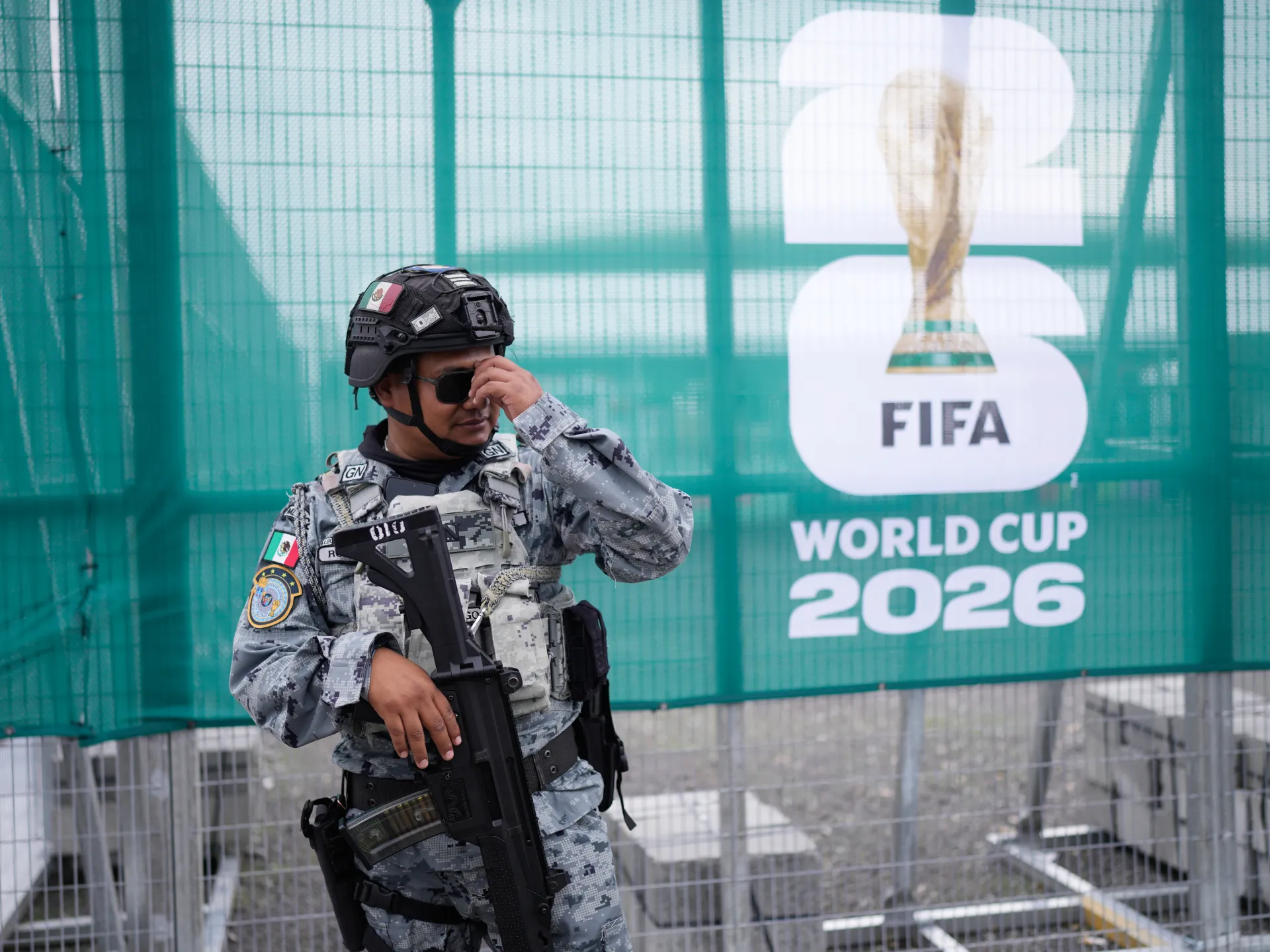
Mexico is preparing to host the opening ceremony and match of the FIFA World Cup, jointly held with the United States and Canada, amidst significant social unrest and heightened security measures. President Claudia Sheinbaum has pledged that the event will be safe, deploying over 100,000 security personnel across host cities including Mexico City, Guadalajara, and Monterrey. In Mexico City, a teachers' union protest has blocked access to the main fan festival plaza, while families of missing persons have highlighted humanitarian concerns. In Guadalajara, authorities have increased security following cartel violence earlier in the year, with local officials assuring visitors of safety. The tournament is expected to generate $3bn for the local economy.
The opening match features Mexico playing against South Africa in Mexico City, with festivities commencing on Thursday. However, the event is marked by significant social friction. A teachers’ union protest camp has effectively blocked access to the Zocalo plaza, the designated site for the country’s main fan festival. The union has been conducting annual protests for better working conditions, which this year included toppling World Cup statues and blocking roads. President Sheinbaum acknowledged the blockage on Wednesday but stated that 18 alternative venues in Mexico City would host free screenings if the Zocalo is unusable. “Everything is under control,” she added, despite criticism regarding government spending and political scandals.
Beyond the capital, social tensions have been highlighted by families of Mexico’s more than 130,000 missing persons. Protesters have hung flyers of their loved ones and urged authorities to focus on humanitarian crises rather than the World Cup. Luis Antonio Rosales Narvaez, a protest organiser, stated that while they are not against the football, the government should be investing in education rather than giving the city a makeover. Residents in Mexico City have expressed concern that authorities are prioritising the competition over pressing social needs as guests flood into the capital.
In Guadalajara, authorities have increased security following cartel violence earlier in the year. The city was rocked by unrest in February following the killing of the country’s most powerful cartel boss by the Mexican military. Local security coordinator Alfonso Briseno stated that normalcy returned to Jalisco state within 48 hours of the incident and guaranteed safety for visitors. Nearly 15,000 security personnel, including those with assault rifles and vehicle-mounted machineguns, have been deployed in the Guadalajara region to reassure residents and tourists.
The security apparatus extends across all three Mexican host cities and major tourist destinations. Measures include anti-drone teams, surveillance-camera networks, and special crowd management units coordinated with FIFA. The Mexican Football Federation estimates the tournament will generate $3bn for hotels, restaurants, and sports venues. Performers including Colombian superstar Shakira are scheduled for the opening festivities, and Spain’s King Felipe VI is expected to attend the June 26 match between Spain and Uruguay in Guadalajara.