Mexican mother locates son's remains in Sonora seven years after cartel abduction
The discovery underscores the systemic failure of state institutions in Mexico, where over 133,000 individuals remain officially missing, forcing families to conduct their own investigations in the face of cartel violence and official inaction.
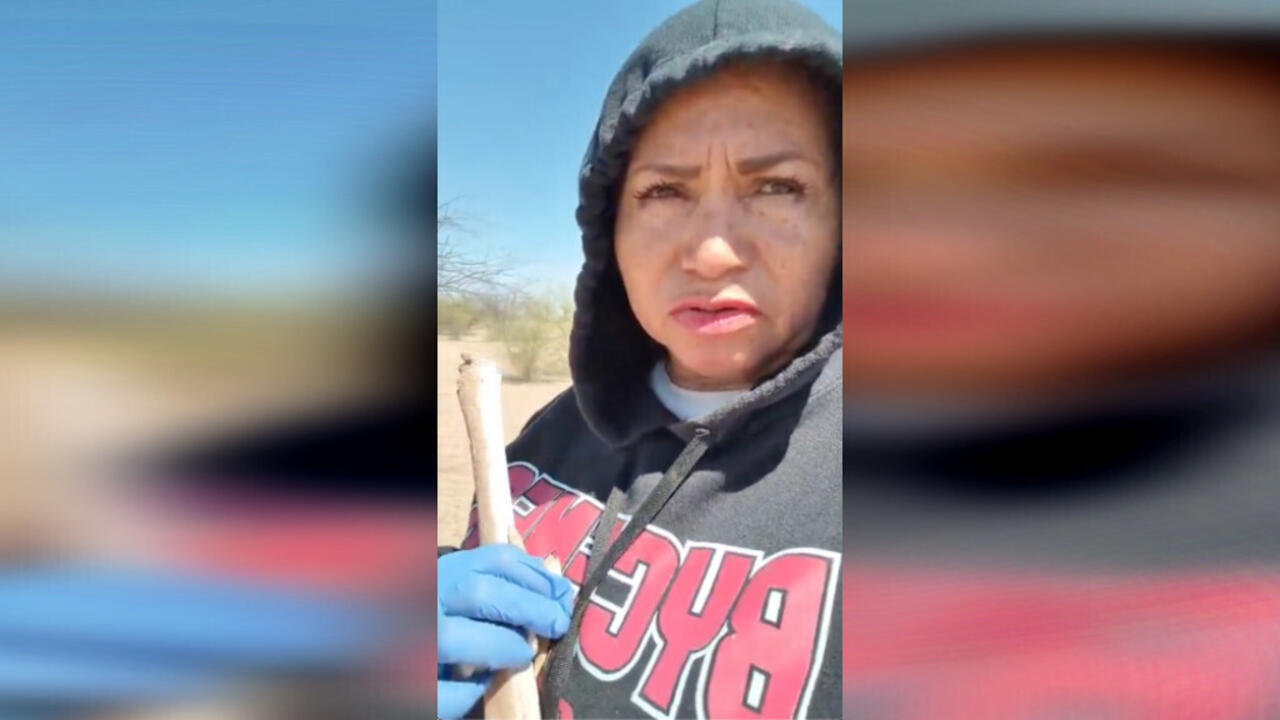
Ceci Flores, a prominent figure in the fight against impunity in northern Mexico, has confirmed the recovery of the skeletal remains of her son, Marco Antonio. The discovery occurred in late March 2026 in an arid landscape near Hermosillo, in the state of Sonora, seven years after the teenager was kidnapped by an armed group in May 2019. While Flores initially identified the remains by the clothing found alongside them, subsequent DNA testing has officially verified the identity of the deceased.
The location of the remains was determined through intelligence gathered from an individual identified as responsible for the kidnapping, who was interviewed by authorities. Despite this breakthrough, Flores notes that only some of her son's bones were recovered, a detail that highlights the fragmented nature of evidence often available in cases involving criminal organisations. The search operation was conducted by the collective "Madres Buscadoras de Sonora", which Flores established following the simultaneous abduction of two of her sons in 2019.
Flores continues to search for her other son, Alejandro, who vanished in 2015, illustrating the ongoing nature of the crisis. The case is emblematic of a broader institutional failure across Mexico, where a national registry established in 2019 records over 133,000 people as officially missing or unaccounted for. A significant proportion of these disappearances are attributed to criminal gangs, yet the state's capacity to locate victims or hold perpetrators accountable remains critically deficient.
The collective Flores leads operates in a high-risk environment, with Amnesty International reporting that 90 per cent of its members are women who face daily threats, assassinations, and further disappearances. Between February 2011 and May 2025, at least 30 family members of the missing were killed while searching for their loved ones. The group utilises basic tools such as picks, shovels and sensors to investigate detention centres and walk the streets, filling a void left by authorities who lack the will or resources to conduct effective searches.
Flores has stated that the creation of the collective was a direct response to official inaction, noting that mothers would not be forced to carry out these dangerous investigations if the state fulfilled its duties. The collective reports having located over 3,000 living individuals and more than 2,700 deceased persons since its inception, though these specific figures have not been independently verified by external outlets. The group's work serves to expose the reality of disappearances that official statistics often obscure.
As the collective continues its operations, the focus remains on raising awareness that the missing are not merely statistics but individuals who deserve investigation and justice. The case of Marco Antonio and the broader context of the 133,000 missing underscore the urgent need for structural reform in governance and security policy to address the systemic violence plaguing the region.