Messi’s sixth World Cup: A tactical evolution, not a decline
Lionel Messi is set to make his sixth World Cup appearance for Argentina, a joint record with Cristiano Ronaldo and Guillermo Ochoa. His career has been defined by reinvention, adapting to the physical demands of the modern game through tactical intelligence rather than pace.
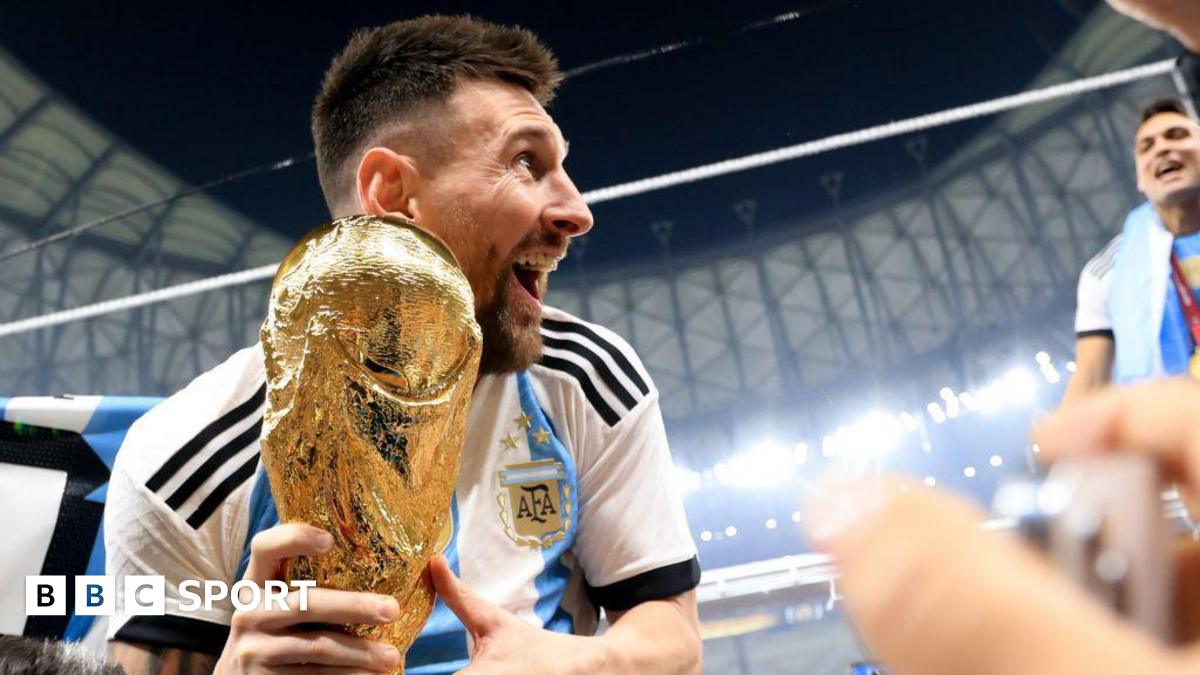
Lionel Messi is preparing to make his sixth World Cup appearance for Argentina at the 2026 tournament, a milestone that places him in a joint record alongside Portugal’s Cristiano Ronaldo and Mexico’s Guillermo Ochoa. The 38-year-old’s journey from a 16-year-old right-sided winger to a veteran playmaker represents a sustained tactical evolution rather than a decline in physical capability. Since his debut for Barcelona in 2003, Messi has reinvented his role at least five times to remain central to his team’s structure, adapting to a game that has become increasingly tactical and physical.
The most significant structural shift occurred under Pep Guardiola, who moved Messi from the right wing to a false nine role in 2009. This decision, initially made for defensive reasons as Messi did not track back, allowed him to drop between the lines and disrupt opposing centre-backs. The strategy proved decisive, contributing to a 6-2 victory over Real Madrid and a Champions League final win against Manchester United. Between 2011 and 2013, Messi scored 96 goals in 69 La Liga matches, winning four Ballon d’Or awards during this period and establishing himself as the focal point of Barcelona’s possession-based system.
Following the departures of Xavi in 2015 and Andres Iniesta in 2018, Messi’s role evolved further into that of an 'enganche' or deep-lying playmaker. With the midfield safety net removed, he was required to initiate play while still contributing goals. This transition was marked by a statistical shift where assists began to rival goals. In the 2019-20 season, he recorded 22 assists and 25 goals in 33 La Liga games. His first season at Paris Saint-Germain confirmed this new identity, with 11 goals and 15 assists in 34 games, marking the first time in his club career that his assist tally exceeded his goals.
Messi’s leadership and tactical maturity were fully realised during Argentina’s triumph at the 2022 World Cup and the 2021 Copa America. After three consecutive final defeats between 2014 and 2016, he emerged as a vocal leader, criticising the South American football confederation in 2019 and galvanising his team in 2021. At the 2022 World Cup, he combined his earlier dribbling prowess with quarterback-like precision, orchestrating Argentina’s victory in France. In a 2023 interview with Zinedine Zidane, Messi noted that the modern game is "much more tactical and physical" than previous eras, having played across three distinct tactical phases of modern football.
Now playing for Inter Miami, Messi’s movement has shifted towards energy conservation, with reports indicating he walks more than he runs. This approach is viewed not as a lack of fitness, but as a mastery of game reading and tactical efficiency. As Argentina prepares to defend their title, Messi’s value lies in his ability to adapt to changing demands, having transformed from a dazzling winger into a deep-lying organiser who sees the game before it unfolds.