Mecca agreement signals shift in Gulf security architecture
Saudi Arabia, Pakistan and Turkiye formalise collective defence mechanism amid ongoing conflict with Iran-aligned Houthis
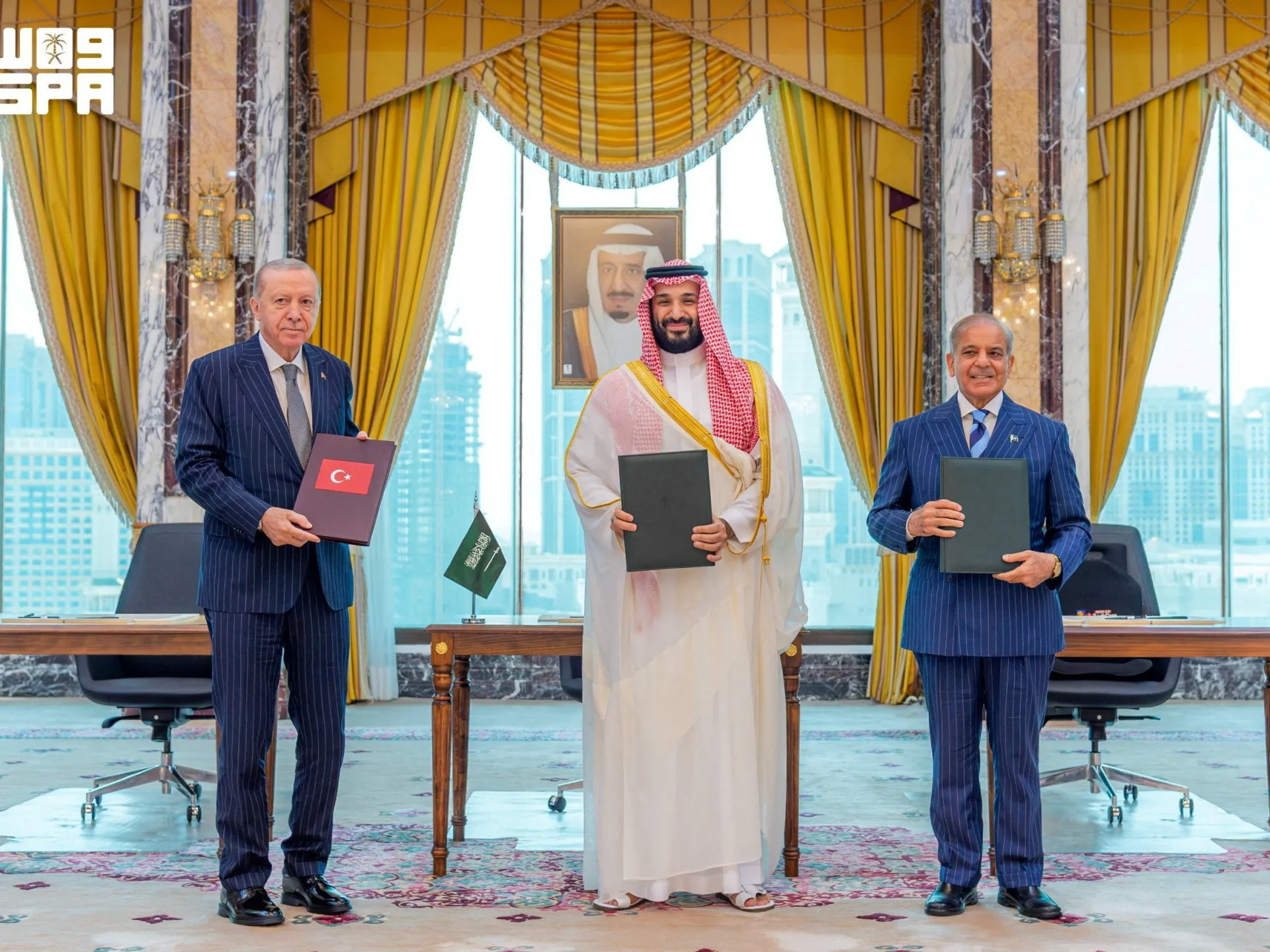
Saudi Arabia, Pakistan and Turkiye have signed the Makkah Joint Defence Agreement, establishing a formal collective defence mechanism wherein an armed attack on any signatory is treated as an attack on all three. The accord was signed by Saudi Crown Prince Mohammed bin Salman, Turkiye President Recep Tayyip Erdogan and Pakistan Prime Minister Shehbaz Sharif at al-Safa Palace in Mecca. The agreement aims to diversify Riyadh’s defence partnerships beyond the United States, integrating Turkiye’s NATO-standard military capabilities and building upon a bilateral Saudi-Pakistan defence agreement signed in 2025.
The signing occurs more than five months into the US-Israel war on Iran, a conflict that has involved missile and drone fire onto Gulf oil exporters and disrupted the Strait of Hormuz. The alliance was announced amid heightened regional tensions, including a Saudi-backed military operation in Yemen against Iran-aligned Houthis and ongoing negotiations between Iran and the US. Saudi officials have stated that the agreement does not pose a threat to regional security.
Iran’s response has been dismissive, with parliament member Ebrahim Rezaei describing the pact as a 'paper agreement' that will not bring security to Saudi Arabia. Analysts note that the pact changes how separate bilateral relationships function and raises questions about Pakistan’s role as a mediator between the US and Iran. Experts suggest the alliance offers a potential alternative to Washington’s security umbrella.
The move raises questions regarding the effectiveness of the long-standing US military presence in the Gulf. Abdulaziz Alghashian, a senior non-resident fellow at the Gulf International Forum, David Des Roches, a professor at the Thayer Marshall Institute, and Zaid M Belbagi, managing partner at Hardcastle Advisory, have analysed the challenges facing the Mecca agreement. They highlight that the pact highlights Riyadh’s desire to diversify its defence partnerships, expanding to Ankara and Islamabad.
The trilateral Mecca pact raises questions about the viability of this new security arrangement. Analysts warn that the collective-defence clause alters the dynamics of separate relationships. The signing also raises questions about Pakistan’s role as a mediator between the US and Iran, with experts noting its presence provides diplomatic insulation for the region. The agreement represents a significant shift in the geopolitical landscape of the Middle East.