McDonald’s taps Red Bull to court younger diners as US sales lag
The fast-food giant’s entry into the energy drink sector aims to boost traffic and offset a 2026 share price decline driven by sluggish comparable sales in the United States.
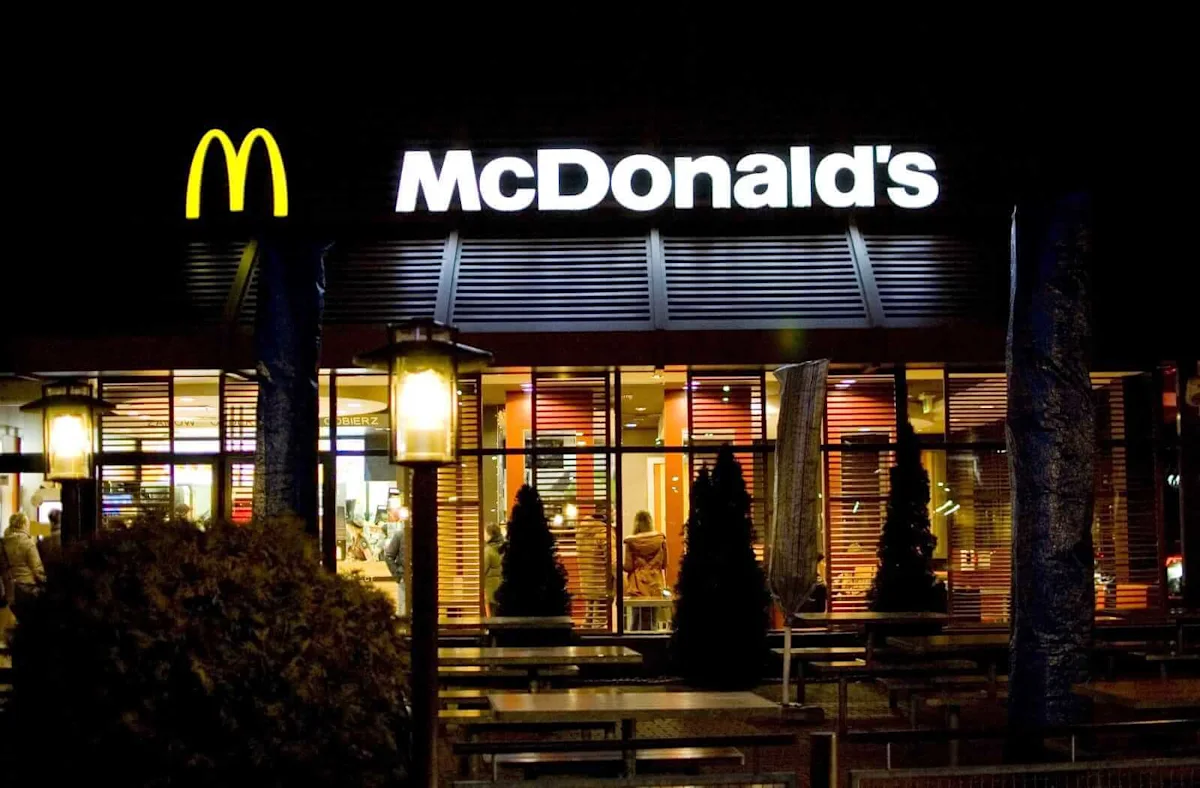
McDonald’s has officially entered the energy drink market, commencing the sale of the Red Bull Dragonberry Energizer across its United States restaurants on 17 August 2026. The product, available in regular and zero-sugar variants, combines Red Bull with blue raspberry and dragon fruit flavours. This marks the company’s first official foray into the category, a strategic move designed to attract younger consumers and stimulate beverage-specific traffic to its locations.
The launch comes at a critical juncture for the stock, which has declined by more than 11 per cent in 2026. This weakness reflects investor concerns over slower comparable-store sales and persistent consumer pressure in the US market. In its most recent second-quarter report, US comparable sales increased by only 0.8 per cent, a figure that lagged behind the 1.3 per cent rise recorded globally. While consolidated revenue grew by 4 per cent and systemwide sales climbed 5 per cent to $37 billion, the domestic performance has raised questions about execution.
Despite the share price drop, McDonald’s recently delivered mixed financial results that offered some reassurance. Adjusted earnings of $3.38 per share exceeded the consensus estimate of $3.32, although total revenue of approximately $7.1 billion fell slightly short of the $7.14 billion forecast. The company’s broader beverage strategy, which includes McCafé offerings, crafted sodas, and seasonal items such as the Caramel Apple Pie lineup, continues to expand. The addition of Red Bull is intended to complement these existing initiatives by providing another avenue to drive customer visits and increase average ticket sizes.
Investors are closely monitoring whether this new product line can translate into meaningful growth in comparable sales. The company’s loyalty program remains a significant driver of revenue, with sales to loyalty members across 70 markets rising more than 20 per cent over the trailing 12 months to $40 billion. Concurrently, 90-day active loyalty users increased by 13 per cent to nearly 220 million. These metrics suggest that while traffic may be soft, engagement among existing customers remains robust, providing a foundation for the new beverage push.
Valuation metrics indicate that McDonald’s is not being priced as a struggling retailer. With a market capitalisation of approximately $189 billion and a trailing price-to-earnings ratio of about 22, the stock still commands a premium for its global scale and franchise-heavy model. Wall Street remains generally constructive, maintaining an overall "Buy" consensus with an average 12-month price target of $318.95. This implies roughly 15 per cent upside from recent levels, though individual targets vary significantly, with UBS and BTIG maintaining higher valuations than peers like Mizuho.
For the Red Bull partnership to provide a sustained catalyst, management must demonstrate that the energy drink launch contributes to higher-frequency visits rather than remaining a niche menu addition. If beverage sales and loyalty engagement help accelerate US comparable-store growth, the current share price weakness may prove to be a temporary dip. However, if domestic traffic remains stagnant, the stock’s premium valuation leaves limited room for further disappointment in the near term.