Matic robot vacuum adds gesture and voice control via free update
The Matic Cues release introduces on-device gesture spotting and cloud-based voice commands, marking a shift in how consumers interact with automated cleaning hardware.
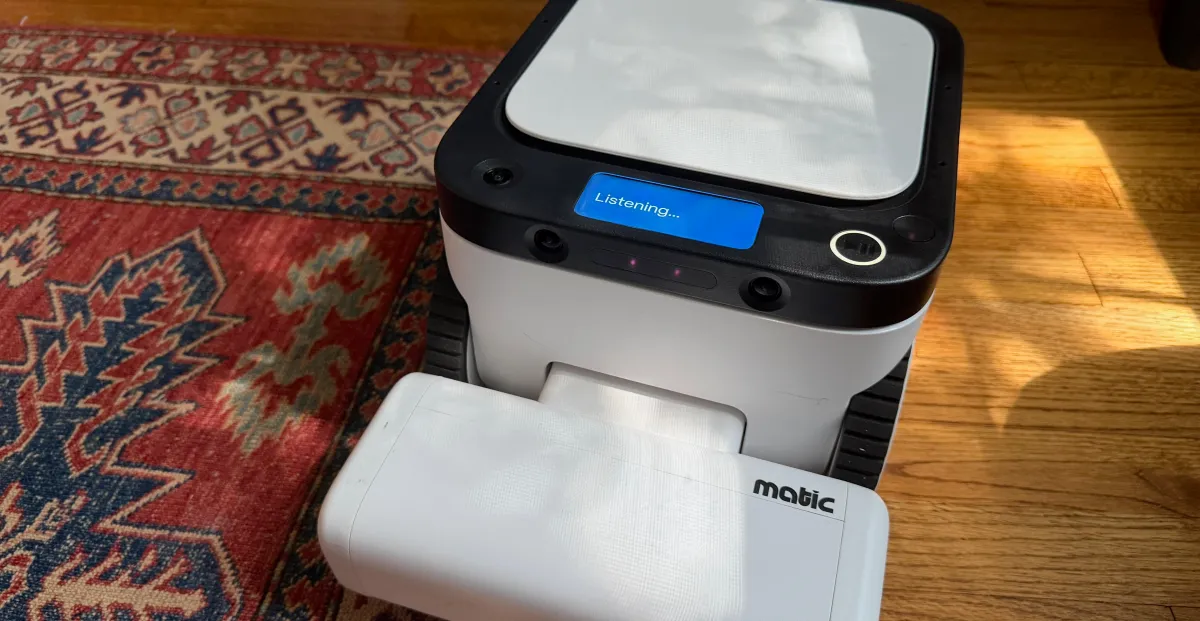
Matic has released a free software update, Matic Cues, introducing on-device gesture control and a Gemini-powered voice assistant to its robot vacuum. The update launches on August 13 at 2 pm ET, ahead of a planned price increase from $1,245 to $1,495 on September 9.
Users can now point at messes to trigger spot-cleaning or issue natural language commands. The gesture control feature allows users to wake the vacuum with "Hey, Matic," point at a mess, and say "clean here" for spot-cleaning. Gesture control works entirely on-device using the vacuum's five existing cameras and is available for all current Matic robots.
The voice assistant uses the Gemini API to process natural language commands, such as "vacuum the inside of the carpet," and supports over 75 languages. Commands following the wake word are sent to the cloud anonymously; the company plans to move the top 20-30 most-used commands to on-device processing in the future.
Matic’s founders are former Google Nest camera engineers who have been developing the gesture technology since 2017. While competitors like Roborock offer on-device voice assistants, Matic utilises cloud processing to support a wider variety of natural language commands. Google’s Gemini app recently reached one billion monthly active users.
The feature is opt-in, and users can disable the microphones and gesture control via the Matic app settings. The long-term accuracy of gesture control for targeting smaller areas when standing versus crouching has only been tested over a short period, and the effectiveness of the planned future on-device processing has not yet been verified.