Mass evacuations and military mobilisation as European wildfires escalate
French authorities deploy thousands of personnel and aerial assets to contain a 420-square-kilometre blaze near Bordeaux, while Madrid declares its worst fire event in regional history.
Wildfires across France and Spain have compelled the evacuation of more than 300,000 residents, marking a significant escalation in the continent’s ongoing climate-related disaster response. In the Gironde department near Bordeaux, a single blaze has consumed over 162 square kilometres in less than four days, an area approximately four times the size of Paris. The fire front is now within nine miles of the city, threatening critical infrastructure including facilities for ballistic missiles, rocket motors, and hazardous chemical processing.
French President Emmanuel Macron has mobilised the military, while Prime Minister Sebastian Lecornu chairs government crisis meetings to coordinate the response. Interior Minister Laurent Nunez has confirmed the scale of the displacement, with over 200,000 people forced from their homes in the southwestern region. Satellite imagery reveals vast stretches of scorched earth, with smoke drifting inland, underscoring the severity of a summer that has seen France burn more land than in any other year this century.
The intensity of the Gironde fires has generated a rare meteorological phenomenon known as a fire thunderstorm. Extreme heat causes air to rise rapidly, forming cumulonimbus clouds capable of producing lightning, hail, and rain. This self-sustaining weather system poses a dual threat, as lightning strikes can ignite new fires, complicating containment efforts in an area characterised by unstable atmospheric conditions and high pressure forecasts.
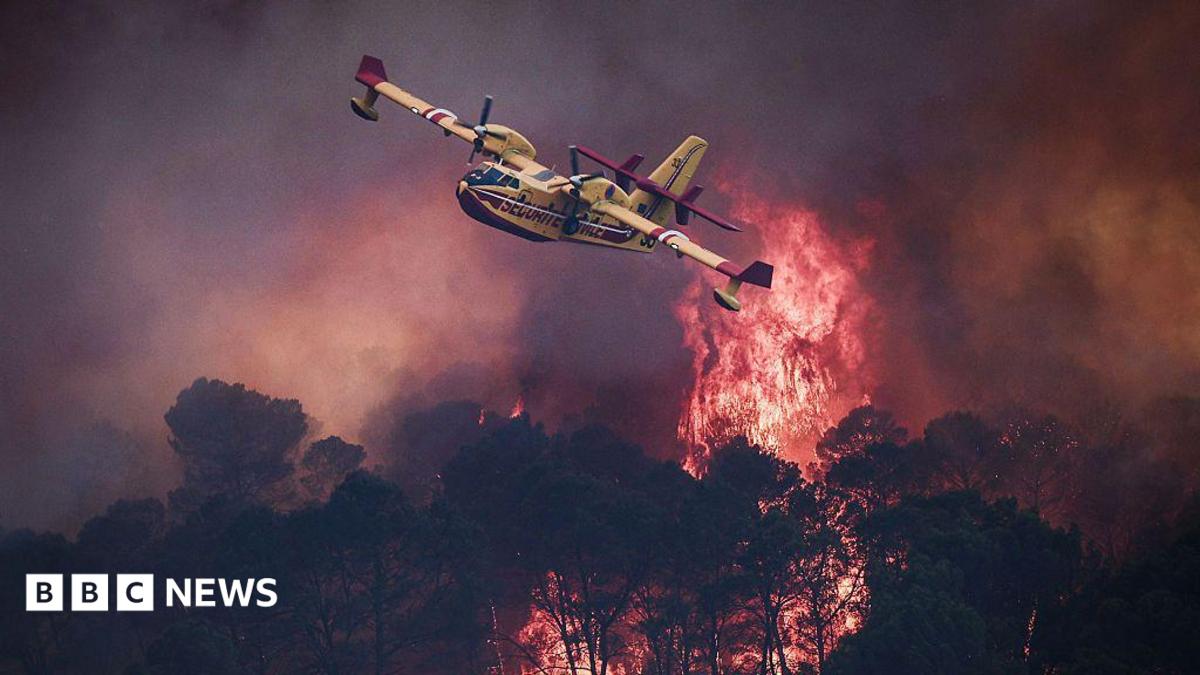
To combat the spread, French authorities have deployed a substantial operational force comprising 2,500 firefighters, 1,500 military personnel, and 1,200 police officers and gendarmes. Aerial assets include Canadair aircraft capable of scooping 6,000 litres of water in 12 seconds, alongside planes delivering fire retardant. Ground crews are utilising bulldozers and mechanical shovels to construct firebreaks up to 100 metres wide, stripping vegetation to remove potential fuel sources before the flames reach them.
In Spain, the situation is similarly dire, with two major wildfires west of Madrid merging into a single, massive blaze. Francisco Martin, a government delegate in Madrid, described the event as undoubtedly the largest fire in the region’s history, prompting a national emergency declaration. With temperatures exceeding 40C and climate change conditions facilitating faster fire spread, officials in both nations fear that worsening high-pressure systems could further destabilise the situation in the coming week.